Ivan Zhakata-CheckPoint Desk
When the sun sets over Harare’s central business district, the glow of nightclub signs mark the beginning of a different kind of economy—one that operates in the shadows of the city’s nightlife industry.
Investigations by CheckPoint Desk show a structured transactional sex economy operating across several central business district entertainment venues.
A popular night spot at the intersection of Nelson Mandela Avenue and Mbuya Nehanda Street has become the hub for commercial sex work and a key operational point in the CBD nightlife economy.
Sex workers frequently use the club as a “base” or meeting point to negotiate with their clients.
Street-based operators often frequent the vicinity for clients, and some reportedly negotiate to use the club’s spaces as a base, although it is considered more expensive than other downtown locations.
Due to crackdowns in traditional red-light districts like the Avenues, many sex workers have moved into the CBD.
Behind the networks are human stories of young women navigating rising living costs and substance abuse with many saying survival leaves them with limited options.
A 24-year-old woman, who works within the CBD nightlife circuit, said she did not plan to enter the trade but was pushed by economic hardship after failing to secure formal employment.
“I finished school and applied for jobs everywhere. I worked part-time, but it was never enough,” she said.
“I tried everything before this. Now I just have to survive.”
Another woman, in her early 20s, said the system is now structured and predictable.
“You know where to go and when. It is like any other work, but it is survival work,” she said.
Some sex workers who spoke on condition of anonymity described similar experiences shaped by poverty and rising living costs.
“There is no work in the city. You try every day and come back with nothing. At some point you stop having choices,” she said.
Another one said financial pressure from family responsibilities played a major role.
“I have children to look after. School fees, rent, food—it does not stop. You just find a way to make money,” she said.
Another woman, who only identified herself as “Queen”, said the environment was increasingly competitive as more young women entered the CBD nightlife economy.
“Every week there are new girls. It is crowded now. Everyone is trying to survive in the same space,” she said.
Another woman “Pepe” linked the situation to substance abuse and dependency.
“Some of the girls are using drugs and it becomes expensive to maintain that life. Once you are in that cycle, it is hard to leave,” she said.
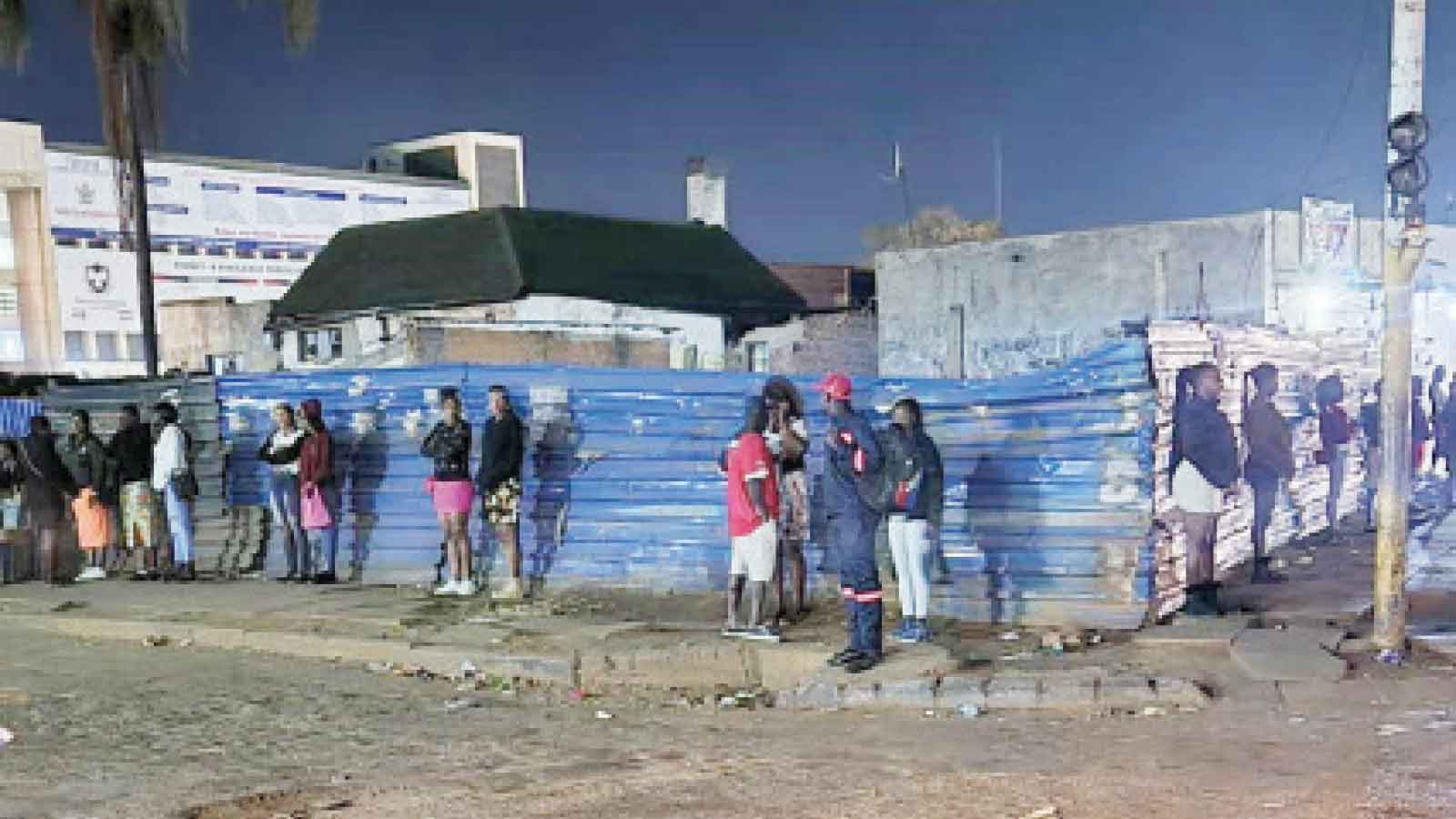
Sex workers operate from designated rooms within or around the premises while others solicit clients along Nelson Mandela Avenue between Harare and Park streets.
Clients are charged set rates for short sessions, with activity intensifying during evenings and weekends.
A vendor operating nearby said the scene has become part of the area’s nightly routine.
“People pass here every day. At night, things change. Everyone knows what is happening,” he said.
Investigations have further established that women positioned along Nelson Mandela Avenue approach potential clients before directing them to nearby ‘venues’ linked to the network.
The movement between street-level solicitation points and indoor premises follows a consistent pattern during peak nightlife hours.
At another night spot located in the basement of a high rise building along Nelson Mandela, investigations revealed that sex workers operate in a dimly lit environment where visibility is limited.
Clients pay for services, with further private arrangements reportedly taking place within the premises.
Similar patterns were also happening at a spot at the City Sports Centre and a hotel along Harare Street, where women operate from designated areas and engage clients.
These joints are also popularly known for hosting strippers, who later on turn into sex work after entertaining the audience.
A patron described the environment as “controlled but informal” and said most activities happen away from public view.
“These activities are long standing but hidden from plain sight,” he said.
Residents, vendors and nightlife workers said the system has existed for years and is widely known within the CBD.
Despite its visibility, little appears to have changed over time.
“It is not new. It has been here for a long time,” said one shop attendant along Nelson Mandela Avenue.
“What is worrying is that it has become normal.”
Social commentators and community leaders said the situation reflects deeper socio-economic challenges, including poverty, housing pressures and rising drug use among urban youths. They have called for coordinated intervention involving law enforcement, social welfare services and health institutions, alongside stronger youth empowerment programmes.
Publicly soliciting for prostitution is prohibited in Zimbabwe.
Sex workers frequently face violence, harassment from street gangs, and arrests.