admin
admin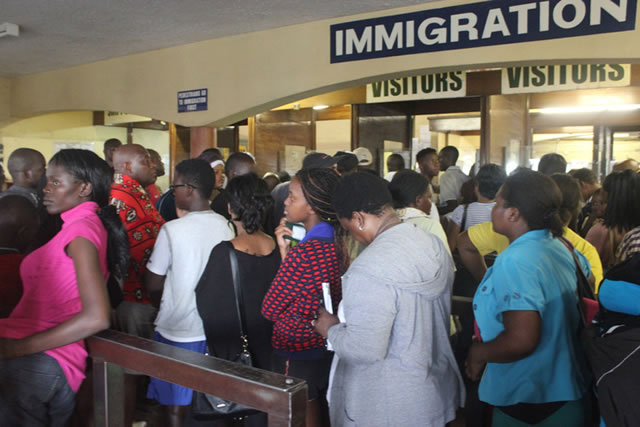
Tinomuda Chakanyuka, Senior Reporter
A LOOMING job action by South African Home Affairs Department workers which threatened the closure of Zimbabwe’s biggest port of entry, the Beitbridge Border Post this week has been averted.
The workers were threatening to go on strike from tomorrow, demanding payment, instead of days off, for working on Saturdays. However, the employees, last week signed an agreement with their employer to put a halt to the economic crippling job action.
The South African Home Affairs Department yesterday confirmed that it had reached an agreement with workers’ unions over the disputed new work schedule. Part of the agreement includes withdrawal of the introduced new working hours, which the workers were disputing.
According to the agreement, a copy of which is in Sunday News’ possession, operations within the department will revert to conditions that prevailed prior to the implementation of the circular including voluntary work. The two parties also agreed to enter into collective bargaining on working hours.
It was also agreed that there would be recourse for workers who had been affected by the directive to work on Saturday. According to unions some workers were subjected to disciplinary hearings while others were given leave without pay for not complying with the circular.
“Parties will enter into collective bargaining on working hours at the departmental bargaining chamber. All consequences related to the circular that negatively impacted employees will be reviewed and reversed on good cause shown,” reads the agreement in part.
Had the strike gone ahead, it would have affected movement and trade between South Africa and other countries, including Zimbabwe.
Zimbabwean officials had however, remained optimistic that an agreement would be reached to avert the strike.
Beitbridge Border Post handles more than 3 500 vehicles and 9 000 people on average on a daily basis.
The number of people can soar to 25 000 per day during holidays. Cross border traders, most of who buy goods in South Africa for resale in Zimbabwe would have been the hardest hit by the strike, while some local retailers would also have suffered.
It is estimated that more than 7 000 members of the Zimbabwe Cross Border Traders Association use the border post to cross into South Africa and back.
South Africa is also Zimbabwe’s biggest trading partner and most goods traded between the two countries pass through the border post. Apart from Zimbabwe, the border also serves as a gateway to goods coming from countries north of Zimbabwe destined for South Africa and vice-versa. Zimbabwe’s Parliamentary Portfolio Committee chairperson on Foreign Affairs Cde Kindness Paradza said had the strike gone ahead it would have affected other countries north of Zimbabwe.
@irielyan



 Online Reporter