

 admin
admin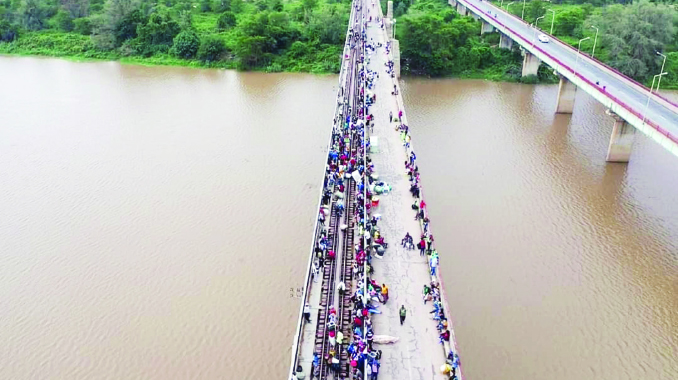
Thupeyo Muleya Beitbridge Bureau
Human and vehicular traffic has significantly increased at Beitbridge Border Post as more Zimbabweans based in Eswatini, Lesotho and South Africa troop in for the festive season.
The National Security Task Force, working with border authorities, has intensified security checks to enforce compliance and minimise smuggling and irregular migration.
So far, a total of 3 065 people were arrested for irregular migration, while 483 were arrested for smuggling-related activities between Friday and Sunday.
The assistant regional immigration officer-in-charge at Beitbridge Border Post (ARIO), Mr Nqobile Ncube said they had synchronised operational plans with their South African counterparts. There are commercial trucks, buses, light cross-border transporters, and private motorists at Beitbridge.
Mr Ncube said the festive peak period has been set from December 10 to January 10.
He said the number of people using the border had increased from an average of 2 000 to 4 000 daily.
Before the Covid-19-induced lockdowns, a total of 15 000 travellers would use the border daily.
“We are already in the peak season, which started on December 10 will run up to January 10 next year.
“This is in agreement with our South African counterparts because we need to harmonise activities in terms or resources allocation and bringing in extra manpower,” said Mr Ncube.
“This year, our operational plan factors principally on the separation of traffic and this is already up and running.
“We are doing business with a futuristic mind to what will be happening here when the border modernisation programme is completed in November next year”.
He said light cross-border traffic commonly known as Omalume are being cleared at a separate place between the old border shade and the new freight terminal.
Buses and private motorists are being processed on spate lanes at the old border shade. Mr Ncube said they had also deployed compliance teams on the ground to work with the NTF to deal with issues or irregular migrants, hawkers and touts.
“Everyone is being cleared at one place in a One-stop-shop concept. You will note that this traffic has different needs and hence we are de-congesting the border under that principle,” he said.
Zimborders Consortium chief executive Mr Francois Diedrechsen said activity was peaking with large amounts of buses and passenger vehicles arriving in the country.
He said the border stakeholders were working together in directing traffic to specific places to enhance the efficient processing of travellers.
“We will continue to work together with government agencies to keep the flow of traffic as smooth and efficient as possible, with short moving queues,” said Mr Diedrechsen. Currently, he said, they were processing between 800 and 950 trucks at the new freight terminal daily.
The consortium in partnership with the government is modernising the border at a cost of US$300 million under a 17-and-a-half year concession.
So far, the freight terminal is complete while the buses and private motor vehicles terminally will be completed in May and November next year respectively. In separate interviews, some travellers applauded the separation of traffic but bemoaned the slower processing of Temporary Imports Permits at the customs counters.
“The idea to separate traffic is noble, but we appeal for authorities to urgently look at the TIPs section, where we are taking longer than necessary to get cleared,” said a driver identified only as Mandla.



 Online Reporter