Online Reporter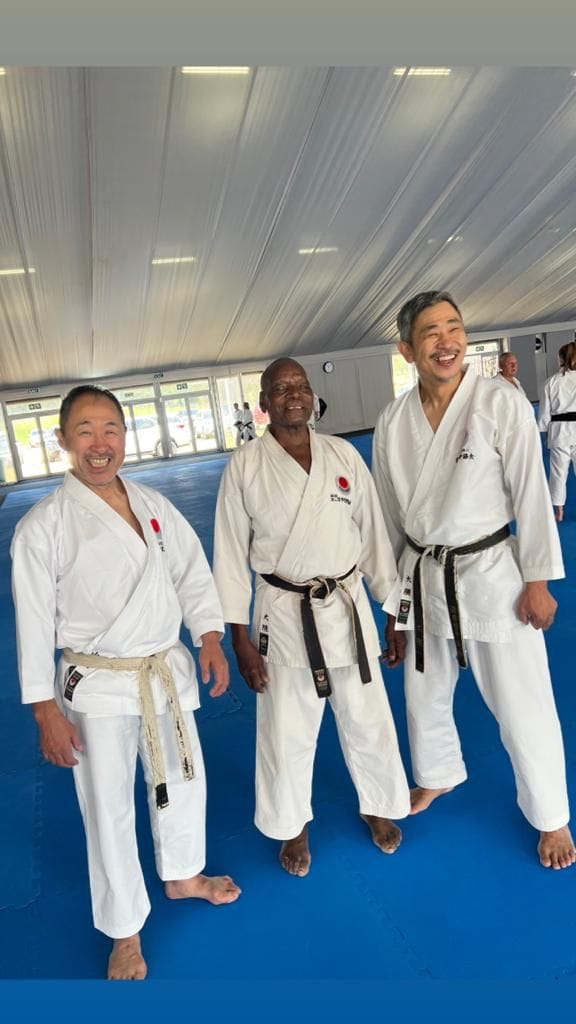
Onward Gangata [email protected]
AT 74, when many people are slowing down and reflecting on retirement, Phibion Mudzenda is still stepping onto the dojo floor, still teaching, still training and still chasing improvement.
More than half a century after he first tied a karate belt around his waist, the Gweru-based martial arts veteran remains one of the most respected figures in Zimbabwean karate.
His movements may be measured these days, but the passion that first drew him to the sport remains undiminished.
To his students and fellow practitioners, he is no longer simply Sensei Mudzenda. He is Shihan Mudzenda, a title reserved for highly experienced masters whose influence stretches far beyond teaching techniques. It is a mark of respect earned through decades of commitment, sacrifice and service to the sport. For Mudzenda, karate stopped being a hobby a long time ago.
It became a way of life.
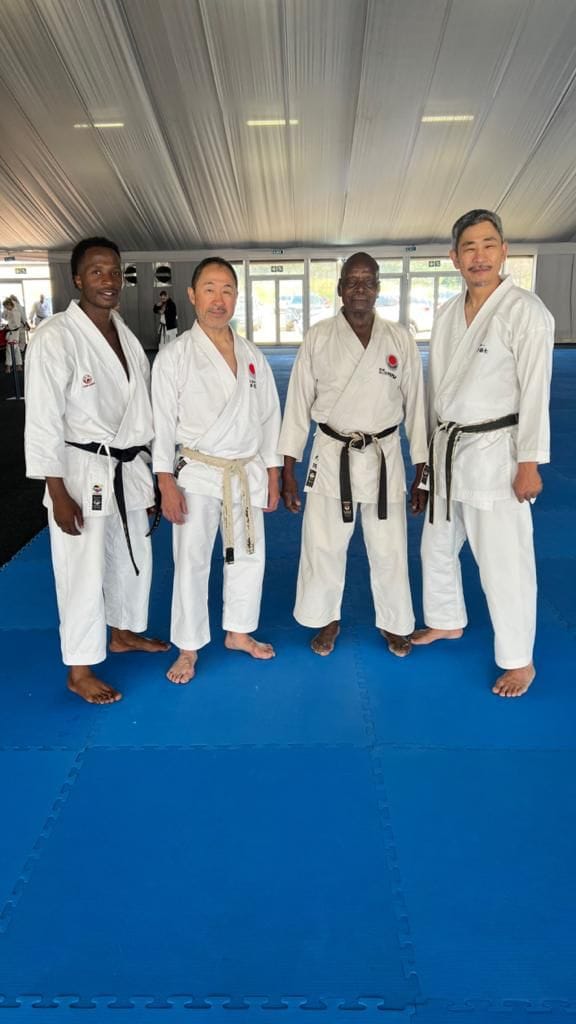
Even now, after 51 years in the sport, he speaks about karate as though it is part of his very being.
The stances, punches, blocks and kicks no longer require conscious thought. They come naturally, forged through countless hours of training and repetition over five decades.
Mudzenda currently serves as chief instructor in the Zimbabwe Japan Karate Association (ZJKA), specialising in the Shotokan style. Holding a 6th Dan black belt, he is the highest-ranked practitioner under the association in Zimbabwe, a position that reflects both his technical ability and enduring contribution to the development of karate in the country.
Yet his journey into martial arts was far from predictable.
Growing up in Ascot, Gweru, Mudzenda was surrounded by young people whose sporting dreams revolved around football and boxing. During the 1970s, karate was still largely viewed as a sport practised by whites and remained on the fringes of mainstream sporting culture.
Like many young boys of his generation, football first captured his imagination.
That changed in 1975.
“I began karate in 1975, I was introduced to the sport by a white man called Brian Batty. I was with my friend Gibson Sangweni and since then I have given my life to karate,” Mudzenda recalls.
The decision was influenced by an incident that left a lasting impression on him.
At the time, he considered himself a promising footballer and regularly followed local matches. One day, while watching a game involving Salisbury Callies, he noticed how supporters turned on one of the team’s veteran players during a poor performance.
The reaction troubled him.
“I was a budding football player but one day something happened at Ascot stadium during a match featuring Salisbury Callies.
“There was a very prominent white player who was reaching the twilight of his career and fans were booing him for having a bad game.
“I said to myself I want to do something that will last forever, something that I could even do in old age. Together with Gibson we met Batty and that’s how the journey began,” he says.
It was a decision that would define the rest of his life.
While others pursued sporting glory through competition, Mudzenda gradually found fulfilment in teaching, mentoring and preserving the traditions of karate. Although he represented the country during the colonial era, his greatest contribution arguably came after independence, when he dedicated himself to developing future generations rather than pursuing personal recognition.
His name may not always feature prominently in discussions about Zimbabwe’s sporting icons, yet within karate circles his influence is immense.
Few individuals have shaped as many careers. Few have left such a deep imprint on the sport.
Among his proudest memories is helping prepare the Zimbabwe karate team that won a bronze medal at the 1995 All Africa Games. The squad featured the late Amos Chihlava and Bob Sangweni, as well as Bearn Mavhiya, and remains one of the country’s most celebrated karate teams.
“I have produced a lot of students but that team was one of my best. They came from my dojo and we trained every day until the games, we prepared thoroughly and my message to them was do not worry much about winning, focus on not losing,” he says with a smile.
For Mavhiya, now based in Australia and himself a holder of a 6th Dan black belt, Mudzenda’s role in that achievement cannot be overstated.
“The team’s success at the 1995 All Africa Games can be largely attributed to the training we received from Sensei Mudzenda. This was a team from his dojo which he trained personally and put through so many rigorous drills to achieve perfection of technique and the much needed synchronisation during team kata performance,” he recalls.
Mavhiya first met Mudzenda in 1985 and remembers more than just a talented instructor. He remembers a mentor who cared deeply about the well-being of his students, especially newcomers finding their feet in a demanding environment.
“Karate training back then was a little bit rough and more traditionally oriented and beginners used to be roughed up during the first few days as an initiation of what to expect. However Shihan Mudzenda was always protective of beginners from senior karatekas who would want to ‘test’ beginners. This particular attribute of him made him popular and trusted as a father figure by beginners, myself included.”
That reputation has followed him throughout his career.
Many of his students speak less about trophies and rankings and more about the guidance, patience and discipline he instilled in them. Among them is promising karateka Chenai Makurumure,
who says Mudzenda places enormous emphasis on getting the basics right.
“He is very particular when it comes to new students, when you are new, he wants to make sure you grasp all the basics, with him there are no shortcuts,” she says.
David Dube, a 4th Dan black belt, senior national team coach and ZJKA technical director, believes Mudzenda’s contribution to Zimbabwean karate is impossible to measure.
“Without him, there wouldn’t be any of us, he is the man who graded the most black belt holders under our Shotokan style in the country,” he says.
Those comments explain why Mudzenda commands such respect.
His legacy is not built solely on medals or titles. It is built on people. Over the years he has produced instructors, coaches, administrators and competitors who continue to strengthen karate both in Zimbabwe and abroad. Through them, his influence stretches far beyond the walls of any dojo.
Remarkably, he is not done yet.
In June next year, Mudzenda will celebrate his 75th birthday. Many would assume that after spending more than five decades in karate he might finally be preparing to step aside.
The reality is very different.
His attention is already focused on earning his 7th Dan grading.
“I am due for grading, in fact I have been to Japan in the past two years trying to upgrade to 7th Dan but I have not been successful. Last year when I returned, I told my students that I thought I was old but my last visit to Japan gave me a different perspective. I met very old people, some ten years older than me still in the game, so I am very much around,” says the seasoned martial artist.
His words reveal a philosophy that has carried him through more than half a century on the mat. In karate, learning never ends. There is always another lesson, another refinement, another level to pursue.
As he looks to the future, Mudzenda’s greatest concern is not his own progress but the future of Zimbabwean karate. He believes young practitioners need stronger foundations before being exposed to the pressure of competition.
“Our biggest challenge is that we are sending our people to competitions too soon, they must be well drilled and prepared. The danger is, once you send someone to a competition and they win, most of them become big headed and feel like they are better than everyone else, which is not the case, let us take time in grooming and preparing well-grounded martial artists,” says the veteran.