Online Reporter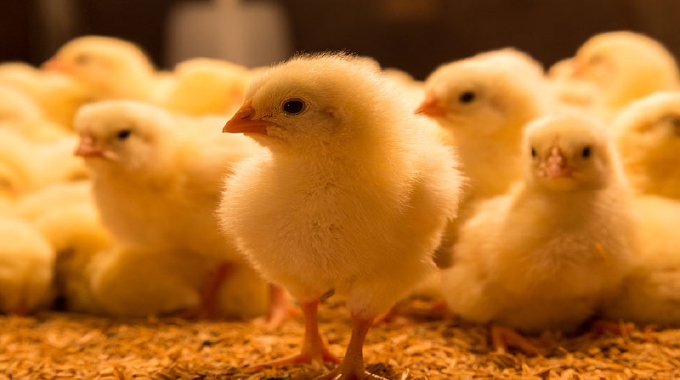
Tapson Ndou [email protected]
Villagers in Ward 5 under the Beitbridge Rural District Council have received a major boost towards household economic empowerment after 5 000 day-old Road Runner chicks were distributed to hundreds of them under the Presidential Empowerment Programme.
The Minister of State for Provincial Affairs and Devolution for Matabeleland South, Albert Nguluvhe, who is also the Beitbridge East legislator, handed over the chicks to the beneficiaries on Saturday last week and said the programme was designed to strengthen rural livelihoods and improve household food security.
“This programme is an important intervention to strengthen rural livelihoods, improve household food security and create opportunities for families to participate in income-generating activities,” said Minister Nguluvhe.
He said the 5 000 chicks were intended to provide rural families with a foundation upon which they could build sustainable poultry enterprises.
“I urge beneficiaries not to view the birds simply as a source of immediate food, but as an investment capable of generating income and multiplying over time,” said Minister Nguluvhe.
“Our expectation is for the initial 5 000 chicks to eventually translate into thousands more, creating economic value for individual households and the wider community.”
The intervention carries significance beyond poultry production, particularly in a district such as Beitbridge where rural development is increasingly linked to the need to strengthen household resilience and create locally driven economic opportunities.
For many rural families, poultry farming requires comparatively modest space and can be undertaken alongside crop production and other livelihood activities, making it a potentially accessible enterprise for women, young people and households seeking to diversify their sources of income.
The programme therefore has the potential to contribute to a wider development chain from household production to local trading, food supply and reinvestment.
Minister Nguluvhe said the empowerment of rural communities remained central to Government’s development agenda.
“The empowerment of rural communities remains central to the Government’s development agenda, with a focus on creating productive households, strengthening rural economies and expanding opportunities for women and young people,” he said.
“Government will continue supporting initiatives aimed at improving household incomes and food and nutrition security, in line with the broader development thrust towards Vision 2030.”
In Ward 5, beneficiaries are being encouraged to ensure that the intervention becomes a long-term community asset rather than a once-off benefit.
Senior Village Head Tshapfutshe, Ms Thandiwe Sibanda, welcomed the initiative and said it had provided villagers with something tangible to start building their livelihoods.
“The arrival of the chicks has generated optimism among community members, particularly because beneficiaries now have an opportunity to venture into poultry production without having to meet the initial cost of purchasing breeding stock,” said Ms Sibanda.
She highlighted the wider community reach of the programme, noting that the benefits extended beyond individual households, with the local school, community choir and village heads also receiving chicks.
“This inclusive approach can encourage different community structures to take part in development and ensure that the poultry project benefits the wider Ward 5 community,” she said.
“The success of the initiative will ultimately depend on how communities manage and expand what they have received.”
Ward 5 Councillor Rabson Mbedzi described the poultry distribution as an opportunity for villagers to take greater responsibility for improving their livelihoods.
“I commend the Government and Minister Nguluvhe for bringing the empowerment programme closer to rural households, because development interventions become more meaningful when communities are given productive resources that can generate benefits beyond the initial distribution,” he said.
“Villagers should focus on building sustainable poultry projects, reinvesting profits and ensuring that the initiative benefits future generations. In addition, they can strengthen their projects by sharing knowledge, supporting one another and exploring local markets for chickens and poultry products.
“Successful household projects can gradually contribute to the broader economic development of Ward 5 by creating small businesses, improving household purchasing power and reducing dependence on external assistance.”
He added that the Ward 5 intervention fits into the broader development trajectory of Beitbridge, where communities are being encouraged to participate actively in local economic development.
The official said development at district level is not only dependent on large infrastructure projects, because small-scale household enterprises such as poultry, gardening and livestock production can collectively make a significant contribution to rural economies when properly supported and sustained.
For Beitbridge, where communities face climatic and economic pressures, strengthening household production can also help improve food and nutrition security.
The poultry project could provide families with access to meat and eggs while creating an opportunity to generate cash through sales, and income generated can potentially be channelled towards school fees, healthcare, food, agricultural inputs and further business investment.