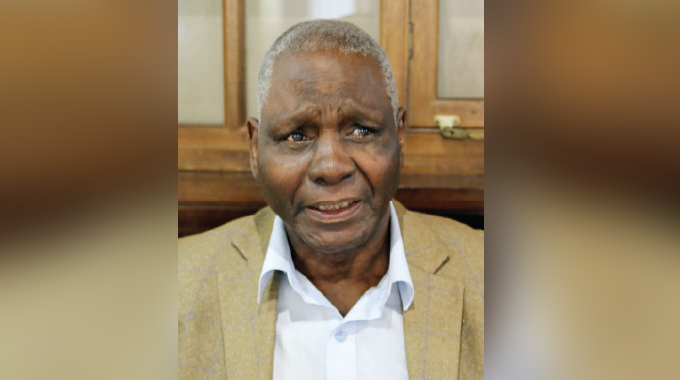
Online Reporter
Stanford Chiwanga
Zimpapers Sports Hub
THERE is something refreshing about the way Benjani Mwaruwari has chosen to begin his Highlanders tenure.
While many coaches prefer to bark instructions from the comfort of the training ground, or retreat behind office doors, Benjani has adopted a decidedly English Premier League-style charm offensive.
It’s one shaped not only by tactics and formations but by human connection, personal accountability, and a genuine investment in his players’ lives.
It is a charm offensive rooted in warmth, discipline, and respect, but also in the hard truths that have defined his journey from the streets of Bulawayo to the bright lights of Manchester.
This past weekend, the former Portsmouth and Manchester City striker made a quiet but purposeful pilgrimage to Makokoba suburb, where he visited young Prince Ndlovu at his family home.
Prince, talented but notorious for developing a sudden injury whenever the unforgiving demands of a Highlanders pre-season looms, was found resting comfortably – too comfortably, some might say.
Yet, as tempting as it is to raise an eyebrow at the conveniently timed ailment, it must be noted that Prince is not the subject of this piece.
For fairness’ sake, and out of respect for a promising young man, we will give him the benefit of the doubt.
What shaped the visit was not the condition of Prince’s ankle or knee but the condition of his ambition.
Benjani sat the youngster down and reminded him what it means to wear the black-and-white of Bosso – what weight, history, and responsibility come with stepping onto Barbourfields turf.
He spoke of hard work, of hunger, of discipline – values that carried him from Bulawayo to Europe, values that Prince would do well to embrace if he hopes to follow even half that path.
To have a coach with English Premier League credentials sitting in your family’s living room, spelling out the meaning of your own jersey, is not a small thing.
Crucially, Benjani’s approach is not random; it is borrowed from the best.
His style mirrors the legendary Sir Alex Ferguson, under whom home visits were not a publicity stunt but a vital management tool.
Sir Alex famously built his empire at Manchester United by understanding his players beyond the pitch – showing up at their homes, talking to their parents, and forging personal bonds that turned ordinary squads into dynasties.
Benjani appears to have taken a page straight out of that book. He has realised that Highlanders’ revival cannot be achieved through tactics alone; it demands a restoration of culture, presence, and the kind of leadership that takes time to sit with a family and say, “Your son can be better, and I will help him get there.”
Still in Makokoba, Benjani moved on to meet another young Bosso player, Mvelo Khoza.
And it was here that the emotional heart of his charm offensive revealed itself.
Benjani didn’t speak like a coach passing through; he spoke like a man invested in restoring Highlanders’ identity.
He told Khoza that Highlanders needs him just as much as he needs Highlanders – a message that cuts deeper than any tactical instruction.
The moment grew heavier when Khoza’s mother broke down in tears.
For her, Benjani’s visit was historic.
She confessed, in her emotion, that he was the first Highlanders coach ever to set foot in her home.
That, on its own, is a damning indictment of some of Benjani’s predecessors – coaches who demanded loyalty without ever bothering to understand the lives, homes, or mothers behind the players. In one visit, Benjani repaired what others didn’t even attempt to fix: the human link between club and family.
From Khoza, the Makokoba road led Benjani to Darlington Mukuli.
He went first to Mukuli’s home, only to find him away. Many would have ticked the box and moved on.
Benjani did the opposite.
He pressed on, tracked the player across the township to Nguboyenja, and finally met him there.
It was not a grandstand moment, just a coach determined to connect – with purpose.