admin
admin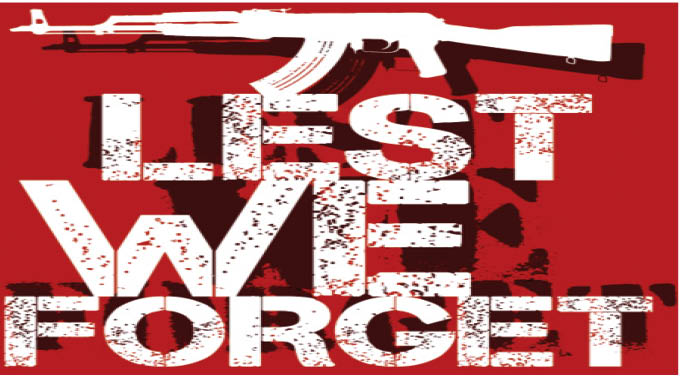
Stephen Mpofu
With no prompt intervention from some divine force above to end lackadaisical and in some cases distorted manner in which Zimbabweans read the biography of the liberation that swells their hearts, our people risk losing a whole generation serving as a guiding star into the future until the return of Jesus Christ.
That star is none other than the liberation of this country in which many gallant sons and daughters of the soil sacrificed their precious lives to free the motherland from those without knees who used their colour as a york to try to keep our people under the foreigner’s submission up until the guerillas with their blazing AK-47’s finally brought Uhuru to a Rhodesia renamed Zimbabwe.
Unfortunately, however, Zimbabwe stands to lose a whole generation in whose hearts and minds is reposed the history of the liberation of this country that should serve as a mirror reflecting the indefatigable intrepidity that powered our people to freedom and should continue to serve as a mirror of how the quest for freedom as bestowed on humanity by God should inspire generations upon generations to come to never surrender to oppression of any form and by any human beings in whom the fear of God should remain dominant in order for our people to shun carnality as God’s enemy.
It is really a tragic irony that a people taunting itself for possessing a very, very high literacy rating on the African continent should lamentably fail to document authentically how it travelled triumphantly and through the vicissitudes of time to be what we really are today with historians among the highest educated people in the country.
Incidentally, the First Republic was home to live talk about immortalising as a guide for the future generations the things that went into making the armed revolution a success the way it was.
There was, for instance, talk at the very top of Zimbabwe’s officialdom about historians being assembled to put together the history of the armed struggle to serve as a mirror in which future generations would look so as not to waver in their sustenance of the revolution and equality it guaranteed human beings as God’s creation.
But come to the Second Republic and one will no doubt be aware of no progress in the writing of liberation history but rather in lip-fogging, as it were, on this very important topic.
An impeccable source in the ruling Zanu-PF, and one who also actively participated in the liberation struggle, confirmed to this communicologist two days ago that the way forward in putting together an authentic history of the armed liberation of this country remained clouded in uncertainties. To begin with, some authentic documents on the armed revolution “were burned” or somehow destroyed by the enemy, while, currently, some Zimbabweans did not regard as true the writings of others about the armed revolution, said the source.
The contradictions delayed work being done in the writing of Zimbabwe’s liberation history which the source said was of critical importance as a guide to future generations.
However he said “something is being done” to produce a credible history of the armed revolution that gave birth on April 18, 1980, to a sweet little baby Uhuru which would anyway still have come by Caesarean section if Geneva, and later, Lancaster House had failed to produce a breakthrough in the stalemate question of independence and freedom for the black people of this country.
Add to the source’s assurances the altruism “better late than never,” because of a dubious historical account hurriedly crafted by pretentious liberation struggle experts — the were-also-theres and probably agents of imperialism infiltrated to subvert the revolution does not wash for Zimbabwe as for any other country for that matter.
Many Zimbabweans talked to by this writer said, for instance, that women who played an important role providing food to freedom fighters and also communicating vital information, among other services, were not yet accorded the importance that they deserve for their services during the struggle.
Not only that. The bush or countryside – what white settlers pejoratively called the “periphery”/ the “sticks” — which was the womb that bore the armed revolution to its completion has generally not nurtured the liberation struggle.
For instance, the villagers no doubt expect Government’s full intervention with drought power and seed for adequate food production to take place as many of the rural folk have lost cattle to drought as draught power and have little to eat with little or no seed to plant this cropping season.
If the villagers do not receive adequate Government support there might be a repeat of famine next year with urban areas that sponge on the countryside for food having to require imported food for their survival as well as for the majority of Zimbabweans out there in the countryside.
The authorities might also wish to make impassioned pleas to young Zimbabweans and to other, able-bodied citizens to return home from neighbouring countries and help in the economic recovery of the motherland.
At the same time, the progressive world should put more pressure on the Western countries that have imposed a crippling economic embargo on this country for no other crime than introducing a land reform programme to help our people manage their lives adequately after independence.
Meanwhile, here at home, the blitz against corruption by those who no doubt must have infiltrated the liberation struggle as a way to fatten themselves and are now sabotaging our freedom, should be intensified with the criminals rusticated in the shade to reap their deserts.
It is really a tragic irony that a people taunting itself for possessing a very, very high literacy rating on the African continent should lamentably fail to document authentically how it travelled triumphantly and through the vicissitudes of time to be what we really are today with historians among the highest educated people in the country



 Online Reporter