Online Reporter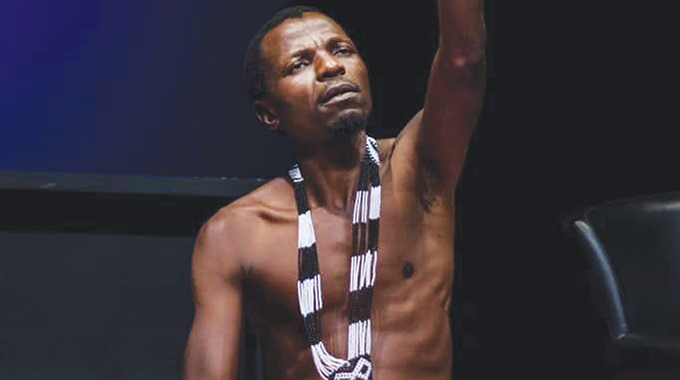
Bruce Ndlovu, Sunday Life Reporter
ZENZO Nyathi remembers a time he was pulled aside by a fellow congregant at his local church.
Nyathi, a household name famous for his role in blockbuster dramas like “Amakorokoza,” was used to attracting attention, even in the house of the Lord.
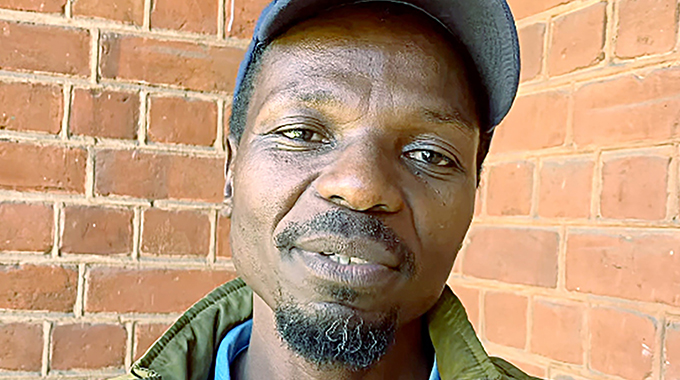
However, this congregant did not approach him to ask if the character they knew as Snake was as venomous in real life nor to enquire if the late Cont Mhlanga was truly the hard-as-nails creative genius many portrayed him to be.
Instead, the believer wanted to give Nyathi a piece of his mind. As a devout worshipper, the congregant felt that
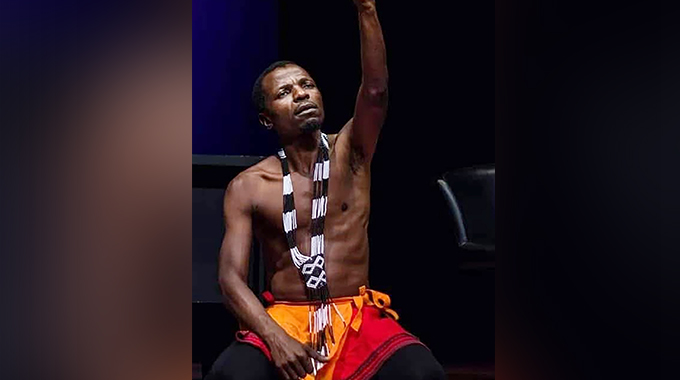
Nyathi and other performers were “offside” for wearing loincloths, leg rattles and other traditional regalia during their stage performances.
For Nyathi, the accusation was surprising. He had never felt any conflict between African tradition and Christian worship. “I remember one time when I used to attend another church — the name of which I won’t mention — someone said, ‘We often see you guys wearing loincloths and traditional regalia while dancing and we do not think it is proper.’ I would say to them, ‘I am not religious, I am spiritual,’” Nyathi told Sunday Life in an interview.
That response was not born of rebellion, but was the culmination of a life spent navigating two worlds that many assume cannot coexist. For Nyathi, faith was not something he discovered later in life, it was passed down through generations alongside a deep appreciation for his family’s history and cultural identity.
“I would say that worship and faith are something that I grew up with at home. Unfortunately, I never got to see my paternal grandfather, Macebo. From what I gather, he worked as a policeman for King Mzilikazi. He is the one who brought the Word of the Lord to the Nyathi family.
“He taught that it was important to believe in the Word and in the Lord because He is the Creator of everything that we see and have. But he also insisted that while it was important to believe in God, it was equally important for us to know who we are as the children of Macebo’s clan,” he narrated.
Those stories, Nyathi explained, have survived not through books, but through the family’s oral tradition.
“We are told that he brought the Bible to our family. Unfortunately, as black people, we did not document these things in writing. He said this Bible would guide us and mould us. Our fathers, even though not all of them were regular Sunday churchgoers, encouraged us to go to church, understand the Bible and understand where Christianity is rooted.”
The Nyathi family story is remarkable because, for them, Christianity never demanded the abandonment of tradition.
Rituals that their elders believed had paved the way for the family were jealously guarded and passed from one generation to the next. “Our fathers continued with rituals that had been done since time immemorial. They would go behind the house and speak to the ancestors. They were not sangomas, but there were things they did that, even today, we continue to do as a family. That is our culture, but we also followed the teachings of our grandfather who brought the Bible to our family.”This upbringing led Nyathi to pursue a degree in theology — not to become a preacher, but to better understand the faith that had shaped his family.
n Full story on www,sundaynews.co,zw
“That pushed me to want a deeper understanding of what the Bible and Christianity are. I think that is why I pursued theology. Even today, I continue to study the Word, every time you study it, new revelations emerge and it remains relevant to our everyday lives,” he said.
Despite his theological training, Nyathi laughs off any suggestion that he might trade the stage for the pulpit.
While he is comfortable performing before an expectant crowd, he does not feel called to lead praise and worship on a Sunday morning.
“I do not see myself as a pastor. Yes, I can preach to someone or share the Word and I do not have a problem with that. But to stand on the pulpit and do the ‘fire, fire’ style — that is not me.”
Instead, he serves quietly as an elder at ZAOGA Forward in Faith.
“I still go to church and praise the Lord. I am an ardent member of ZAOGA Forward in Faith and I am an elder. I believe every person should have a place where they worship.
“We should also separate knowledge and faith. I believe a person should know who they are and where they come from. Sometimes we tend to think our history and background are demonic and that becomes a problem,” notes Nyathi.
This philosophy informs his artistic career, where traditional dance, indigenous costumes and African storytelling have never felt incompatible with Christian belief.
Long before he stepped onto the stage, he learnt at home that the Bible and family tradition could occupy the same space.
Whether he is in church attire on Sunday or traditional regalia under the bright lights of a theatre, he remains convinced that neither diminishes the other.
“There has never been conflict for me as an artiste. The last time I spoke to Sunday Life, I said the Lord was a creative and we as artistes are simply smaller creatives because we are made in His image.
“I do not see any conflict between our art, which is sometimes traditional and worshipping the Lord. These things coexist for me. Maybe someone else who looks at our art from another angle can speak of conflict, but I do not see it that way,” he said.
For an actor who has spent decades bringing Zimbabwean stories to life, Nyathi believes authenticity begins with refusing to abandon either faith or heritage.
“Some people see things differently. I am not someone who gets swept away by pressure that comes with faith and then forgets who he is. I have never had that pressure because I know who I am. I know my people and where I come from and that we were all made by the same Lord that I worship.”