Herald Reporter
As Zimbabwe marks the beginning of the 16 Days of Activism Against Gender-Based Violence, Sprout Women Empowerment Trust is taking the conversation back to the roots of family and community relationships, challenging harmful norms and encouraging practical action towards safer homes.
Gender-based violence (GBV) does not begin with physical violence alone. It can be rooted in everyday attitudes, expectations, inequalities and unresolved tensions that shape how people relate to one another in their homes and communities. Addressing it therefore requires more than responding when violence occurs. It calls for honest conversations, a willingness to challenge harmful beliefs and practical efforts to build relationships based on mutual respect, dignity and shared responsibility.
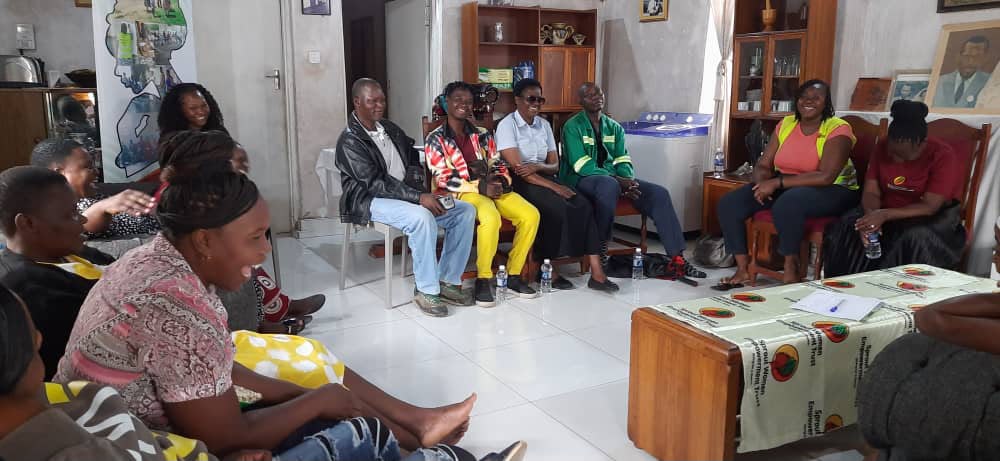
As Zimbabwe marks the beginning of the 16 Days of Activism Against Gender-Based Violence, Sprout Women Empowerment Trust (SWET) is using its Sprout Skills and Rooted Conversations Cafés to amplify conversations it has been facilitating since the beginning of the year through its The Household We Want initiative.
The initiative recognises that women do not live in isolation. If meaningful progress is to be made in addressing violence within households and communities, men and young boys must also be part of the conversation. SWET has therefore created spaces for women and men to reflect together on relationships, household responsibilities, communication, respect and the values that should guide how people live with one another.
The approach is grounded in a simple but important understanding: change begins with the individual, with a willingness to listen, question long-held assumptions and consider different ways of relating to others. Rather than waiting until disagreements escalate into physical violence and life-threatening acts, families and communities need opportunities to address difficult issues early.
One of the key lessons from the engagement was that violence within households cannot always be understood by looking at relationships in isolation. Some of the pressures experienced by families originate outside the home, including economic hardship, inadequate public services and competition over scarce resources. Others are rooted within the household, in unequal power relations, harmful social expectations and the way family members communicate and resolve disagreements.
To explore these connections, SWET used a participatory methodology that included a short video on water access as a conversation starter. Although the video focused on water, it opened up a broader discussion about the frustrations communities experience when essential services are unavailable.
Participants reflected on how something as basic as access to water, which should be guaranteed through effective public service delivery, has become a daily challenge for many households. The additional burden of sourcing water, managing household needs and coping with economic pressures can create tensions that spill into family relationships. Violence also occurs in public spaces, including at water points and in the course of accessing public transport.
The conversation then moved to internal household dynamics. Participants examined expectations placed on women, including the assumption that a wife must carry the burden of unpaid care work, fulfil her wifely duties without complaint and remain submissive even when experiencing abuse. Religious interpretations that emphasise a wife’s submission without equal attention to mutual respect and accountability were also questioned.
An important question emerged: if a wife is regarded as a helper, what does that mean in practice, and where do her own rights, aspirations and wellbeing fit within the relationship?
Economic pressures also featured prominently. With single-income households becoming increasingly difficult to sustain, many women are contributing financially while continuing to carry most household responsibilities. Yet earning an income does not automatically protect women from violence. This reinforces the need to address the attitudes and power relations that determine how women are treated, regardless of their economic contribution.
SWET also used short plays as conversation starters, creating opportunities to unpack sensitive issues that people may otherwise find difficult to discuss openly. Through these participatory approaches, participants were able to reflect on how disagreements, unmet expectations and poor communication can escalate when there are no constructive ways of addressing them.
Behind these discussions are women whose experiences demonstrate why addressing GBV cannot be reduced to awareness campaigns alone. During the engagement, three cases requiring further referral and support were identified among participants experiencing abuse in their marriages.
One woman’s experience brought into focus the difficult position of women who remain in abusive relationships because they fear what leaving might mean for their children. For her, the decision is not simply about staying or leaving; it is also about the uncertainty of raising children, their wellbeing and the consequences of breaking up the family.
| “I am afraid to leave because of my children. I worry about what will happen to them if I walk away from this marriage. But staying means continuing to live with the abuse. Sometimes I feel trapped because I do not know what will happen to my children or where I would go.”
— A participant experiencing abuse in her marriage (identity withheld for her protection). |
Her experience reflects why communities must create safe spaces for women to speak, access support and explore their options without judgement. No woman should have to endure abuse in the name of keeping a family together. The three cases identified during the engagement also highlighted the importance of connecting community conversations to appropriate psychosocial, legal, health and protection services.
The urgency of this work is reflected in national statistics. Zimbabwe’s 2023–24 Demographic and Health Survey found that 27 per cent of women aged 15–49 had experienced physical violence since the age of 15, while 13 per cent had experienced physical violence in the preceding 12 months. Nine per cent had experienced sexual violence during their lifetime. Only 44 per cent of women who had experienced physical or sexual violence had sought help.
More recently, the National Prosecuting Authority recorded 7,061 sexual and gender-based violence cases in the first quarter of 2026, according to figures reported by the Zimbabwe Gender Commission. These reported cases illustrate the scale of the challenge, although they do not capture all incidents of violence, many of which remain unreported.
For SWET, the response must be holistic. Alongside engaging men and young boys, strengthening communication between couples and challenging harmful gender norms, communities need opportunities to work together, develop practical skills and support one another economically. Keeping people productively engaged and creating opportunities for shared household and community activities can contribute to stronger relationships and more supportive communities.
Women’s economic empowerment must also be accompanied by respect for women’s autonomy and equal participation in household decisions.
The “Household” We Want initiative is ultimately about returning to some fundamental questions: How do we relate to one another? How do we speak to each other respectfully, recognise one another’s rights and fulfil our responsibilities towards others? How do we resolve conflict without resorting to intimidation, violence or abuse, whether within the privacy of our homes or in public spaces?
Through its Sprout Skills and Rooted Conversations Cafés, SWET recognises that meaningful change requires more than awareness. It requires communities to examine the beliefs and practices they have normalised, create opportunities for difficult conversations and translate reflection into practical action.
As the 16 Days of Activism begin, SWET calls for communities to make these conversations part of everyday life rather than waiting for a crisis. The organisation will continue creating spaces where individuals, couples and communities can reflect, learn and identify practical actions towards safer relationships.
“Building the household we want begins with how we treat one another today. It begins with listening, respect, shared responsibility and the courage to address difficult issues before they become violence” Caroline MutimbanyokaDirector Sprout Women Empowerment Trust