Online Reporter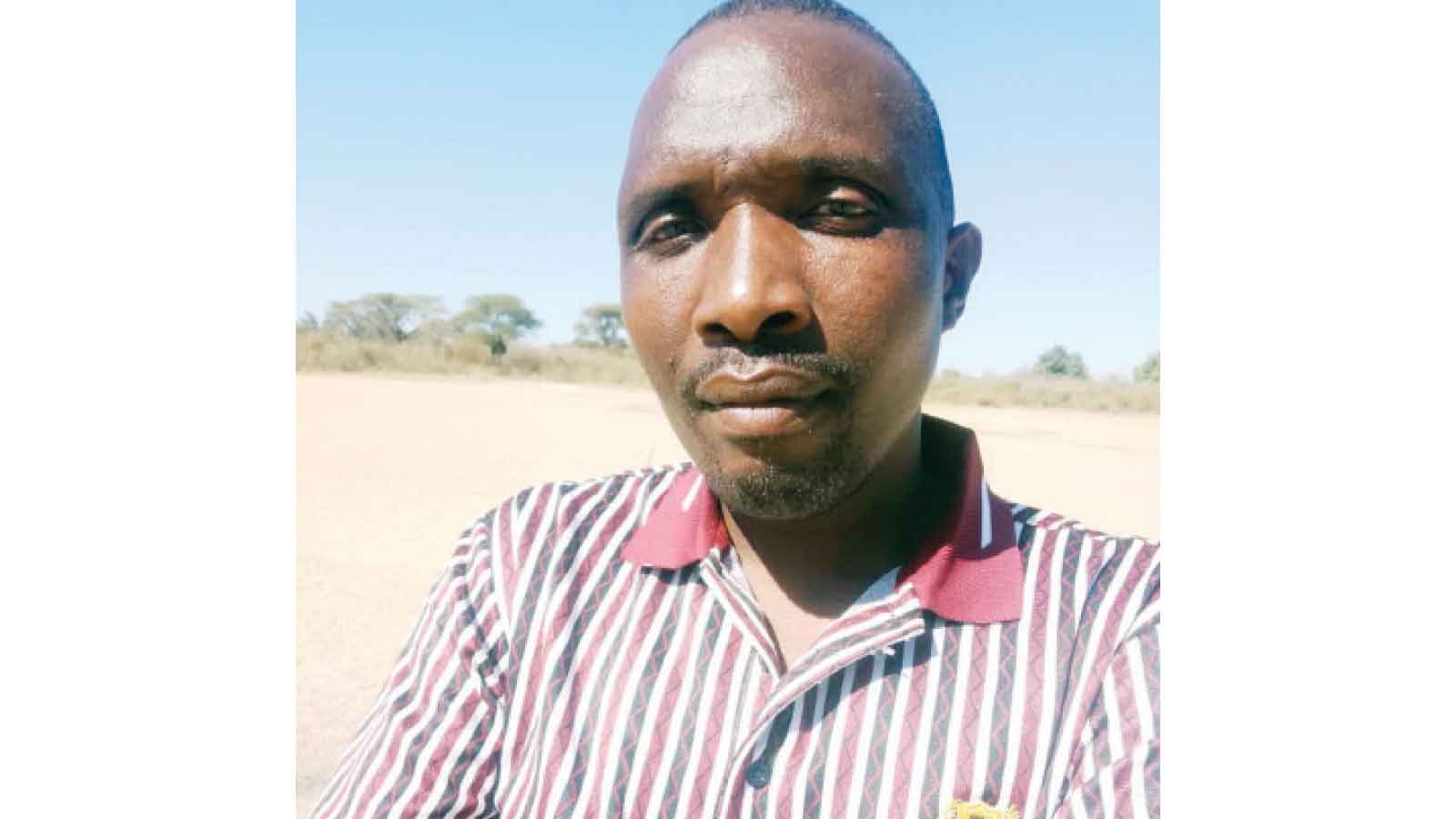
Tendai Chara-Zimpapers Sports Hub
ON most mornings in Sanyati, the air carries the steady hum of irrigation pumps and the metallic grind of stamp mills crushing ore.
Tractors drag lines across fields that once made the district a cotton powerhouse.
Artisanal miners slip into shallow shafts before sunrise and return at dusk, faces grey with dust and expectation.
This is a place built on extraction and endurance.
Few outside Mashonaland West speak of it in sporting terms.
That may be about to change.
In recent months, another sound has begun to combine with that of diesel engines and grinding stones.
It is the thud of a football on hard earth and the clang of hammers fixing metal goalposts.
There is also the chatter of men and women arguing over measurements for dressing rooms and toilets at a ground that, until recently, hosted little more than social matches and school tournaments.
Sanyati wants to be known for something else. For decades, its identity has rested on cotton bales and gold claims. Now, a section of the community is attempting something far less predictable.
They want competitive football rooted at home. They want Division One success by 2027. And, if ambition survives the grind, they want Premier League football played on their doorstep. The spark has come from 45-year-old miner and farmer Patrick Marere, who recently acquired a Northern Region Soccer League franchise and relocated it to Sanyati.
For the first time, the district will field a team in one of Zimbabwe’s second-tier leagues.
On paper, it is a straightforward sporting transaction. On the ground, it feels like a statement about self-worth.
For many residents, supporting Marere Football Club is not just about 90 minutes on a Saturday or Sunday afternoon. It is about changing how the country sees Sanyati.
It is about telling the rest of Zimbabwe that this district is more than crops and small-scale mining.
At the ARDA Sanyati grounds, volunteers move slowly, but deliberately. Some carry bricks. Others dig post holes for perimeter fencing.
A group measures space for changing rooms. This is unpaid work. The motivation is not. Antony Moyo, who runs a construction company in the area, speaks less like a fan and more like a man who sees a long-term project.
“I will attend all the home matches,” he says, wiping cement dust from his hands. “But before that, we need to make sure our ground meets Division One standards. As a builder, I will help construct the toilets and changing rooms for free.”
Until those upgrades are complete, the club will use Rimuka Stadium in Kadoma as its temporary home. The arrangement highlights both ambition and constraint. Sanyati has the will. It is still building the infrastructure.
Rasai Tarika, a lifelong follower of local football, is clear that noise alone will not win promotion.
“Singing and dancing is not enough,” he says.
“We must be practical and support the team properly if we want the championship.”
Cash donations, building materials and labour have begun to trickle in from businesspeople and ordinary residents. It is grassroots fundraising, but it carries the weight of ownership. People speak of “our team” with a conviction that feels new.
Marere himself appears slightly taken aback by how quickly the project has been embraced.
“Practically, this team does not belong to me alone anymore,” he says. “It has become a community team.”
He brushes aside talk of profit.
“There is no real money in local football,” he says. “I am driven by passion and by the desire to bring top-flight football home.”
Still, this is not a casual venture. Alongside the Division One side, Marere owns a Division Two outfit and is establishing an academy.
The blueprint is clear: create depth, develop local talent, build a pathway that does not depend entirely on buying ready-made players from elsewhere.
Inside the camp, the message is blunt.
Claudious “Samusha” Mapako, the team manager, says the target is not survival. It is the title.
“Our sponsor wants the Northern Region championship,” Mapako says.
“That is why we are recruiting experienced players from different clubs.”
The recruitment drive has attracted players from Hardrock, Agama, Kwekwe United and Banket United. Two Zimbabweans who had been playing in Botswana and Namibia have returned.
Former Kwekwe United coach Benoni Mashayi Ngena has been handed the responsibility of guiding the side through what is often a bruising campaign.
Division One football in Zimbabwe is not for the faint-hearted. Travel costs eat into budgets. Player allowances must be met on time. Facilities are inspected and sometimes rejected. More than one ambitious rural projects have collapsed under financial strain.
That reality hangs over Sanyati’s dream.
Yet the stakes go beyond league tables and promotion battles. Rural districts across the country continue to wrestle with youth unemployment and limited recreational spaces.
Talented teenagers often leave home early, chasing opportunities in cities that do not always welcome them.
A stable football structure can anchor young players locally while offering a credible route to professional contracts.
If Sanyati succeeds, it could present a working model: a farming district using football not just for entertainment, but as an economic and social anchor.
Match days would mean business for vendors. Transport operators would benefit. Small shops would see increased trade. More importantly, young boys and girls would see a pathway that begins at home.
If it collapses, it will join a long list of well-intentioned experiments that burned bright and faded quickly.
Marere insists the foundation is solid.
“We have our own buses and club facilities,” he says. “We have strong community support. We are not here to fight relegation. We want to be the first team to bring Premier League football to Sanyati.”
In a district more accustomed to discussing rainfall patterns and gold yields, talk of promotion feels almost radical. Perhaps that is the deeper story.
For years, Sanyati has been defined by what it pulls from the soil. Cotton. Maize. Gold.
Now, it is trying to cultivate something less visible but equally valuable. Identity. Pride. Belief that a rural growth point can host elite competition and not just supply labour to it.
The irrigation pumps will continue to hum. The stamp mills will keep grinding. Farming and mining will remain the backbone of the local economy.
But on certain weekends, if this gamble holds, those sounds will be joined by the roar of a crowd and the presence of a community seeing itself in a different light.
Sanyati is not abandoning its past. It is expanding its story. And in a place long associated with survival, that shift in narrative may matter as much as any trophy.