Online Reporter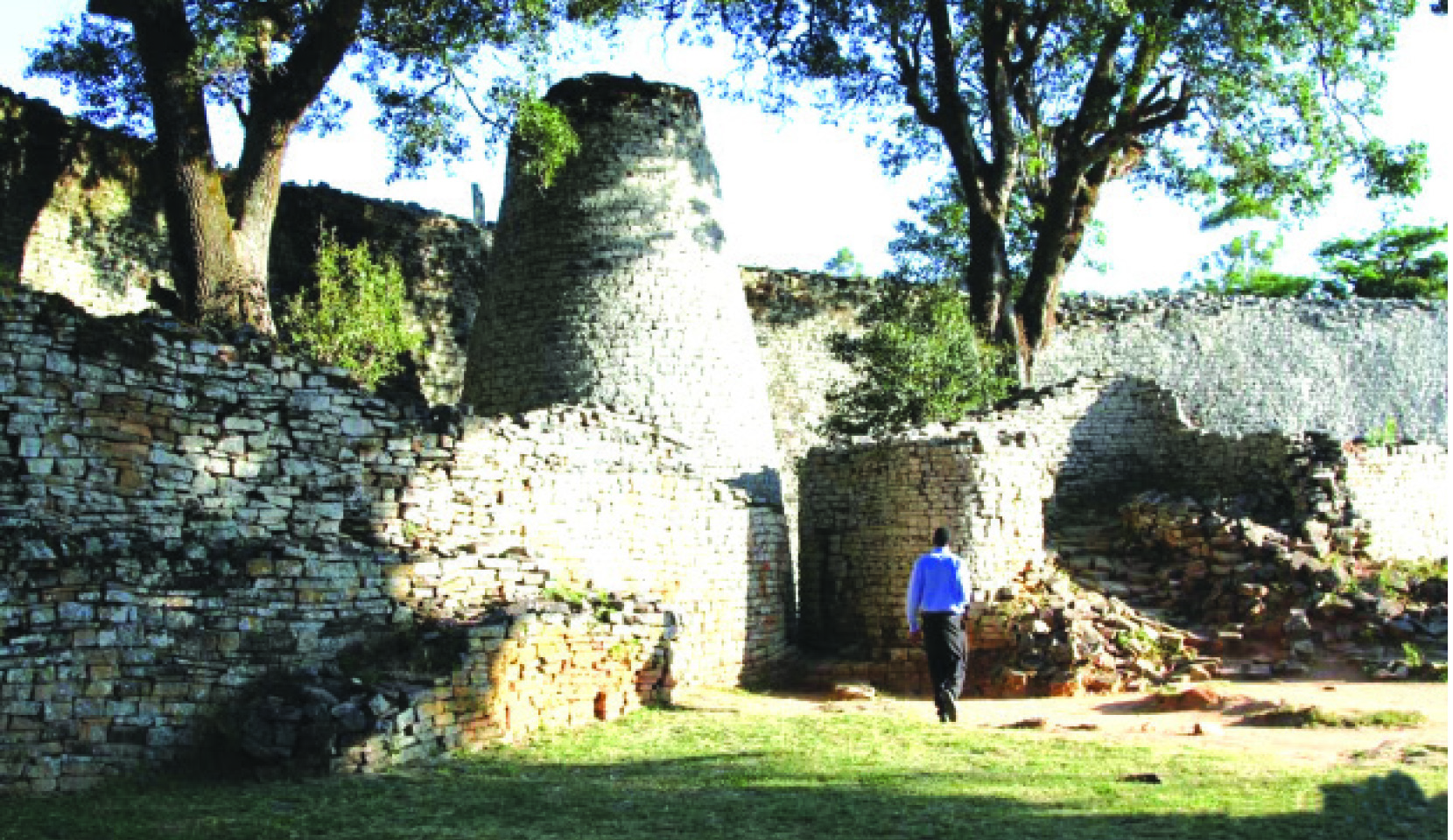
Ranga Mataire
Group Political Editor
Observed annually on May 25, Africa Day is a vibrant celebration of the continent’s diverse cultures, history and achievements.
It is a day that holds tremendous importance, not only for Africans, but for people worldwide who appreciate the valuable contributions of the continent to the global community.
Cultural festivities
All over the world, past Africa Day celebrations have always been accompanied by cultural activities- music, dance, poetry, drama and colourful dresses reflecting the cultural milieu of a continent famed for its spirituality and hospitality. Diverse African cultures are a rich heritage of Africa bound by shared history, languages and beautiful unique landscapes that have sustained humans and wildlife from time immemorial.
It is this rich history that has shaped Africa’s identity, languages and provided inspirational reference points for people who have strived to free themselves from the twin evil systems of slavery and colonialism.
Beyond the cultural festivities
But beyond the cultural festivities, the real essence of Africa Day as envisaged by the founding fathers of the Organisation of African Unity (now AU) is deeper than just dances, music, drama and colourful attire. It must remain in the psyche of the present and future generations that Africa Day was established to commemorate the dislodgement of colonialism, forge political and economic unity of all African countries and to continue guarding against neo-colonial forces seeking to undermine Africa’s hard won independence.
Present and future generations must be aware that Africa Day is not about just music and dances, but a time for deep reflection of the continent’s liberation trajectory; a time to think about devising ways of dealing with contemporary challenges affecting the continent and a time for introspecting about the inspirational reference points that must guide all to navigate through the vagaries of the contemporary world and the future.
Inspirational Reference Points
In a fast-paced world where the Global South is always at the mercy of cultural imperialism from the Global North due to differences in economies of scale, it is our rich inspirational heritage that must imbue us with the confidence to forge ahead.
The significant disparities in economies of scale between the Global North and South contribute to cultural imperialism. This is so because the larger, more established economies in the North are able to exert greater influence on global markets and media, often leading to dominance of their cultural products.
In light of the pervasive nature of cultural imperialism in shaping fragile impressionable minds, people of African descent need to continue highlighting the fact that it is racist and factually incorrect that Africa had no history, language or culture before the white man’s arrival.
We need to provide tangible historical inspirational reference points that instil a sense of pride in black people long battered by colonial myths of inferiority.
Inspirational historical reference points are those moments in history when Africa was the leader in various aspects of human endeavour.
These are periods in history when people from other continents would come to Africa (Egypt & Senegal) to learn about science, the Arts and astronomy.
These inspirational reference points are crucial in imprinting the fact that far from being a Dark Continent of Joseph Conrad’s depiction in “The Heart of Darkness”, Africa was at some stage the leading light of the world. Inspirational African historical reference points include the Munhumutapa Empire whose origins are in Zimbabwe, but straddled across a large territory in southern Africa.
Another inspirational reference point is the Great Zimbabwe monument, which represents unmatched advanced social, political and economic organisation at the time in terms of architectural ingenuity. Africans need to debunk the myth that Egyptian civilisation, which inspired Greek civilisation (the mother of European civilisation) was an Arabic or Asiatic civilisation.
We need to tell present and future generations that the tombs of Pharaohs including that of Tutankhamen are still intact at the pyramids including their mummified bodies. The mummified bodies are that of black people not of Europeans or Arabic. If the bodies of the past Egyptian Kings are blacks, it logically follows that the inhabitants of that civilisation were black people not Arabic or any other race.
Additionally, we must talk about the contributions of Black Africans in science, technology, education, and arts including the Ethiopian Obelisk and the richest man who ever lived – Mansa Musa of Ancient Mali with his gold wealth. We need to tell our children that several Greek philosophers studied in or visited Egypt, seeking knowledge specifically Plato, Pythagoras and Thales. These are now fuzzy or phantasmagorical theories. It is something based on actual historical records.
We need to impart these historical inspirational reference points to the present and future generations in order to re-affirm, re-assert, reconfigure, reframe our actual place as black people in the current contemporary world.
These historical reference points are crucial in debunking the notion that colonialism brought civilisation. Yes, our development was varied, but we were surely on an ascend trajectory and could have developed in our own way and even invented some of the best usable technologies had colonialism not come.
On Africa Day, Africans need to make as much noise about the deep love they carry within for the men and women who are the bright lights of history in a world full of racism and European domination.
Africans need to valorise the journeys travelled and the love that grows mightily when we take a penetrating view at the African/black experience.
We need to sing Ossie Davies tune that says; “I find in being Black, a thing of beauty, a joy, a strength, a secret cup of gladness.” We need to continue telling our children that African people never stole the land of others and that Africa is our land, not through murder, theft or violence.
We must talk about Ivan Van Sertima, that Guyanese man whose pioneering work in “Blacks in Science: Ancient and Modern” debunked many falsehoods peddled about blacks not having contributed anything to world civilisation.
Instead of spending useless time on Tiktok, we need to encourage our children to read books like a “Journal of African Civilisations or “They Came Before Columbus: The African Presence in Ancient America” authored by Van Sertima.
We need to tell our kids that if colonialism had not disrupted our progression we could have been the first continent to invent modern communication ways. We need to tell them that one of the marvels of Africa as documented by some European travelogues was the mystery which African peoples communicated information almost instantly over vast distances.
Europeans often told stories of arriving in a place after many days’ journey to find that the people there already knew the details of an event – a battle or a birth, a death or disaster – which could have occurred in a far part of the country.
This was before the telegraphic morse-code or the radio. African people had used finely tuned instruments to relay messages over these distances, sometimes with drum-scripts so nifty they came close to a rhythmic mimicking of the human voice.
The reason for highlighting these historical reference points is to educate the present and future generations that they too can be pioneers in one field or another. It is meant to provide inspirational springboards by realising if their forefathers were pioneers in different fields of endeavour, they too, could lead the way in the contemporary world.
Highlighting historical inspirational reference points resonates well with this year’s theme; “Revisiting our History, Shaping Our Future.”
This theme emphasises the importance of understanding our past as the compass for future development. It encourages reflection on Africa’s historical journey and is meant to address the root causes of issues like slavery, colonialism, neo-colonialism and racial justice.
More than just dance and music, Africa Day is a day for imagining an inspired future inspired by the fact that since Africa is home or birth place of the first human being (remains at Olduvai George prove this), it logically follows that Africa is the home of civilisation as we know it today.
Olduvai Gorge is considered the “Cradle of Mankind” because it holds the oldest known remains of human ancestors, including Homo habilis and Paranthopus boisei. The gorge’s layers provide a timeline of hominin evolution from about 2 million years ago to 15 000 years ago.