Chronicle Editor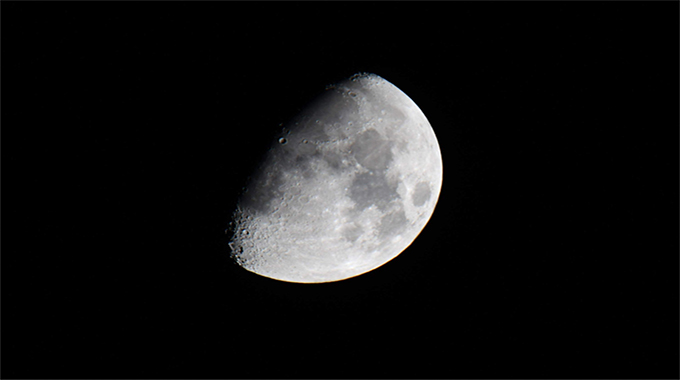
Phathisa Nyathi
THE moon is a celestial body closest to us. Its influence on us, as we might expect, is powerful and potent. We saw in the last instalment that the moon, known as inyanga in IsiNdebele, has healing qualities and traits that it shares in common with an African traditional doctor.
However, the last article did not exhaust moon-associated healing qualities and instances. We are not even likely to exhaust them in today’s episode. Different communities embrace different aspects of lunar healing albeit with shared cosmologies. This is to be expected as the Bantu share common historical origins. They share common cultural fundamentals and essence.
Senator Watson Khupe provided further insights on the perceptions of the moon, in particular from a Kalanga perspective. He starts by postulating that ‘‘Kholiwe’’ is an expression of faith, in the same vein as we refer to amakholwa, the believers or followers of Christ. This is possible as those who make the chant, “Kholiwe, hamba lomkhuhlane,” say so out of conviction that the moon has the power or potency to deal effectively with a condition that is tantamount to disease or ill-health. The moon, inyanga, has the capacity to heal or do away with the condition of sickness. If the people did not believe or have faith in the healing powers of the moon, they were not going to make the chant every month at the appearance of a new moon.
The reference to a new moon, “ukuthwasa kwenyanga” suggests there was some old moon. That old moon progressively got sick, waning. From the time of appearance of the new moon it waxes to a maximum when there is a full moon. In IsiNdebele they say, “Iyakhula ize igcwale.” Full moon translates to the best state of life and health. From the pinnacle of good health and life the moon wanes till it dies.
“Inyanga ikhula igcwale, ize icine isifa, ibisithwasa njalo.” This is an important lunar trait of birth, growth, degeneration and death. This is the lunar idea of regeneration.
When the moon does not appear on the sky, that day is referred to as “elimnyama,” the black or dark day. This is the day that was associated with sickness and work in the crop fields was suspended. In the absence of the moon, inyanga, the herbalist or traditional doctor, inyanga, did not perform his healing functions. This points to the fact that the lunar body provides its power and potency to the cultural herbalist who derives healing powers from the moon. African languages did not give a common name to both for no apparent reason.
Light seems to be the opposite of darkness. The colour is associated with sickness or the absence of good luck. “Umuntu ulomnyama.”
“Ubogeza isinyama/umnyama.” One is being encouraged to cleanse his/ her bad luck. When the moon does not appear in the sky, the night is dark. We could say the day is an unlucky one which is associated with failure or lack of success. You may remember that Imfazo II of 1896 was timed to coincide with the full moon, in March. Success is likely to occur on such a day. The light of the full moon is a facilitator of processes.
Indeed, on a dark day so many activities are suspended. The Lozwi Mambo had, in his royal capital, people assigned to keep track of the movement of the moon. These moon watchers occupied a strategic location within the royal town situated on a mountain. They had an artefact known as ‘‘ziso’’ with which they gazed the western sky in order to see when the moon was ‘‘dead’’. The mere fact of referring to the moon as ‘‘dead’’ insinuates a day that is defiled, or diseased. Africans always believed death had a defiling effect, particularly to those that came into direct and physical contact with the corpse.
We observe some similar occurrence during lunar eclipse. The moon, inyanga, is said to have rotted, inyanga ibolile. It is either partially dead (partial lunar eclipse) or completely dead (total lunar eclipse). A lot of cultural taboos attended such an ominous day. As we would expect, the taboos are associated with death. Armies are known to have taken flight when suddenly the day went dark as the moon ‘‘rotted’’. Beliefs are indeed real in so far as their consequences are real. Dare we refer to such phenomena as superstition?
After burial, mourners, having been defiled by death, underwent elaborate cleansing rituals to remove conditions of defilement. They were perceived as being covered in darkness. Their condition required lighting up. The word used for the cleansing process points precisely at that.
Candles from certain dry plants were lit so that they gave light which would, in conjunction with other herbal formulations, drive away darkness. The term for the ritual is ukukhanyisa, literally to light up. Darkness is removed by light. It is a condition of absence of light and one that is associated with disease or ill health or low levels of life.
The Lozwi ruler needed to know the position of the moon and thus determine when to cease royal consultations and superintending over ritual ceremonies. The waning moon was in positive correlation with the declining purity, power and potency of the monarch. About four days prior to the ‘‘dark day,’’ he suspended a lot of royal business. Using ‘‘ziso,’’ his lunar watchers kept a close look at the moon. The important day was the appearance of the new moon on the western sky.
Inevitably, the new moon landed on the highest mountain peaks. These were the first to get lit. In several African languages the first appearance of the moon is referred to as ‘‘landing.” “Mwedzi wagala. Inyanga isihlezi.” Senator Watson Khupe further maintains that the chant during the appearance of a new moon ought to be, “Hhoya mwedzi wagala. Wagala pana Duntule.” Duntule, he argues, is a mountain.
On that Mount Duntule, the new moon rests or lands. Here is where the new moon is seen first. The Ndebele will say the moon is being seen by baboons. This is said in reference to the fact that baboons which reside and sleep on mountains see the new moon ahead of humans who dwell on lower ground.
Once the lunar watchers see the new moon, by wearing the mask-like ‘‘ziso,’’ they inform the King who must then cleanse himself with water-based herbal formulations. The cleansing process includes lighting of candles so that light expels darkness that had enveloped the monarch.
Once again, we see the two opposites of light and dark, with the former signifying good and the latter bad. For the next four days the King abstained from royal duties while he underwent extended and complex ritual cleansing processes. Light features prominently in African Spirituality. During its absence, darkness sneaks in until light expels it. Opposing conditions of light and darkness feature significantly in the African cultural realm.
The moon, by virtue of its propagation of light, has cleansing power and potency. African Traditional Religion (ATR) in the New Curriculum expects students to know various healing methods. Cleansing with medicated water is one of them. Africans seem to have known this and devised methods of symbolically harnessing lunar potency. The moon is pointed at with one’s finger so as to access, control and possess its power.
That done, appropriate herbs were then used, after infusing them with lunar potency. Lunar distance was obviated through symbolic manipulation. Its power was infused into herbal formulations that the sick used to cleanse themselves and, in the process, get healed. In reality what healed them was lunar potency. Inyanga, the moon, is the source of healing. Traditional doctors and herbalists who share a bit of the healing traits with the lunar body are also referred to as inyanga (plural izinyanga).
In the next instalment we shall pursue the healing idea of the moon that led to its being named inyanga in the Ndebele language. Ill-health is manifested in several bodily and spiritual conditions. To the African, spirit and body mutually influence each other. When one is diseased the other equally gets diseased. This dual or mutual influence has implications regarding healing in the African context. Seeking to heel the body alone sometimes fails.



 derick.khumalo