daniel chigunwe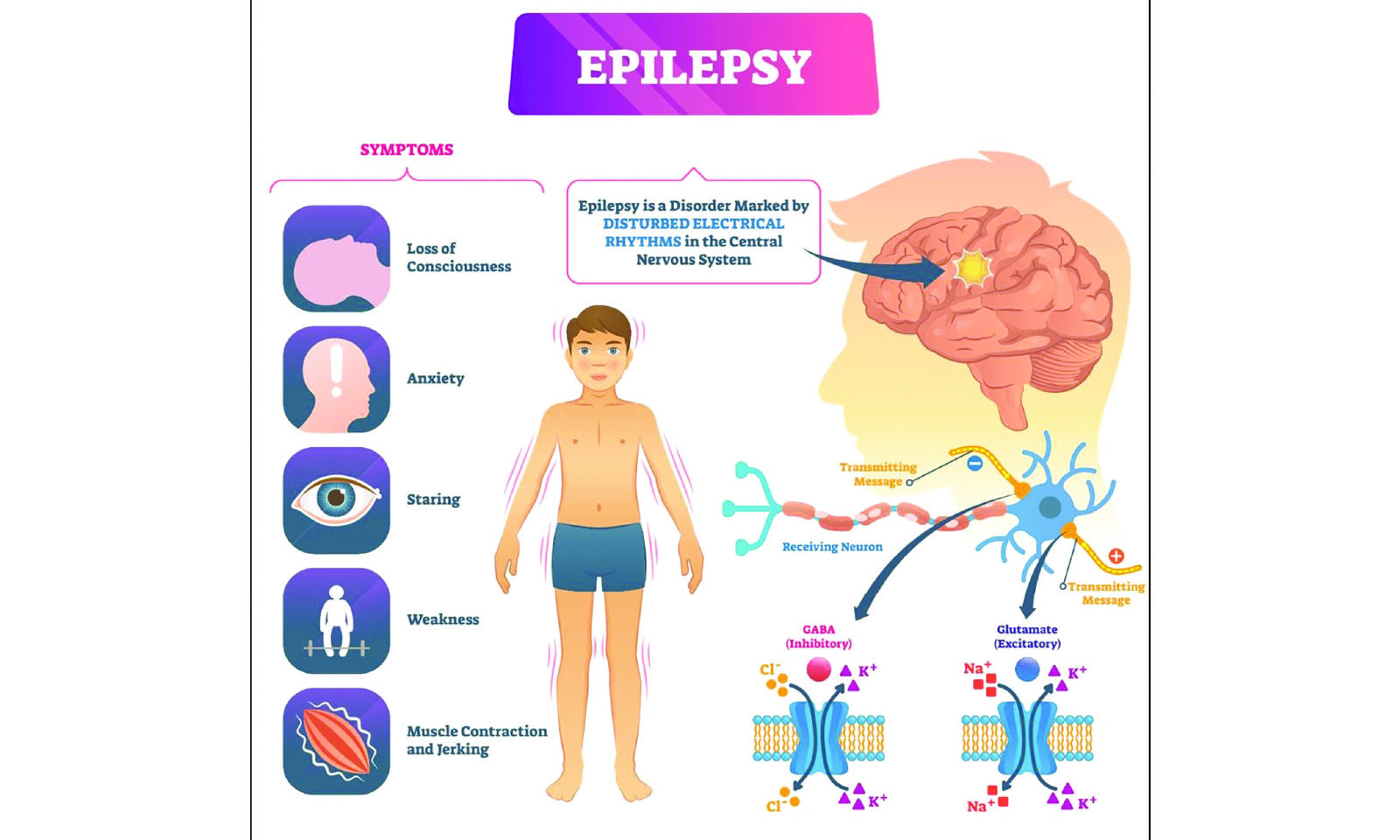
Rumbidzayi Zinyuke
Health Buzz
Many people remember Shakespeare’s famous play ‘Julius Caesar’, which portrays the life of one of history’s greatest military strategists.
What many may not know is that Caesar led Rome to power while living with epilepsy. More than 2 000 years later, legendary musician Prince also battled epilepsy, as did actor Danny Glover, musician Neil Young and Olympic gold medallist Florence Griffith Joyner.
Closer to home, many of us have likely met someone affected by epilepsy, yet few openly acknowledge it.
Despite the achievements of some of these remarkable individuals, epilepsy remains one of the most misunderstood neurological disorders, often clouded by fear, stigma, and superstition.
Yesterday, the world commemorated International Epilepsy Day, a global awareness event observed to educate people about the condition which affects millions worldwide.
The day aims to reduce stigma, promote understanding, and support those living with epilepsy.
For many in Zimbabwe and beyond, the day probably went unnoticed. Mostly because of the lack of understanding and the myths and misconceptions surrounding it.
Understanding epilepsy
Epilepsy is one of the world’s oldest recognised conditions, with written records dating back to 4000 BCE.
It is a neurological disorder characterised by recurrent seizures caused by sudden, uncontrolled electrical activity in the brain.
Fear, misunderstanding, discrimination and social stigma have surrounded epilepsy for centuries.
This stigma continues in many countries today and can impact on the quality of life for people with the disease and their families.
According to the World Health Organisation (WHO), over 50 million people worldwide live with epilepsy, making it one of the most common brain disorders.
Nearly 80 percent of people with epilepsy live in low and middle income countries and it is estimated that up to 70 percent of people living with epilepsy could live seizure-free if properly diagnosed and treated.
In high-income countries, there are estimated to be 49 per 100 000 people diagnosed with epilepsy each year but in low and middle income countries, this figure can be as high as 139 per 100 000.
This is likely due to the increased risk of endemic conditions such as malaria, the higher incidence of road traffic injuries, birth-related injuries as well as the limited availability of preventive health programmes and accessible care.
If not diagnosed and treated, the risk of premature death in people with epilepsy is up to three times higher than for the general population.
Unfortunately for people in low income countries including Zimbabwe, three quarters of people with the condition do not get the treatment they need.
Contrary to myths, epilepsy is neither contagious nor a sign that one is possessed.
Although many underlying disease mechanisms can lead to epilepsy, the cause of the disease is still unknown in nearly half of all cases globally but may include brain damage from prenatal or perinatal causes, genetic conditions with associated brain malformations, a severe head injury, a stroke that restricts the amount of oxygen to the brain, an infection of the brain such as meningitis, encephalitis or neurocysticercosis, certain genetic syndromes and brain tumours.
Signs and symptoms
According to experts, characteristics of seizures vary and depend on where in the brain the disturbance first starts, and how far it spreads.
Temporary symptoms occur, such as loss of awareness or consciousness, and disturbances of movement, sensation (including vision, hearing and taste), mood or other cognitive functions.
People with epilepsy tend to have more physical problems such as fractures and bruising from injuries related to seizures, as well as higher rates of psychological conditions, including anxiety and depression.
This often leads to the myths and misconceptions that often come with the disease leading to a high rate of stigma.
Common misconceptions
‘Epilepsy is caused by witchcraft or evil spirits.’
In many communities, epilepsy is mistaken for a curse or supernatural attack. This misconception often leads to people seeking alternative treatment first, delaying effective management.
‘A person having a seizure should be restrained or have something placed in their mouth.’
This is one of the most dangerous myths. Trying to restrain someone or putting objects in their mouth can cause injury or suffocation. Instead, the best response is to keep the person safe by placing them on their side, removing dangerous objects nearby, and timing the seizure.
‘People with epilepsy cannot live normal lives’
Many individuals with epilepsy achieve great success in various fields. Danny Glover, best known for his role in the movie ‘Lethal Weapon’, has been outspoken about his epilepsy and how he learned to manage it. With proper medication and lifestyle adjustments, people with epilepsy can lead fulfilling lives.
‘Epilepsy only affects children’
While some forms of epilepsy begin in childhood, it can develop at any age. In older adults, epilepsy is often linked to conditions like stroke, brain tumours, or Alzheimer’s disease.
Prevention
Experts say an estimated 25 percent of epilepsy cases are potentially preventable.
They say preventing head injury is the most effective way to prevent post-traumatic epilepsy. It can also be prevented through provision of adequate perinatal care.
Why awareness is important
Despite medical advancements, stigma and misinformation continue to hinder treatment. It is therefore important for education campaigns to be prioritised to debunk harmful myths.
For this to be effective, it is important to involve schools, workplaces, and religious institutions in epilepsy awareness programmes.
Governments must also ensure affordable access to anti-epileptic drugs and medical care while support groups are made more available to empower people with epilepsy and their families, helping them navigate challenges they face.
The first global report on epilepsy produced in 2019 by WHO and key partners, Epilepsy: A public health imperative, highlighted the available evidence on the burden of epilepsy and the public health response required at global, regional and national levels.
The 75th World Health Assembly adopted the Intersectoral global action plan on epilepsy and other neurological disorders 2022–2031, which recognises the shared preventive, pharmacological and psychosocial approaches between epilepsy and other neurological disorders that can serve as valuable entry points for accelerating and strengthening services and support for these conditions.
These efforts have contributed to the prioritisation of epilepsy in many countries where projects have been carried out to reduce the treatment gap and morbidity of people with epilepsy.
There have also been efforts to train and educate health professionals, to dispel stigma, identify potential prevention strategies and to develop models integrating epilepsy care into local health systems.
Above all, it is imperative for communities to understand that a person with epilepsy can live a normal life.
If historical figures and modern-day celebrities can thrive despite epilepsy, why should anyone living with the condition today be held back by stigma.
The fight against epilepsy misconceptions starts with knowledge. By replacing fear with facts, society can create a more inclusive and supportive environment for those living with the condition.
Feedback: [email protected]



 Online Reporter