Vusumuzi Dube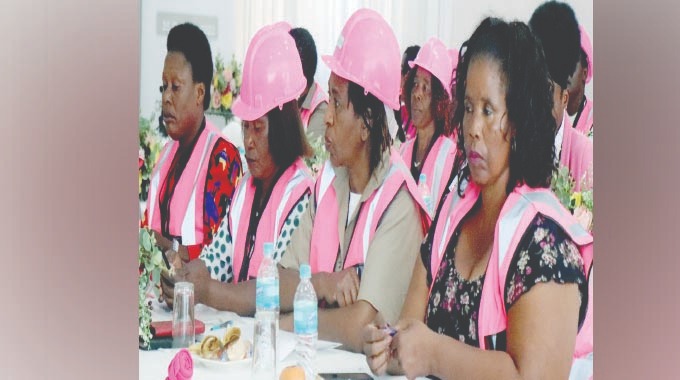
Alphina Ndlovu, [email protected]
BULAWAYO has always been a city of strength. Once known as the industrial heartbeat of Zimbabwe, it carried the hum of factories, the discipline of formal employment and the dignity of structured production. When economic tides shifted in the 1990s and 2000s, the city did not surrender. It adapted.
But adaptation is not the same as design.
For decades, Bulawayo has survived through resilience — through market stalls, backyard industries, cross border trading, informal manufacturing and community networks. The question now is whether survival is enough.
As we mark the month of March — globally recognised for celebrating women’s contribution to society — it is fitting to ask: can Ubuntu, deeply rooted in our cultural fabric, shape Bulawayo’s next economic chapter?
From industrial hub to informal backbone
Bulawayo’s economic story mirrors that of many Southern African cities. Structural reforms, global market shifts and industrial decline reshaped the formal employment landscape. Factories slowed. Skilled workers were retrenched. Young graduates entered an economy no longer structured to absorb them.
Yet something remarkable happened.
The economy did not vanish. It reorganised.
Women expanded cross border trading networks. Families converted homes into production spaces. Informal markets became centres of co-ordination rather than chaos. Youth embraced innovation and digital tools to navigate shrinking opportunities.
In many ways, Bulawayo demonstrated what economists often overlook: that communities function as ecosystems long before policy frameworks acknowledge them.
But resilience — while admirable — cannot replace long term structure.
Understanding Ubuntu economically
Ubuntu is often translated as “I am because we are.” It is celebrated as a moral compass, a philosophy of humanity and interconnectedness.
Yet Ubuntu also contains economic logic.
Historically, African communities mitigated risk collectively. Co-operative labour systems, shared harvests, burial societies and rotating savings clubs were practical mechanisms of stability, not sentiment.
Ubuntu economics recognises that individual success cannot thrive in a collapsing environment. It assumes interdependence, not isolation.
If applied deliberately to modern economic design, Ubuntu implies that:
l Businesses grow more effectively within clusters.
l Women’s enterprises strengthen entire communities.
l Youth potential rises when mentorship and networks exist.
l Finance must circulate within local ecosystems to remain productive.
Bulawayo already practises Ubuntu — informally. The challenge is to formalise it deliberately and strategically.
March and the women
who held the line
This month, as women are honoured globally, we must acknowledge something quietly powerful: Bulawayo’s economic survival has been significantly female led. When formal employment contracted, women did not retreat. They traded. They organised savings groups. They crossed borders to sustain households. They absorbed economic shocks with resilience and ingenuity.
Women in Makokoba, Nkulumane, Pumula and beyond did not wait for policy clarity. They built micro ecosystems out of necessity.
But recognition must translate into structural support.
Women’s participation cannot remain confined to informal endurance. Access to capital, digital platforms, co-operative manufacturing hubs and structured SME support must follow.
Ubuntu economics in Bulawayo must therefore include gender intentionality.
Not as charity. But as economic strategy.
Moving from survival to ecosystem thinking
What would it mean to move beyond survival? It would mean viewing Bulawayo not as a former industrial city in decline, but as a potential SME cluster hub.
Ecosystem thinking requires connection:
l Linking small manufacturers with regional supply chains.
l Strengthening vocational training aligned to local industry.
l Formalising informal networks into co-operatives with bargaining power.
l Channelling diaspora investment into productive, not consumption based, sectors.
Across Sadc, cities face similar transitions. Zambia navigates commodity dependence. Malawi builds agricultural value chains. South Africa wrestles with inequality within advanced sectors.
The region shares common structural features: youthful populations, informal sector dominance and rising digital penetration.
This presents opportunity. Instead of competing in fragmentation, SADC economies could strengthen regional integration through co-ordinated value addition. Bulawayo’s industrial heritage, Zimbabwe’s entrepreneurial drive and regional market demand can function as complementary forces.
Ubuntu at scale becomes regional co-operation.
A city at a crossroads
Bulawayo carries industrial memory — skills, discipline and identity shaped by structured production.
That memory is an asset, not nostalgia.
If supported intentionally, the city can evolve into a hybrid model:
l industrial heritage,
l SME clustering,
l formalised women led enterprises,
l youth digital innovation, and
l regional integration.
That combination moves beyond survival. It becomes economic design.
Economics, simplified
Economics is often presented as complex and technical. But at its core, it asks simple questions:
Can families plan with confidence?
Can youth see opportunity at home?
Can businesses grow without collapsing under pressure?
Ubuntu economics offers relational answers.
It suggests that growth must stabilise households, not destabilise them.
It suggests that reform must consider community absorption capacity.
It suggests that dignity is as important as output.
Bulawayo does not lack resilience. It lacks co-ordinated ecosystem reinforcement.
A path forward
As we reflect during Women’s Month, perhaps the most meaningful tribute is not celebration alone — but structural commitment.
Commitment to:
l strengthening women led co-operatives,
l designing SME clusters in key sectors,
l aligning vocational training with local industry,
l leveraging diaspora networks, and
l engaging SADC value chains intentionally.
Beyond survival lies structured prosperity.
Ubuntu reminds us that economic design must reflect social reality.
Bulawayo’s future will not be built by abandoning its past, nor by romanticising it. It will be built by connecting its resilience to deliberate economic architecture.
From market stall to manufacturing cluster.
From informal endurance to structured growth.
From isolated effort to co-ordinated integration.
The city has survived. Now it must design.
l Alphina Ndlovu is a researcher and columnist exploring economic ecosystems, Ubuntu-informed development and SADC regional integration. She writes from both lived experience and academic inquiry.


 Online Reporter