Online Reporter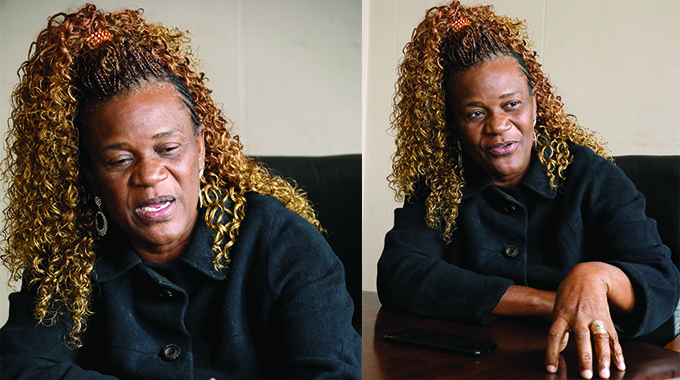
Gibson Mhaka, Zimpapers Politics Hub
THE iconic song “Kubuhlungu Emoyeni” (It breaks the soul) by the Light Machine Gun (LMG) Choir which was set up by the late Vice-President, Dr Joshua Nkomo played a pivotal and soul-stirring role in the struggle for independence by motivating freedom fighters.
This powerful anthem, described by many as an embodiment of Zimbabwe’s liberation struggle, not only recounts the agonising experiences endured during the war but also poignantly speaks to the enduring plight of some ex-combatants after the war.
So deeply ingrained in the nation’s memory, it is synonymous with Heroes’ Day commemorations, typically resonating when a national hero is laid to rest at the National Heroes Acre or when the country solemnly remembers its valiant sons and daughters who made the ultimate sacrifice for liberation.
A voice from the past
As her voice moves from an almost meek whisper to a powerful bellow of the lyrics, Cde Happiness Sibanda, a former freedom fighter, Zanu-PF Central Committee member and the only surviving member of the LMG Choir rises to attention.
Cde Sibanda whose nom de guerre was Kunzima Ekhaya joined the struggle at the tender age of 14 in February 1977.
She does not merely let the song narrate the challenges of the liberation struggle.
Instead, her demeanour changes as she begins to personally recount the harrowing, deeply felt difficulties she faced as a female freedom fighter.
She describes the gruelling daily routine that defined their existence.
“Death crawled everywhere; we saw its eyes, ears, nose and arms everywhere we dared to look. We woke up early in the morning every day and did toyi toyi while carrying logs. The most difficult exercise was the number nine where you would hop like a frog.
“This was usually given as punishment. Maybe you would have stolen some guavas and were caught. When you were caught, you would be punished because you would be eating before the other soldiers have eaten,” Cde Sibanda recounts, her voice a quiet echo of a harrowing past.
She adds, with a wince, her memories painting a vivid, stark picture of a girl’s crucible in the liberation war.
“There was no sanitary ware. But also because of the exercises we did, even those who had just started menstruating stopped because of the strenuous exercises, which were so difficult that they made females like us resemble men.
“All the girls stopped menstruating because of the type of exercises we did in the morning. We all ceased being ‘normal’ women,” she recalls, her words laden with pain endured.
The challenges mounted daily.
“It was a great challenge, as was the food we ate and the clothes we wore — strictly combat attire, which alone was painful.
Even where we slept was difficult, and the conditions were not suitable for a girl child.”
The unique burden of female fighters
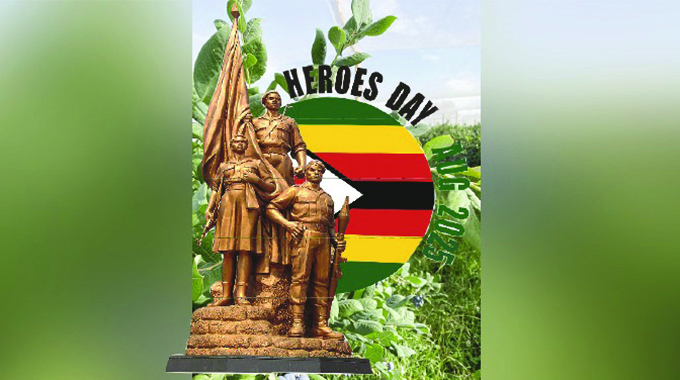
As Zimbabwe prepares to commemorate Heroes’ Day on August 11, Cde Sibanda said it was important that women told their own stories, apart from the male- dominated narrative.
Her story, a poignant testament to female resilience, demands the recognition it so richly deserves.
Her youthful bravery quickly met the brutal realities of war, especially the challenges unique to women.
She said the training regime was relentless and gender-blind.
“The training was the same for both sexes, it didn’t matter whether you were a man or a woman . . . There was no distinction,” she explained.
Cde Sibanda, who is originally from Beitbridge decided to join the liberation struggle one afternoon as she herded cattle.
“I come from Beitbridge, in the Shashe area. I used to herd cattle and would bump into people who needed to be shown directions to Botswana. This one day, a group of about 60 people passed through and I decided I wasn’t remaining behind.
“Also, there was a guy called John Mbedzi who would always encourage people to join the struggle through the radio. The way the whites were mistreating people also pushed me to join the war,” she said.
A sight for recognition
Despite bearing the same burdens as their male counterparts, Cde Sibanda firmly believes that women’s unique suffering in the struggle warrants distinct recognition.
“I believe the person who should be recognised for liberating the country and bringing Zimbabwe to independence is the girl child.
“This is because our nature as women was not conducive for the harsh conditions we endured . . . So, as female war veterans, there is a great need for us to be recognised just like our male counterparts, because of the unique suffering we endured.
“Men’s bodies are strong and more suited for those difficult exercises and physical endurance, unlike us women.”
She said many female ex-combatants faced unique challenges that have largely been overlooked in the national narrative.
Despite their critical roles in the fight for independence, she said, stories of female ex-combatants have not been fully celebrated.
“It’s unfortunate that it’s not well-documented, but more women died than men. To make matters worse, do you know that most of our girls during that time cannot even give birth today?
“They became barren because of the conditions we lived under and the hard exercises we endured. Many stopped having menstrual periods permanently, making them unable to conceive.”
This profound sacrifice, Cde Sibanda argued, should translate into tangible, differentiated support.
“We believe more should be done for us as women,” she said.
She highlighted the disparity in post-independence benefits between male and female freedom fighters as a critical concern.
“Whenever people talk about war veterans, they quickly think of males, and consequently, we as female war veterans are often looked down upon,” she explained.
Cde Sibanda insisted that female war veterans performed equally, yet received unequal recognition.
Full article on www.chronicle.co.zw
“Female war veterans did the same as male veterans, but when it comes to recognition, it is men who are primarily recognised,” she said.
“As female war veterans, we want to be given the same recognition accorded to male war veterans. We need those farms which are being given to male war veterans. For example, if there are 10 tractors, five should be for females and the other five for males.”
She said the fact that they were trained shows how much women were an integral part of the arsenal at Zanla and Zipra’s disposal during the protracted war of liberation.
A continuing struggle: Post-independence hardships
Cde Sibanda has taken it upon herself to locate and advocate for her fellow female comrades.
“I am now spearheading the process of identifying all female war veterans because I know them. It’s just that the process is slow, but as I speak, we have identified some of them.
“So far, I have identified about 15 female war veterans from Ntabazinduna and Insuza under Umguza District.
“They are struggling, and live in poverty. Many did not return to school after demobilisation, opting for marriage, which further limited their opportunities,” she said.
Cde Sibanda ( 63), is still pursuing her degree, a testament to her enduring drive, but she acknowledges the profound cost.
“Luckily, some of us did go back to school, but we were older than some of our classmates, which was unsettling and often led to us being laughed at . . . That’s tormenting us, as everything feels delayed. It’s painful, all our progress feels like we’re behind,” she said.
A message for the younger generation
As Heroes’ Day approaches, Cde Sibanda delivers a powerful message to the younger generation.
“These young women today, when we talk about Zimbabwe’s liberation struggle, they don’t fully understand it.
“They should defend their country because its freedom didn’t come on a silver platter. Many women lost their lives and their very nature as women so that Zimbabwe could become free. We should jealously defend our country.”
“To be a hero, one endured immense hardship, living in the jungle, crossing rivers and mountains, so that our country could be liberated. As Zimbabweans, we should remember Heroes’ Day as a very important day on our calendar; a day marked by the shedding of blood,” said Cde Sibanda.