


 Online Reporter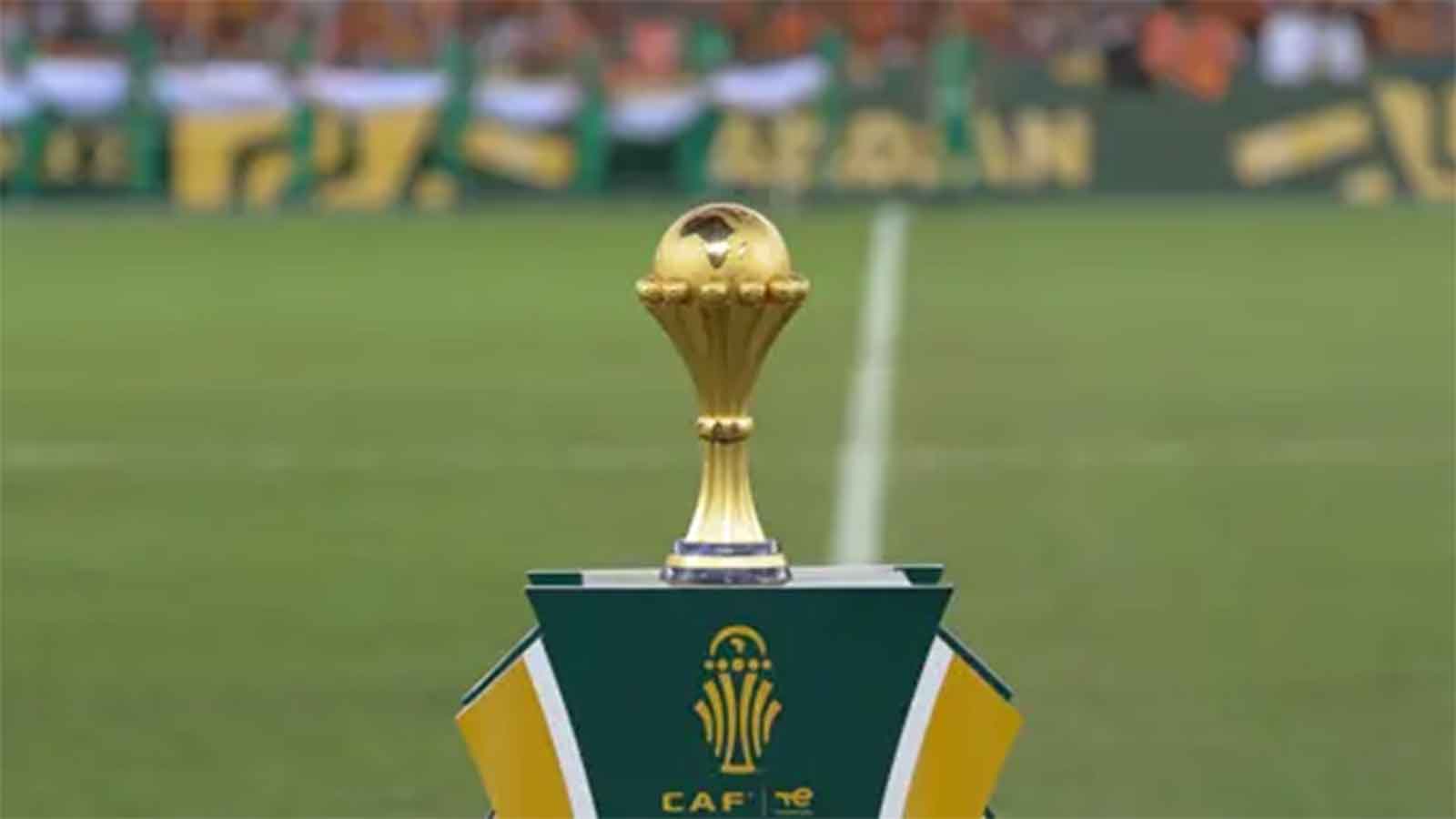
Inside ZIFA-Nqobile Magwizi
When the lights dimmed in Rabat and the curtain finally fell on AFCON 2025, the tournament left behind two sharply contrasting narratives.
The first is the one that will linger in highlight reels and heated debates: a final charged with tension, shaped by VAR controversy, a walk off, prolonged stoppages, the presence of riot police and moments when the spectacle appeared to edge uncomfortably toward disorder.
My view is straightforward.
African football cannot afford showpiece finals that drift toward chaos, especially at a moment when the continent is intentionally working to build trust, commercial value and institutional credibility.
The final is the shop window of the game. It must never resemble broken glass.
Yet the second story is the one that truly matters to football people. It is not told in flashpoints or drama, but in data.
In the quiet, unglamorous numbers that explain why this AFCON felt different, why Morocco has emerged as a reference point and why Zimbabwe’s rebuild must be driven by systems if it is to be genuine, durable and worthy of belief. CAF confirmed that Morocco 2025 became the highest-scoring AFCON edition on record, reaching 120 goals before the final.
With the final itself ending 1-0 in favour of Senegal after extra time, the tournament closed on 121 goals. This is not trivia. It is evidence of a continent playing with greater courage, higher technical confidence, and better preparation.
On the business side of the game, where leadership is most clearly tested, CAF announced a 43% increase in prize money for the champions to US$10 million, a clear signal that the product is growing and the stakes are rising.
Morocco 2025 was also described by CAF as a commercial landmark, delivering over a 90% surge in competition revenues and attracting 23 sponsors. These outcomes did not happen by accident. They reflect leadership and planning.
CAF president, Dr Patrice Motsepe, has demonstrated a meticulous approach: setting clear targets, strengthening commercial discipline and insisting that African football must think beyond the next matchday.
That mindset was visible in the packaging of this tournament and in the confidence to grow partners, raise prize money and open new markets. The fans played their part too. By the quarter-finals, cumulative attendance had already surpassed 1,1 million across host venues, which were record numbers even before the tournament reached its climax.
That matters because attendance reflects trust. Fans show up when the experience is worth it. Even the controversy surrounding the final, ironically, reinforced the point about market value: when a chaotic match can still attract 1,7 million viewers in the UK, that is not “noise”. It is attention, reach and commercial potential. While Morocco 2025 was dramatic on the surface, beneath the drama it functioned like a dashboard. Football quality went up. Commercial value went up. Fan engagement went up. And dashboards do not improve by prayer. They improve by design.
Morocco did not become a continental hosting power and a consistent global competitor by accident. Their federation treated football as a national development project.
The logic was clear: build the pipeline, professionalise the pathway, modernise infrastructure and repeat the cycle.
At the centre of that cycle sits the Mohammed VI Football Academy, launched in 2009 and built on a principle many countries still treat as optional: elite football development that is inseparable from education. The academy identifies talent early, coaches it properly, educates it properly and connects it to a clear route into professional football and the national teams.
Morocco’s rise has been engineered. It is the product of a deliberate programme, not a lucky generation.
They then scaled the environment around the player — investing in technical capacity, high-performance centres, medical support, modern stadiums and operational systems strong enough to host a major tournament.
They plugged into global football conversations and aligned domestic work with international best practice. The lesson is simple. Talent is everywhere. Pathways are not. Morocco built pathways and AFCON 2025 became the shop window. Zimbabwe does not need to copy Morocco’s budget. We need to copy Morocco’s logic: make football rebuildable, measurable, systematic and repeatable. That is exactly where the most important ZIFA work is already pointing.
First, we must shift from opinion and instinct to evidence. Morocco functions as a performance ecosystem, driven by data: player minutes, development benchmarks, competition intensity and clearly defined progression pathways. ZIFA’s adoption of CIES/FIFA-aligned thinking is, therefore, not optional; it is transformative. It moves our game out of conjecture and into measurable reality.
What can be measured can be managed and what is managed can be improved. Only then are we equipped to confront the difficult questions with honesty and clarity: are our players accumulating meaningful minutes, are we developing the right profiles rather than merely coping and which provinces are producing talent, in what numbers and for what reasons?
Second, we must strengthen Zimbabwe’s football knowledge base through deliberate education. Partnerships with universities are not public relations exercises; they are long-term infrastructure.
With a Memorandum of Understanding already in place with Midlands State University, ZIFA is grounding key aspects of the rebuild in research capacity, including performance analysis, sports science, governance training, development monitoring and evidence-led planning. Equally strategic is the MoU with the Ministry of Primary and Secondary Education. Schools are where the numbers reside: participation levels, talent identification, structured competition and the formation of early coaching habits.
A federation that works hand in hand with the education system is not merely adding a partner; it is establishing the largest organised talent pipeline in the country.
Ultimately, a federation that learns is a federation that stops repeating its mistakes.
Third, the rebuild must be national, inclusive and modern. The reintroduction of a national competition such as the ZIFA Cup is not an exercise in nostalgia.
It is about restoring a national football rhythm that reaches every corner of the country and embraces every expression of the game.
This includes futsal and beach football as legitimate development pathways that broaden participation, sharpen technical ability and expand opportunity, rather than treating them as secondary to the main game. When football grows across all its codes, the talent base deepens and the football economy strengthens.
Fourth, none of this can succeed without a solid foundation. This is why the soon to be announced Roots Impact Programme must be treated as the base layer of the entire pathway system, the soil from which everything else grows.
Roots is where participation widens, communities are organised, early competition structures are established and talent is identified earlier and retained longer.
When football truly belongs to communities again, talent stops leaking before it has the chance to emerge.
Finally, we must build competitions that develop players, not just winners. AFCON 2025’s goal record points to technical confidence, coaching preparation and teams willing to play.
ZIFA’s rebuild must obsess over calendars, formats, standards and consistency, because players are shaped by what they repeatedly experience.
The real question is not “who wins this weekend?” It is: what kind of footballer does this competition produce every month?
Commercial credibility follows football credibility. CAF’s data makes this plain: when performance improves, the market responds. The same lesson applies to ZIFA.
Strengthen governance and predictability, raise matchday standards, make grassroots football visible and continuous, and build competitions that supporters and partners can trust.
Football is not sold through posters or slogans; it is sold by building something genuinely worth investing in.
AFCON 2025 confirmed, in hard numbers, that African football is scaling upwards, with more goals, more revenue, greater attention and higher expectations.
Morocco’s deeper message is even more instructive. Systems win.
ZIFA’s rebuild will not be measured by good intentions, but by outcomes. It will be judged by supporters seeing organised grassroots football, clearer development pathways, better coached teams, stronger and more credible competitions and a game that can stand commercially because it stands firmly on technical foundations. This is the work before us and the direction is already taking shape.
In the coming weeks, ZIFA will share more on its CIES and FIFA aligned approach, the Midlands State University partnership, the Roots Impact Programme and community competitions that reconnect the game to the people.
The task now is to link these elements into one coherent operating system.
The call to action is clear. For administrators, coaches, players, partners, communities and supporters, this is the moment to commit to building the system together.
When the system is right, consistency follows. When consistency takes hold, the statistics will follow.
Nqobile Magwizi is the president of the Zimbabwe Football Association



 Bongani Ndlovu