Taking Stock
Kudzanai Sharara
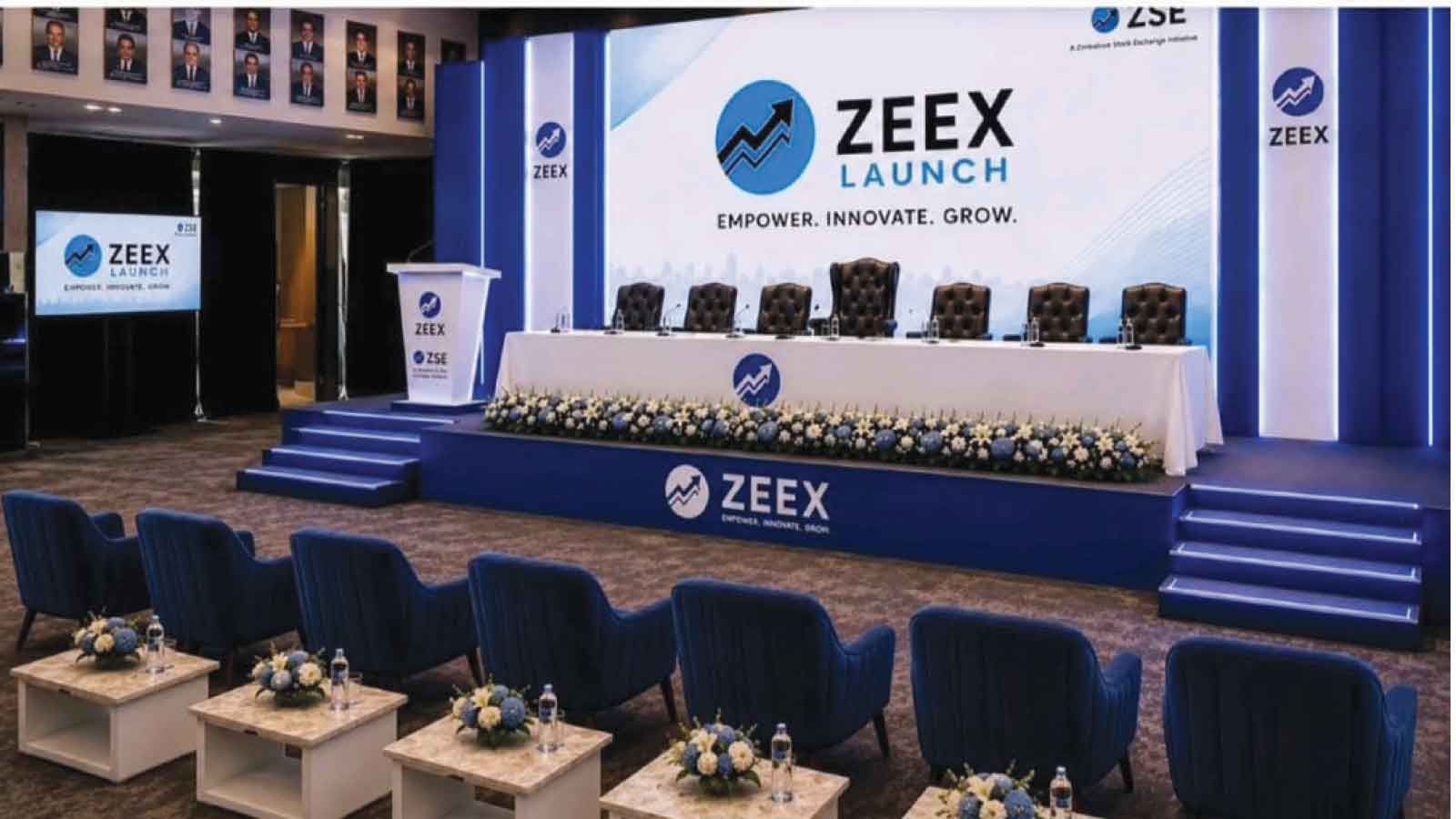
Last week in Harare, Zimpapers and the Zimbabwe Stock Exchange hosted an event intended to unpack the invoice discounting financial instrument which is offered under the Zimbabwe Entrepreneurship Exchange (ZEEX).
Although it remains unfamiliar to many, the instrument represents a form of short-term borrowing in which a business uses its unpaid invoices as collateral to obtain cash from a financier before the customer actually pays.
The idea, which is to help small and medium businesses raise money by using invoice discounting to unlock what has come to be called “dead capital”, applies in those cases where a small business that has delivered goods to a large company is owed money, but that money is stuck.
Invoice discounting turns that unpaid invoice into immediate cash, letting the SME pay wages or buy stock without waiting for the large buyer to settle its bill, so that the financier earns a fee (the “discount”) for providing the cash early, while the SME gains liquidity it would otherwise not have.
At the event, the pitch was straightforward: Zimbabwean banks hold US$7,1 billion in deposits, yet 76,1 percent of our businesses — about 155 900 — remain informal and cannot get credit.
Listening to the presentations, I felt I had heard it all before, since the talk of a “funding gap” is familiar; but a panel discussion I attended earlier this month in Cape Town offered a different way of looking at the problem, and that makes ZEEX not just timely, but possibly transformative — if we are honest about the hurdles.
The Cape Town panel was direct, and one speaker said: “I actually don’t think we do have a funding gap”.
Using African Development Bank data, the panel noted that savings and assets in Africa — in banks, pension funds and insurance — add up to US$4 trillion, which suggests that the problem is not a lack of money, but what it called ‘asymmetry’.
There is 30 times as much money in Africa as the projects need, and the money is there, sitting in pension funds, asset managers, unions and banks; the problem is that it does not reach the projects.
“Africa is not poor,” the panel said, “Governments are broke.”
This distinction matters for ZEEX because the ZSE’s new platform is not asking for foreign aid; instead, ZEEX is trying to build the missing structure, and it is a structural answer to an asymmetry problem.
For years, we have been told the problem is that there is no money, but the truth is simpler and harder: the money is here, but the pipes that should carry it to our businesses are broken, and ZEEX is an attempt to build those pipes.
The Cape Town panel laid out a practical way forward, suggesting that domestic capital be used as leverage, that structures be created in which foreign direct investment joins as a limited partner rather than a direct competitor and that funds — infrastructure, minerals, agriculture, tech — be built that are owned and controlled by Africans.
ZEEX takes this idea and applies it at the micro level and the platform’s focus on invoice discounting directly answers the asymmetry by unlocking the “dead capital” of a receivable.
A business that has delivered goods to a large company is owed money, and that money is real, but it is stuck, so the business cannot use it to pay workers or buy stock.
ZEEX turns that unpaid invoice into a structured instrument — the discounted invoice — that lets pension funds and banks put their vast pools of capital into the productive economy without the traditional collateral demands that have locked out SMEs.
This is important because for decades, small businesses have been told to bring land, buildings or other collateral before they can borrow, and most do not have it, although they do have invoices from large corporates.
ZEEX is saying they should use what they have, which is a significant shift.
But the Cape Town panel also warned, with one speaker noting that “only the lenders are making a lot of money”, and that “that is killing the economy because the lenders are getting 20–30 percent returns. They are like pawn shops.”
If ZEEX is to succeed, it cannot simply copy the pawn-shop model, and it must deliver the ‘mid-range returns’ the panel talked about, along with good corporate governance.
This is where the platform’s “Bond Holding Company” and “ZEEX Sponsor” model becomes important, because by holding collateral and doing due diligence, these structures can lower the risk premium, so that the cost of discounting does not eat up the SME’s margin.
The panel stressed the “five Ms” — mentor, market, manage, monitor and money — and ZEEX, with its “Graduation Pathway” from informal SME to private capital, then to a public listing, embodies this, since it is not just a funding venue but an incubator.
A business that starts on ZEEX can learn how to keep proper records, how to present itself to lenders and how to grow, and that is the real value; the money is important, but the discipline that comes with it is just as important.
Yet the ZEEX team, led by Mr Justin Bgoni, know the risks, which they have listed: a “commitment gap” if large companies fail to confirm invoices, the problem of public-sector arrears and the danger of fraud, since one big scandal could destroy trust for a decade.
These are not small worries, because in Zimbabwe we have seen good ideas die because of poor execution or because one bad actor ruined it for everyone, and ZEEX will need strong controls and honest leadership.
These are serious challenges, but the Cape Town panel reminded us that the alternative — continuing to export our capital and import our risk definitions — is not sustainable, since we cannot keep sending our savings abroad to be managed by people who do not know our markets, only for that money to come back as foreign loans with conditions attached; that model has not worked, and it will not work.
ZEEX is a bold experiment and it seeks to turn the theory of “asymmetry” into practice, since it is an attempt to build the market infrastructure that will let our own capital finance our own development.
The initial target of US$10 million by year-end is modest, but the ambition is not, and if it works, it will not just close a gap, but change how we think about money in this country.
That is the promise. Now, let us see whether it pays.