
Andrew Mangwarara
WHEN landscaping, one of the greatest joys for gardeners is seeing their chosen plants mature to their full potential.
The Kenyan croton is one such tree worth watching grow, especially given its relatively fast growth rate.
It is an ideal addition to any garden or landscape.
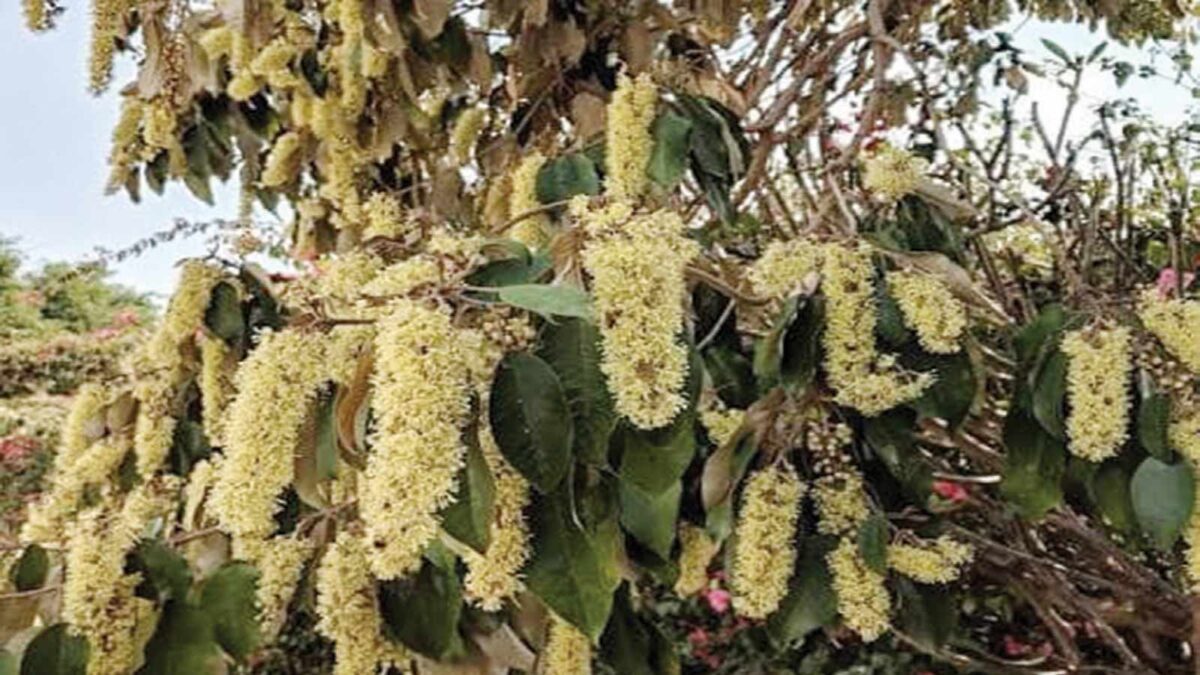
Croton megalocarpon is a deciduous to semi-evergreen tree that can reach heights of up to 35 metres, with a broad trunk diameter of up to 120 centimetres.
Its primary aesthetic appeal lies in its flat, spreading crown, making it perfect for providing shade across lawn expanses, gardens and parking areas.
Beyond its ornamental value, it is used for timber, firewood and traditional medicine, while its seeds serve as a valuable source of biofuel and poultry feed.
Although native to East Tropical Africa — including the Democratic Republic of the Congo, Uganda, Kenya, Zambia and Mozambique — the species has successfully naturalised across Southern Africa.
In its natural habitat, it thrives in evergreen and semi-deciduous forests at altitudes between 700 and 2 400 metres above sea level, as well as along riverbanks and open grasslands.
The Kenyan croton thrives in well-drained soils and exhibits strong drought tolerance once established.
It responds well to pruning and can be trained into a hedge.
Seeds take roughly five months to mature after flowering, yielding an impressive harvest of up to 30kg per tree.
Its traditional medicinal applications are varied.
Because livestock do not graze on its foliage, the tree is an excellent candidate for live fences, boundary hedges and windbreaks.
Additionally, it functions well as a shade tree in coffee plantations and acts as an effective mulching agent.
The fruit shells can be repurposed as garden mulch or incorporated into potting mixes. The flowers also produce a dark, strong-flavoured honey.
The timber is hard, strong and moderately durable, though it remains susceptible to termite damage.
It is commonly used for crafting stools, mortars, beehives, veneer and agricultural tools, as well as producing quality charcoal.
Propagating the Kenyan croton is straightforward, as the seeds germinate easily and can be sown directly into their permanent position.
Harvested seeds remain viable in storage for up to nine months, making this one of the easiest trees to establish.
The most common mistake gardeners make when planting is placing the tree too deeply and burying the stem, which leads to stunted growth.
To ensure healthy development, plant the tree so that only the root ball is submerged. With proper planting, the Kenyan croton will rapidly mature into an impressive specimen feature.
If you would like to be featured in our green-up campaign, contact us on: [email protected] or [email protected]