Online Reporter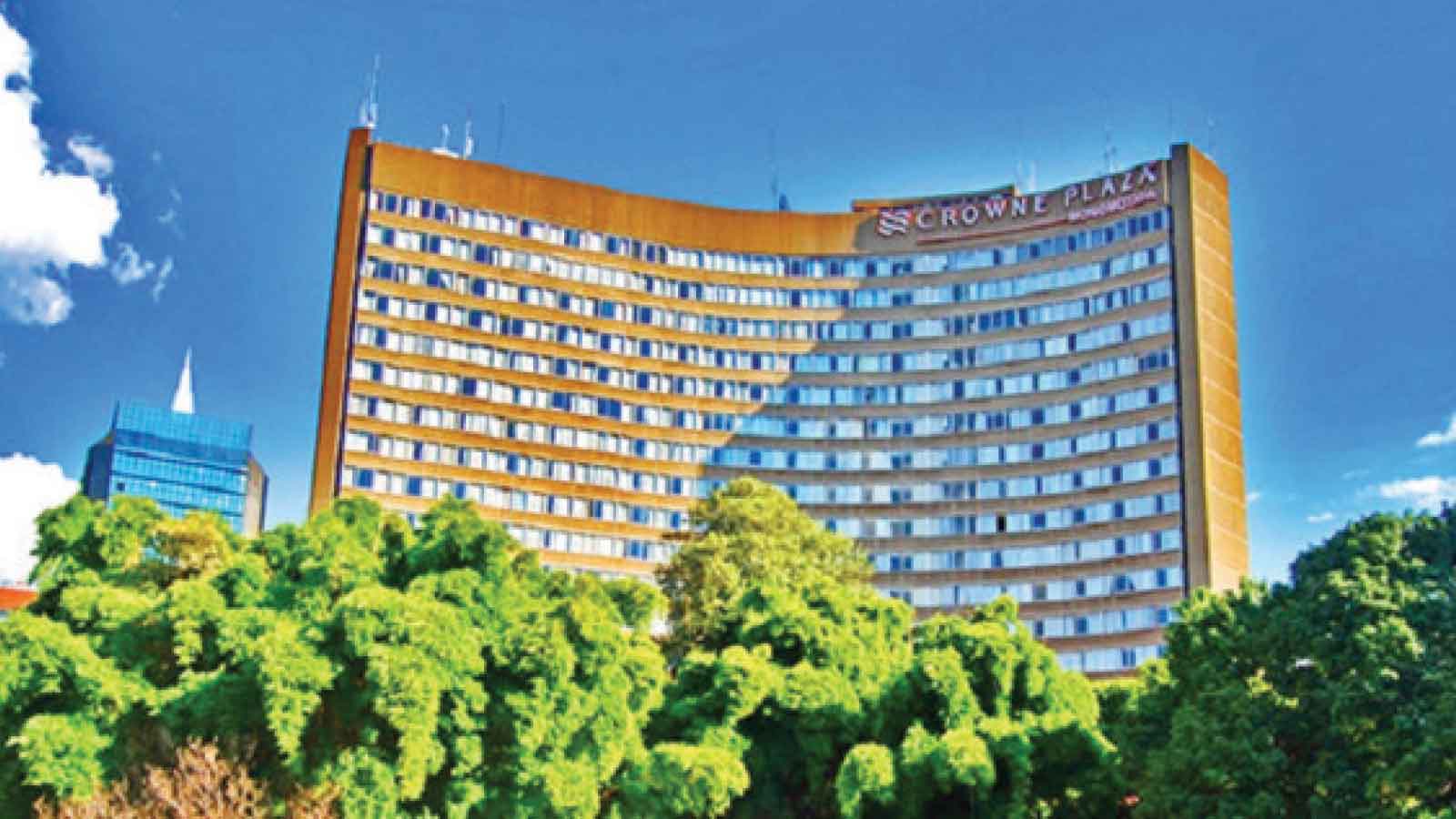
Charles Mavhunga-Tourism Branding
It was a warm June morning in the lobby of the Monomotapa Hotel in Harare when I found myself in conversation with a group of American visitors who had, by any conventional measure, made an unusual choice.
Back home, the United States was in the grip of World Cup fever.
Stadiums from Los Angeles to New York were packed. Streets were draped in national flags. The tournament, held on American soil for the first time since 1994, was the singular cultural moment of the summer. And yet here were a handful of Americans, thousands of miles away, sipping Zimbabwean tea and talking about mbira music.
“We heard about it, of course,” one of them said with a relaxed smile. “But we wanted something that wasn’t on schedule.”
That sentence, almost offhand, unlocked a longer conversation about why Zimbabwe, in June, in the cold winter, away from the world’s most watched sporting event, was exactly where they had chosen to be.
The Counter-Seasonal Calculus: Skipping the Spectacle.
June 2026 marks a rare convergence of global spectacle.
The FIFA World Cup, co-hosted by the United States, Canada, and Mexico, has drawn an estimated five billion cumulative viewers worldwide.
Flight prices into major American cities have surged. Hotels near match venues have been booked out for months.
The world, in a very real sense, is looking at America.
But for a quiet and growing segment of American travellers, that very saturation is the reason to look elsewhere. These are not people indifferent to the world: they are deeply curious about it.
They simply prefer depth over density, rhythm over rush.
Zimbabwe in June, a shoulder month before the European summer peaks and well outside the southern African cold winter season, offers something the World Cup cannot: unhurried access to a country still largely undiscovered by mass tourism.
Globally, this pattern is gaining traction. Travel analysts have noted a post-pandemic shift toward what the industry calls “intentional travel”: journeys shaped not by package deals or FOMO, but by deliberate cultural goals.
Zimbabwe sits at an interesting frontier in this trend.
The sound that brought them here: Mbira and Living Culture
Several members of the group had first encountered Zimbabwean culture through music: specifically, through the mbira, the ancient thumb piano central to Shona spiritual practice and artistic identity.
One visitor, a music teacher, described attending a world music festival in the United States where a Zimbabwean ensemble performed.
“I went home and started researching. A year later, here I am.”
The mbira is not merely an instrument: it is a UNESCO-recognised heritage tradition, used in bira ceremonies to commune with ancestral spirits.
To experience it here, in community settings and not on a foreign stage, carries an entirely different weight. The visitors had attended a weekend gathering outside Harare where local musicians played late into the night and they described it with the kind of reverence usually reserved for life-changing moments.
In a world where cultural exchange is often reduced to souvenir stalls and staged performances, Zimbabwe offers something increasingly rare: organic access to living tradition.
Touring the Monomotapa: History as Hospitality
The Monomotapa Hotel itself became a conversation piece. Named after the legendary Munhumutapa kingdom whose stone-walled empire once dominated central Africa, the hotel sits at the edge of Harare’s Harare Gardens with views toward the National Gallery.
For the Americans staying there, the name was a doorway into history they admitted knowing almost nothing about.
“We did a resort tour that included stops at Great Zimbabwe,” one visitor said.
“Standing in front of those stone walls, knowing they were built without mortar by an African civilization in the eleventh century: that context simply does not reach us in America.”
Great Zimbabwe, the ancient city that gives the country its modern name, is among Africa’s most extraordinary archaeological sites and yet remains dramatically under-visited compared to Egypt’s pyramids or Morocco’s medinas.
The resort circuit in Zimbabwe: connecting Harare to Bulawayo, the Matobo Hills and eventually Victoria Falls, is maturing quietly. New boutique lodges emphasizing cultural programming alongside wildlife have emerged in recent years, and tour operators report increased interest from visitors seeking a Zimbabwe beyond safari.
Zimbabwe in the Global Travel Moment
The global context matters here. Africa’s tourism share of world arrivals, while still below its potential, has been recovering steadily since 2022.
Several African nations have made bold moves:
Rwanda’s gorilla tourism model, Kenya’s luxury eco-camps, Tanzania’s Zanzibar expansion: and Zimbabwe is watching and learning. The country’s ease of visa access for many Western nationalities and the introduction of the Zimbabwe Gold (ZiG) currency have introduced cautious economic stabilization that travellers notice.
Meanwhile, the World Cup’s concentration of global attention on North America creates, paradoxically, a quieter travel window for everywhere else. Airlines have shifted capacity toward transatlantic routes serving tournament cities. That means less competition for seats to Harare, Nairobi, or Lusaka, and in some cases, lower fares.
The Americans I met had travelled through Johannesburg and noted the lightness of the journey: no queues, no crowds, no competition for taxis.
Conclusion: The quiet choice as a loud statement
Before the group dispersed for the afternoon, some heading to the National Gallery, others to a craft market on the edge of town, I asked what they would tell friends back home who were surprised by their choice. “Tell them the World Cup will be on television in a hundred countries,” one replied. “Tell them mbira won’t.”
That instinct: to seek what cannot be streamed, replayed, or replicated: is perhaps the most honest definition of meaningful travel. Zimbabwe, with its ancient music, its layered history, its half-discovered landscapes and its quiet June mornings, is precisely the kind of destination that rewards that instinct. While the world watched the beautiful game, a small group of Americans found something equally beautiful and entirely their own.
Charles Mavhunga, co-author of textbooks in Business Enterprising Skills and current PhD candidate in Management at Bindura University, is the scholar behind the landmark publication on AMAZON: Mbira Virtuosos: Stories of Zimbabwean Mbira Legends. For inquiries, he can be contacted at [email protected] or 0772989816.