admin
admin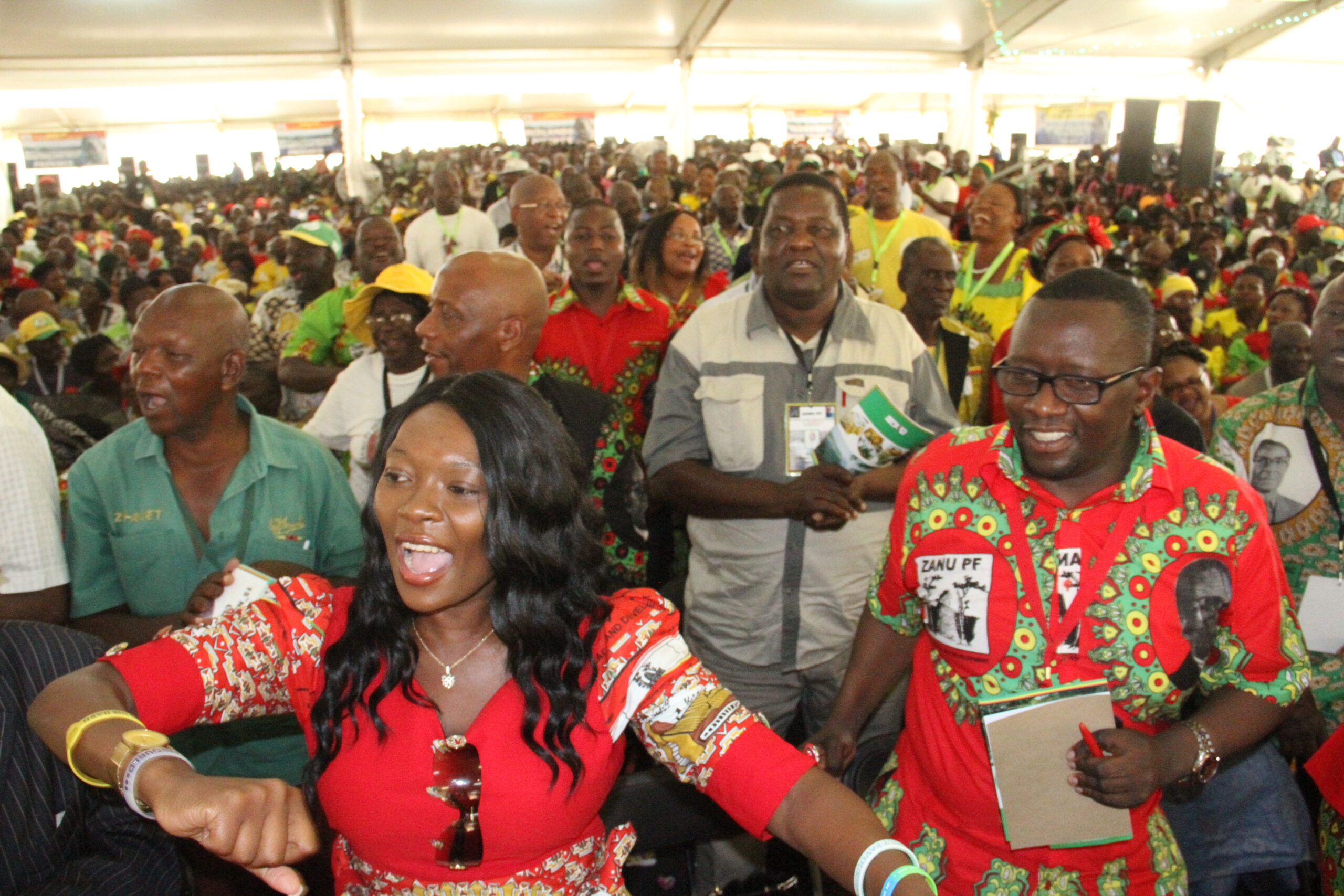
Zanu-PF’s 15th Annual National People’s Conference ended in Victoria Falls yesterday, with its theme “Consolidating People’s Power through Zim-Asset” bringing a new dimension to national economic discourse.
From the outset, it is pertinent to note the many commonalities among Zim-Asset, Sadc’s 10-year Industrialisation Programme, the African Union’s Agenda 2063 and the 17 United Nations Sustainable Development Goals.
The only noticeable difference here is in time-frames. Zim-Asset Food Security and Nutrition and the Social Services and Poverty Eradication clusters cut across all these programmes.
The Value Addition and Beneficiation and Infrastructure and Utilities clusters are essentially the equivalent of industrialisation, development and or inter and intra-regional integration under the Sadc initiative and Agenda 2063.
This out-turn should be a source of national pride to Zimbabweans.
That said, I wish to add my voice to Zim-Asset financing and financing mega deals on a bilateral basis in line with the Look East Policy.
The visit by China’s President Xi Jinping to Zimbabwe that culminated in 12 agreements worth at least US$4 billion has shown the way. We should, however, not forget the US$3 billion Darwendale Platinum deal with Russia.
Multi-lateral institutions – again mainly from the East – like the Asia Investment Bank, Brics Bank, China Development Bank, China Export and Import Bank, etcetera, are potentially major sources of reasonably priced capital finance, which come free of unwise, onerous and unwelcome conditionalities. Under China’s US$60 billion assistance package to Africa, Zimbabwe should mainly seek capital finance.
The following are possible key financial options:
a) Grants and zero interest loans
b) Concessional loans and
c) Funds under the China Africa Development Fund and China-Africa Fund for Production Capacity
Co-operation.
We should also move speedily to prepare bankable projects, with a view to capacitating local entities whose main mandate can be transformed to include lending to large, medium and small enterprises under Zim-Asset. Such entities include the Infrastructure Development Corporation of Zimbabwe, Agribank, the Industrial Development Corporation and a new bank specialising in financing mining and tourism.
The Chinese, in particular, have been on record calling for bankable projects.
Another possible and viable option to capacitating these institutions is floating an international bond of, say, US$ 5 billion.
And this bond should be in Chinese Yuan to circumvent possible challenges occasioned by Zidera.
We should not fall into the trap of mistakenly believing that the Debt Clearance Strategy endorsed in Peru is the panacea to all our problems. It is not, and can only go some way in this regard. The definition of “international community” being used here is dangerously flawed, as it excludes two-thirds of the global population and about three-quarters of Earth’s geographical space.
It also does not encompass 55 percent of the world’s output as measured and expressed by countries’ GDP figures.
We can, however, utilise borrowings from the East to settle debt arrears to the World Bank and African Development Bank in terms of the Debt Clearance Strategy. On the related and pressing matter of liquidity challenges in Zimbabwe, I propose some measures below.
Bond coins
All bond coins secured under the US$50 million facility as relating to the unutilised portion thereof should be released, so should the Zimdollar coins that are at par with bond coins and US cents, and lying idle in Reserve Bank of Zimbabwe vaults.
A resolute stance should be taken to avoid any further unnecessary prevarication on the matter. We used rudimentary instruments like tokens, credit notes and or even sweets for change in the not-so-distant past.
Surely, Zimdollar coins can be used for this purpose without any ill-economic side effects. Both these actions can result in coins being released by the RBZ directly into the money market via entities owned by Government, as part of our Domestic Settlement Strategy.
Zimbabwe’s domestic debt is long overdue, with dire consequences to the concerned entities. These coins due, in part, to their weight, do not lend themselves to be used for import purposes; hence they will assist in maintaining local liquidity as opposed to their note equivalents.
Land Reform Programme
Following Cabinet’s approval of land rentals and development levies for State land, there is now absolute need to bring closure to our noble and exemplary land reforms.
The objectives include accommodating the 500 000-plus households still on the waiting list. Government should consider the following:
— Issuing State guarantees to 99-year lease holders and special land use permits to both A1 and A2 farmers.
This is permissible in terms of the Public Finance Management Act, as these farmers are utilising a valuable State asset in the form of land. Their operations are in the national economic interest in terms of food security, employment creation, and other socio-economic benefits to Zimbabwe.
This should have the same effect as title deeds without the risk of returning our land to former colonisers. Massively subsidising agriculture, for instance, seed, fertilisers, chemicals, electricity and water);
— Granting support prices on crops (like cotton) that may suffer due to low global prices;
—Giving viable producer prices for staple food crops like maize, and
— Assisting farmers with mechanisation, particularly irrigation equipment, and facilities like dams.
The long term objective is to have swathes of irrigable land, with capacity to produce the staple, maize, and small grains.
Though the RBZ has done quite a bit to ensure low interest rates, more still needs to be done, as the cost of money remains relatively high compared to other countries.
In addition, Government should prioritise capacitating Agribank, Arda, the Grain Marketing Board and Cold Storage Commission. This should result in a massive take-off in the agriculture sector, in particular, and the economy, in general.
Further, farm sizes should be assessed.
Zimbabwe’s Land Reform Programme is a shining empowerment model. It is, therefore, important that we create a legacy not only for Africa, but globally.
From, say 2017, Zimbabwe should not accept single-digit annual GDP growth rates if we are to make meaningful changes to our people’s living standards.
The 2.7 percent economic growth rate projected by the 2016 National Budget, and the 1.5 percent growth for 2015 are miserly, disappointing and unacceptable.
Even the average 7 percent in Zim-Asset is unsatisfactory.
Adjustments should be made.
We should learn from our Chinese friends whose double-digit annual growth rates over the past 35 years have seen China become the world’s second biggest economy, with real possibility of overtaking the United States.
The Angolan experience after the civil war is also worth reflecting on.
Corruption
Corruption should remain on the national radar. Action taken on some prominent cases of corruption and or gross incompetence have raised hope that such malpractices and vices can be dealt with effectively.
Corruption cuts across the entire social fabric and, therefore, demands decisive action if we are to make headway in Zim-Asset implementation. The legal instruments to deal with it are already in place. I rest my case.
Edmore Ndudzo was Harare’s first black City Treasurer. He is a chartered accountant and certified public accountant by profession, and writes in his personal capacity and in the national interest.


 Online Reporter