

 Online Reporter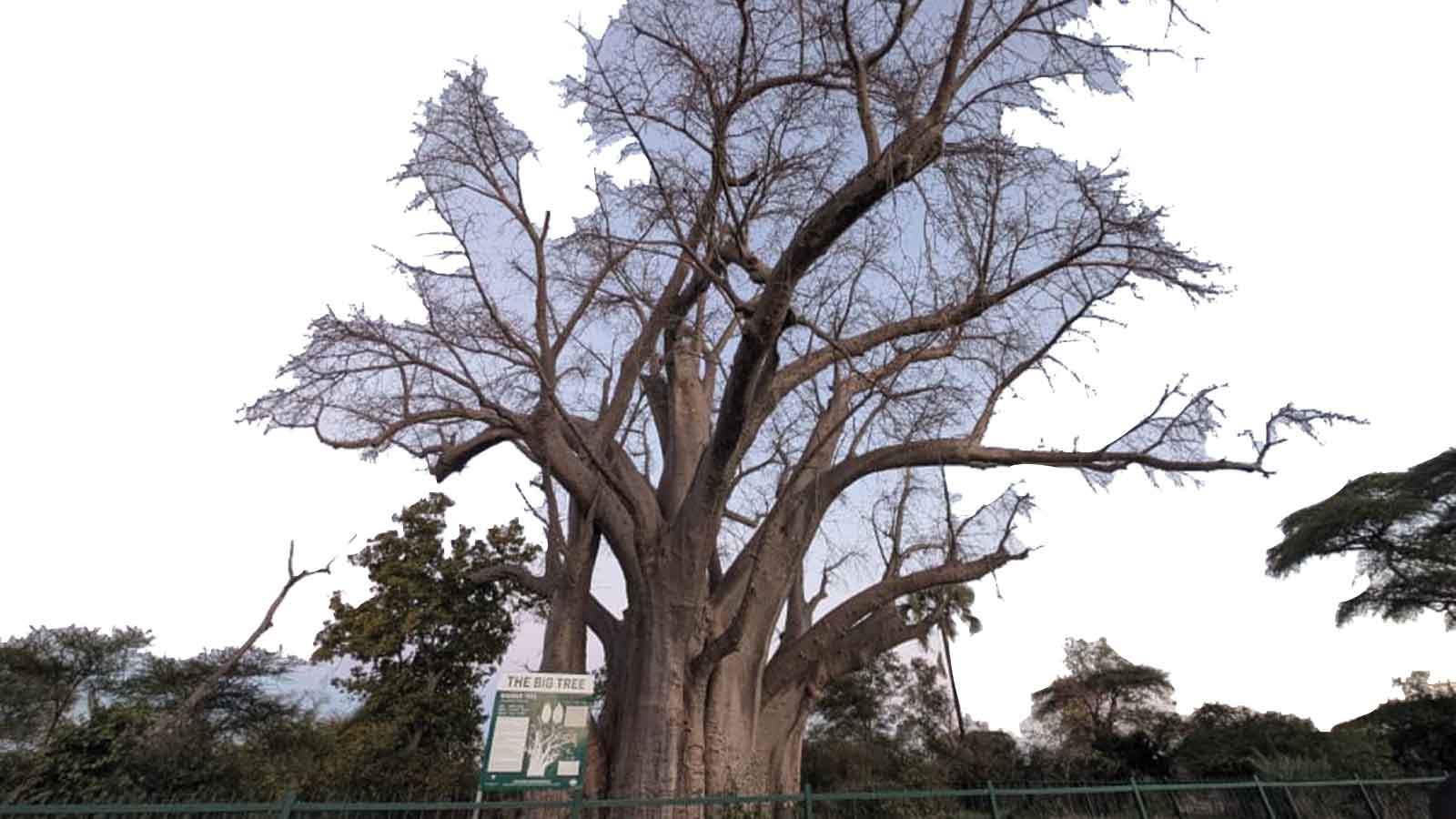
Ivan Zhakata
Features Correspondent
Towering over the landscape like a silent guardian of time, the Big Tree has become one of the enduring attractions drawing tourists to the resort city of Victoria Falls, offering visitors a glimpse into Zimbabwe’s rich natural heritage beyond the thunderous spectacle of the waterfall.
The magnificent baobab, scientifically known as Adansonia digitata, stands as a living monument to the resilience of Africa’s indigenous trees and has over the years become a popular stop for both international tourists and domestic visitors exploring the tourism capital.
Estimated to be more than 1 200 years old, the Big Tree measures approximately 22,40 metres in girth and rises 24 metres above the ground, making it one of the most striking baobabs in the region.
Its sheer size, age and unusual appearance have helped cement its place on the Victoria Falls tourism circuit, with visitors often making time to see the ancient tree and learn about its ecological, cultural and historical significance.
The baobab is popularly known as the “upside-down tree” because its branches resemble roots reaching into the sky.
For tourists visiting Victoria Falls, the Big Tree provides an experience that complements the majestic waterfalls by showcasing another dimension of the resort town’s natural heritage.
One tourist, Miss Shelly Wharton, who had visited Victoria Falls from Canada, said the Big Tree has added another memorable experience to the trip.
“When most people think about Victoria Falls, they immediately think about the waterfall,” she said.
“But coming here and seeing a tree that has survived for more than 1 000 years is something very special. It gives you a different appreciation of Zimbabwe’s natural heritage.”
Another visitor, Ms Siphiwe Khumalo from South Africa, said the attraction has allowed her to learn more about Zimbabwe’s history, wildlife and traditional folklore.
“The Big Tree is not just a tree. There is a story behind it, there is the history of the baobab, and there is the wildlife that depends on it. It was fascinating to see such an ancient tree standing so proudly,” she said.
Tourism operators said attractions such as the Big Tree were important in encouraging visitors to spend more time exploring the destination, creating opportunities for communities and businesses to benefit from tourism-related activities.
For residents, the attraction is also a source of pride and an important part of the city’s natural heritage.
A Victoria Falls resident, Miss Moreblessing Chabata, said the Big Tree has become part of the identity of the resort town.
“We are proud to have such a magnificent tree here,” she said
“It reminds us that Victoria Falls is not only about the waterfall. We have a rich natural heritage, and attractions like this should be protected and promoted so that future generations can also enjoy them.”
Another resident, Mr Prosper Mhlanga, said the continued interest in the Big Tree demonstrated the potential for local communities to benefit from tourism.
“When tourists visit attractions around the city, they support local businesses, tour operators, accommodation facilities and other service providers,” he said.
“We would like to see more of our natural and cultural attractions being promoted because this can help create opportunities for local people.”
The tree’s appeal is not only in its impressive physical stature but also in the mystery surrounding its longevity.
Carbon dating indicates that the oldest stem of the Big Tree is approximately 1 200 years old, while newer stems are estimated to be between 200 and 250 years old.
The tree is believed to have undergone several growth spurts over centuries, with new stems developing and fusing with existing ones.
Although the oldest parts of the tree stopped growing about a century ago, much of the Big Tree remains vibrant, producing leaves, flowers and fruit throughout the year.
This remarkable ability to survive for centuries has made the tree a symbol of resilience, attracting visitors fascinated by its natural history and the story of how it has endured changing environmental conditions.
A local tour guide, Mr Pedro Mbembe, said the Big Tree was an important part of the broader Victoria Falls tourism experience.
“Visitors come to Victoria Falls expecting to see the waterfall, but when we take them to the Big Tree, many of them are surprised by its size and history,” he said.
“It allows us to explain the importance of baobabs, local folklore and the relationship between people, wildlife and the environment.”
The guide said the attraction also provided an opportunity to encourage tourists to explore more of Victoria Falls instead of limiting their visits to the main waterfall site.
“The more attractions we have for visitors to experience, the longer they are likely to stay and the more they can learn about the destination. The Big Tree is a good example of an attraction that adds value to the Victoria Falls tourism package,” Mr Mbembe said.
The baobab’s ability to store up to 120 000 litres of water in its trunk enables it to withstand harsh drought conditions, while its resistance to diseases, pests and other external factors has contributed to its remarkable longevity.
Beyond its tourism value, the Big Tree also plays an important ecological role.
Its massive structure provides habitat for small mammals, birds, insects and reptiles, while its flowers are adapted for pollination by fruit bats and, occasionally, bushbabies.
The tree also produces large, hard-shelled fruits covered in a distinctive fuzzy outer coating.
The fruit pulp, known for its tart, citrus-like flavour, is consumed by a variety of animals, including baboons and elephants, as well as humans.
It is also valued for its nutritional content, providing calcium, magnesium, vitamin C, potassium and iron.
For tourists, however, the Big Tree is as much about the stories surrounding it as it is about its imposing presence.
One popular African folktale explains the tree’s unusual appearance through the story of a hyena who, after being given the baobab by the Great Spirit, became unhappy with the gift and planted it upside down.
The legend adds a cultural dimension to the attraction, allowing visitors to connect the physical landscape with African folklore and oral traditions.
The Big Tree therefore offers tourists more than a photographic opportunity.
It provides a gateway into Zimbabwe’s natural and cultural heritage, helping to diversify the Victoria Falls tourism experience.
Victoria Falls is internationally renowned for the spectacular waterfall that straddles the Zambezi River, but attractions such as the Big Tree demonstrate the depth and diversity of the destination’s tourism offering.
As Zimbabwe continues to promote domestic tourism and attract international visitors, the preservation and promotion of lesser-known natural and cultural attractions could play an important role in extending visitor experiences and spreading tourism benefits.
The Big Tree’s enduring appeal also highlights the importance of conservation partnerships in protecting natural heritage for future generations.
The ancient baobab is maintained and preserved by the Palm Hospitality Group in conjunction with the Pristine Victoria Falls Society ensuring that its story and ecological significance remain part of the tourism experience in the resort city.
For generations of visitors, the Big Tree will continue to stand as a living link between the past and present — its enormous trunk bearing witness to centuries of change while its branches reach skywards, reminding tourists that Victoria Falls is a destination whose attractions extend far beyond the roar of the world’s largest curtain of falling water.
In a city where tourism is the heartbeat of the local economy, the Big Tree has quietly carved out its own place in the story of Victoria Falls — proving that sometimes the journey to discovering a destination’s true character begins not at its most famous attraction but beneath the shade of a tree that has stood there for more than a millennium.



