Business Reporter
THE COMESA business community has recognised this year’s edition of the regional forum as one of its most successful to date, praising its high-level engagement and strategic partnerships.
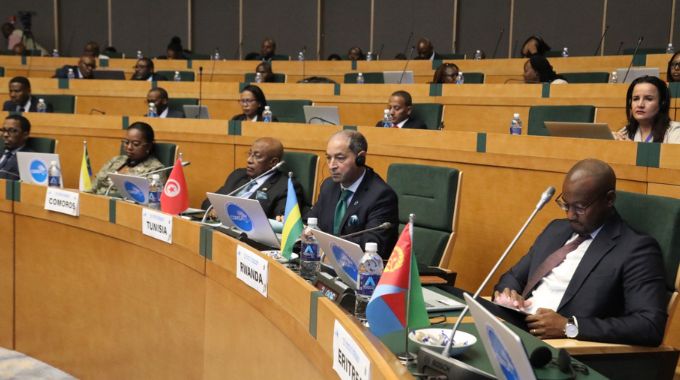
The 19th COMESA Business Forum and COMESA Green Industry Connect, held in Harare on October 19 and 20, concluded with a comprehensive declaration by regional commerce leaders.
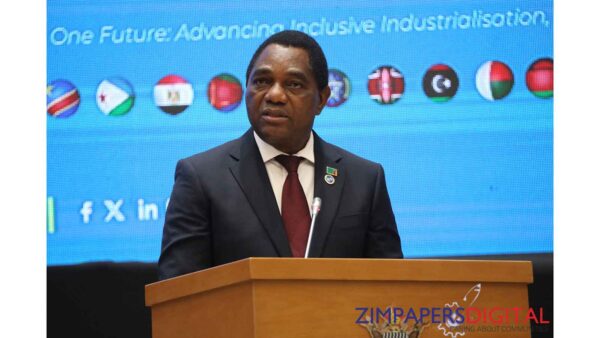
The event, held on the margins of the 25th COMESA Summit, brought together the private sector under the COMESA Business Council (CBC) to discuss the theme: “One Market, One Future: Advancing Inclusive Industrialisation, Investment and Regional Integration in COMESA.”
In their final communiqué, delegates expressed gratitude to the COMESA Secretariat, co-conveners ZimTrade and the Zimbabwe National Chamber of Commerce (ZNCC), and various sponsors.
The declaration also congratulated President Mnangagwa, the Government, and the people of Zimbabwe for hosting the forum alongside the COMESA Multi-Sectoral Trade Exhibition.
The declaration stressed that COMESA’s future depends on converting its market size and resources into a competitive, inclusive, and sustainable industrial economy. The private sector committed to shifting from commodity dependence to value addition, establishing functioning regional value chains, and scaling up investment for SMEs, women, youth, and informal enterprises.
This sentiment was echoed by Professor Amon Murwira, delivering a keynote address at the Harare International Conference Centre.
Professor Murwira underscored that Africa’s wealth lies not in exporting raw materials, but in processing, manufacturing, innovation, and retaining greater value within local economies. He called for a decisive shift toward competitive industries and sustainable green industrialisation.
The declaration noted that inclusive industrialisation requires a robust ecosystem of reliable energy, modern logistics, harmonised standards, predictable regulation, and circular-economy solutions. Private sector leaders stated that deeper regional integration must directly deliver jobs, competitive enterprises, diversified exports, and improved livelihoods.
To achieve these goals, the declaration established six key calls to action:
Build Competitive Regional Value Chains
The business community called for the coordination of industrial policies and co-investment in regional processing hubs, agro-industrial parks, and shared infrastructure for priority sectors such as agro-processing, horticulture, coffee, leather, and pharmaceuticals.
It urged the integration of SMEs and youth-led enterprises into regional supply chains through market intelligence, e-markets, out-grower models, and shared logistics hubs. The private sector also called for seamless markets achieved through the mutual recognition of standards, green lanes for certified regional goods, the Simplified Trade Regime, and coordinated border management.
Crucially, the declaration demanded that every non-tariff barrier reported through the COMESA-EAC-SADC online mechanism be resolved within agreed timelines with clear milestones. Professor Murwira challenged member states to honour their commitments by removing these barriers to enable the free movement of goods and services.
COMESA Business Council President Mucai Kunyiha told delegates that the barriers holding back regional trade are largely artificial. He noted that while everyone acknowledges that opening borders will drive growth, the difficult work of execution must now take place across governments, the secretariat, and the private sector.
Mobilise Investment and Finance at Scale
The declaration called for the establishment of national and regional credit guarantee schemes and blended finance facilities with development finance institutions to shift lenders away from collateral-heavy requirements. It urged the mobilisation of African capital through the TDB Group, Afreximbank, and ATIDI, leveraging pension funds, diaspora capital, and impact investors to provide long-term financing.
Delegates also requested expanded risk-sharing mechanisms for SMEs—including alternative credit scoring, trade credit insurance, and SME capital-raising platforms—alongside expanded local-currency lending and settlement through REPSS and PAPSS to mitigate foreign-exchange risks.
Advance Green Industry and Circular Value Chains
The private sector committed to developing harmonised COMESA standards for circularity, recycling, and refurbished goods, including a phased approach to extended producer responsibility. The declaration called for dedicated finance windows for circular SMEs and enhanced skills training to meet international requirements on sustainable packaging, traceability, and environmental performance.
This objective aligns with remarks by Zimbabwe’s Minister of Industry and Commerce, Mangaliso Ndlovu, at the Green Industries Connect forum. Minister Ndlovu urged member states to move beyond exporting raw materials, noting that governments cannot deliver green industrialisation alone. He stated that regional ambitions must extend to developing the skills, technologies, and productive capabilities required to capture a greater share of emerging value chains.
The declaration additionally called for the scaling of the regional leather value chain from raw hides to finished regional products and brands, supported by strict traceability and regional procurement policies.
Strengthen the Digital Backbone
The declaration concluded by calling for accelerated, interoperable digital trade systems, including electronic certificates of origin, national single windows, digital customs, the COMESA Yellow Card, and the mutual recognition of digital documents. It also emphasized the need for harmonised digital public infrastructure, including digital identity systems, e-signatures, robust data protection laws, and seamless cross-border data flows to safely connect national payment platforms.