Martin Kadzere in BIKITA, Masvingo
Bikita Minerals has engaged the Government over the December 31 deadline on unprocessed lithium concentrate exports, as mining companies seek to align with the Government’s drive to accelerate local value addition and mineral beneficiation.
The engagement comes as Zimbabwe’s oldest lithium operation advances its multi-stage processing infrastructure, targeting total investments exceeding US$900 million by 2027.
At the centre of the consultations is Bikita Minerals’ US$400 million lithium sulphate plant. Although the lithium sulphate plant — which has an annual production capacity of 100 000 tonnes — was originally scheduled for completion in March 2027, supply chain bottlenecks and shipping logistics have pushed the projected commissioning date to July 2027.
“Our initial projection was March 2027 and they (Government) had accepted. But due to delays in shipping the equipment and other issues beyond our control, we can no longer meet the deadline.
“We are engaging the authorities and we are fully confident that we will commission the plant next July,” said deputy general manager (chief public relations officer) Ms Amanda Makausi during a debriefing ahead of a media mine tour organised by the Minerals Marketing Corporation of Zimbabwe (MMCZ) in partnership with the Zimbabwe Environmental Law Association.
The Government initially imposed a strict ban on the export of unprocessed raw lithium ore and concentrates in February to compel mining firms to invest in domestic processing facilities, as mining consolidates its foothold as one of Zimbabwe’s key sectors.
Following extensive industry consultations, authorities temporarily eased the restriction, providing phased timelines tailored to processing plant construction schedules across the sector.
Lithium has overtaken platinum as Zimbabwe’s top non-precious mineral foreign currency earner, with lithium sales reaching US$1,24 billion in the first eight months of this year.
Mining generates over 80 percent of Zimbabwe’s total export earnings, making lithium a central pillar for national financial stability and supporting the local currency (ZiG).
The sector has attracted over US$1,4 billion in investments — largely from major Chinese companies like Zhejiang Huayou Cobalt, Sinomine and Tsingshan — stimulating infrastructure and industrial development.
While Bikita Minerals works towards its 2027 commissioning target for its chemical unit, Prospect Lithium Zimbabwe (PLZ) — owned by Zhejiang Huayou Cobalt — became the first lithium producer in the country to export lithium sulphate in April this year after commissioning its processing infrastructure at Arcadia.
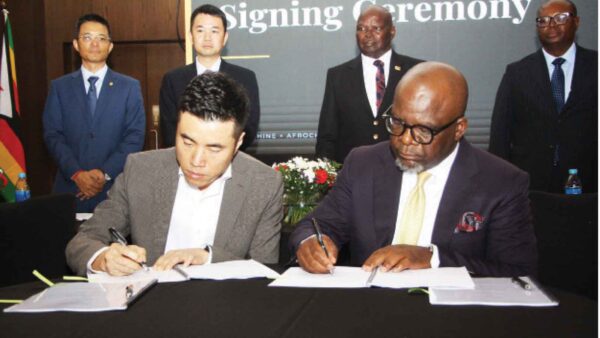
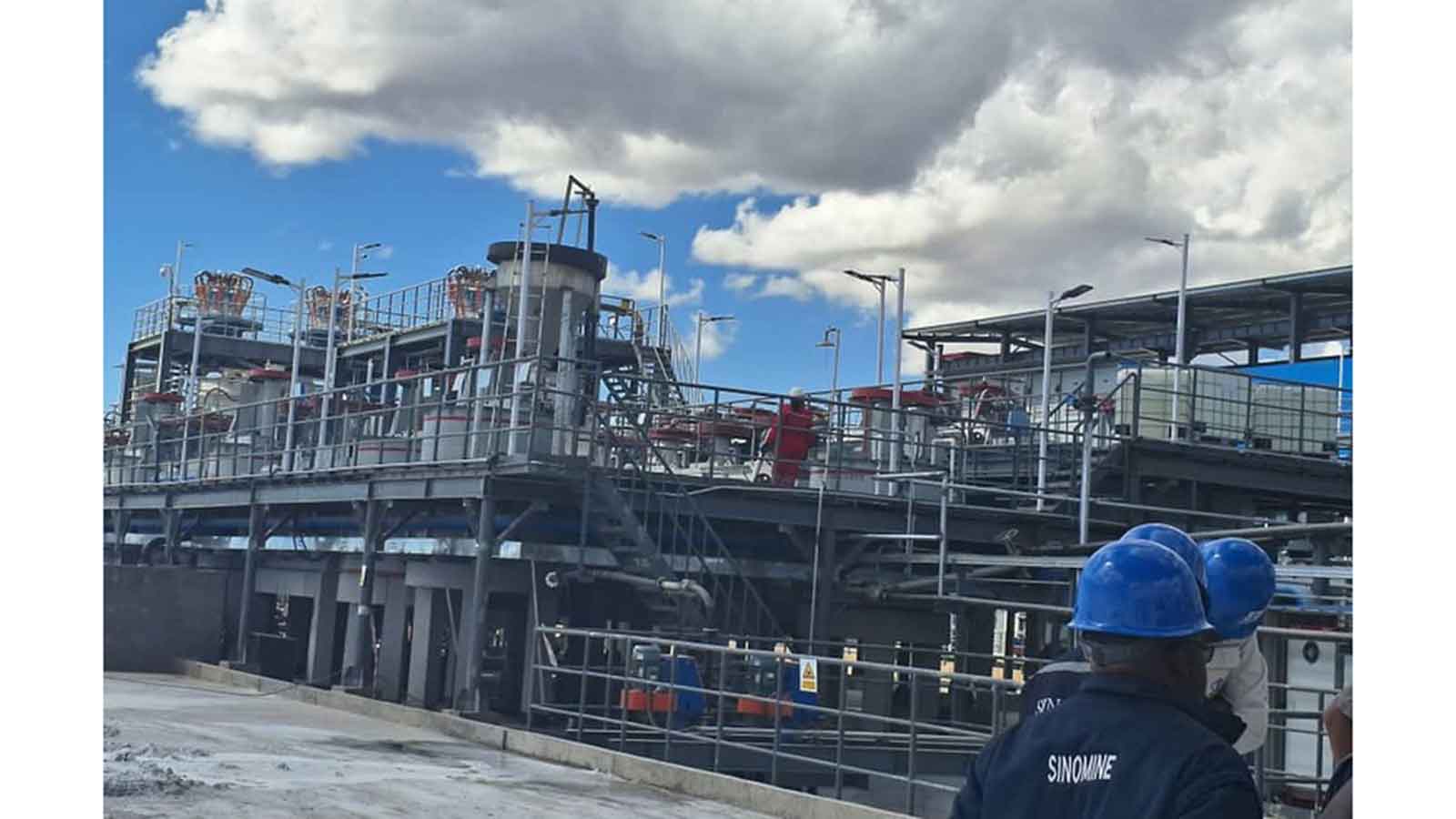
Following its acquisition by China’s Sinomine Resource Group in 2022, Bikita Minerals has executed an extensive capital expansion programme to capture value across all mineral fractions within its ore body.
Highlighting the scope of the projects, deputy general manager (technical) Mr Thomas Mufumi outlined the company’s operational transition and beneficiation strategy:
“So, in support of the Government’s development strategy, NDS1, Bikita Minerals has been on a drive of beneficiation to expand its beneficiation scope,” Mr Mufumi said.
“The main thrust is sustainable mineral processing and sustainable mineral extraction. The main thrust is gaining value from all our minerals contained in our ore bodies.”
Mr Mufumi noted that Sinomine has already deployed significant capital into completed processing units while preparing for further downstream integration:
“So, upon acquisition of Bikita Minerals by Sinomine, Sinomine has invested in excess of US380 million in beneficiation plants. The US380 million accounts for the completed projects thus far, and we are projecting in excess of US$900 million by 2027.”
Detailing the phase-by-phase rollout, Mr Mufumi said phase one of the tantalite extraction project has been completed following an investment of US3 million, while the second phase will cost US$12 million.
Bikita is also expanding its spodumene processing capacity from two million tonnes to 3,3 million tonnes for US$60 million.
“It is an integrated system of beneficiation to make sure that we gain value from all the constituent minerals that are of economic importance.
“That is the thrust to support the national agenda and also to gain value for all our stakeholders and our shareholders.”
The push for local refining aligns with Zimbabwe’s broader goal of positioning itself as a regional battery-grade chemical hub rather than an exporter of unrefined rock.
“Lithium has rapidly emerged as the country’s single largest foreign currency earner among non-precious minerals, eclipsing traditional base metals following heavy capital inflows into hard-rock spodumene and petalite deposits.
Dr Nomusa Moyo, general manager of MMCZ, said that lithium concentrate has overtaken PGMs as their leading revenue source, “giving us more than what we expected.”
“We got our first lithium consignment from PLZ, which is a sign that the lithium producers are taking the lead in value addition and beneficiation,” Dr Moyo said.
“It is our hope that with major developments we are seeing from the lithium producers who are taking the lead in value addition and beneficiation, we are actually going to realise more revenue, an increase in employment, and technological development in our country as they bring in technology, which we hope will also cascade to the locals.”
Zimbabwe holds the largest lithium reserves in Africa and ranks among the top five globally for hard-rock pegmatite lithium deposits (such as the Bikita and Arcadia mines).
Global net-zero emissions targets and the massive scaling up of electric vehicles and grid-scale energy storage have turned lithium from a basic industrial chemical into a high-demand “transition mineral”.