Theseus Shambare
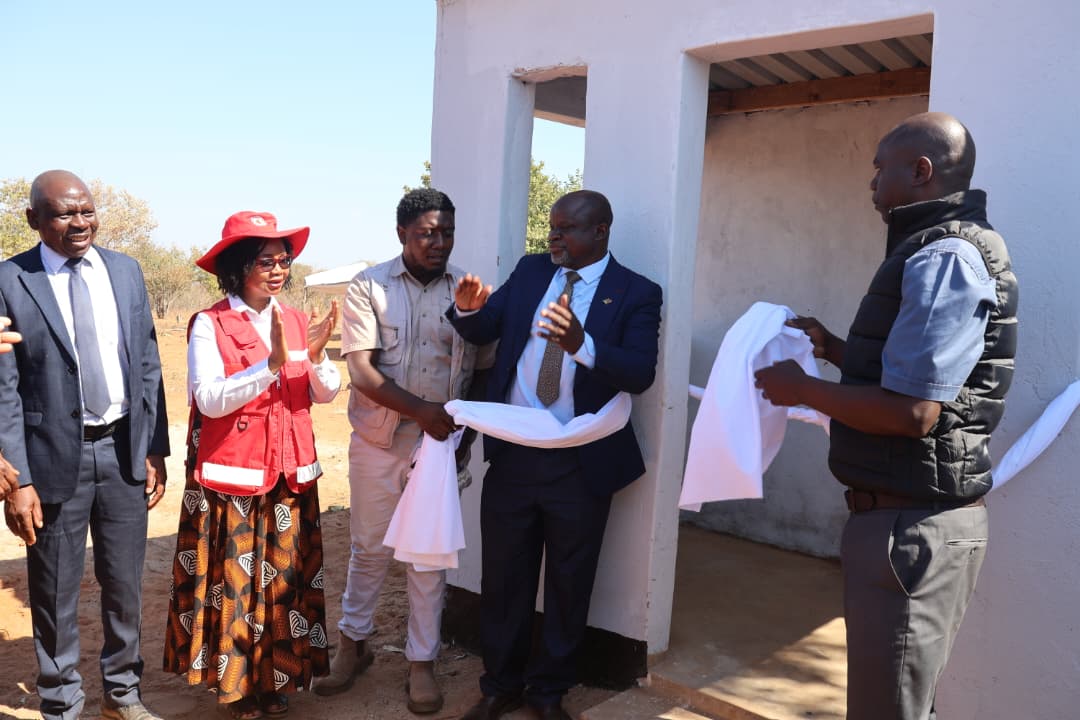
COMMUNITIES in Binga District have received a major boost to climate resilience and rural livelihoods following the commissioning of the Mankobole Dip Tank and the Mupambe Piped Water Scheme by the Zimbabwe Red Cross Society (ZRCS), with support from the Finnish Red Cross and Danish Red Cross.
The two projects, implemented under the Climate Smart Resilience Initiative in Siansundu Ward 9, are designed to strengthen communities’ capacity to withstand the growing impacts of climate change by improving access to reliable water supplies and protecting livestock from disease.
The Mankobole Dip Tank, funded by the Finnish Red Cross in partnership with ZRCS, is expected to reduce livestock losses caused by tick-borne diseases significantly.
Before its construction, farmers were forced to travel nearly 20 kilometres to access dipping facilities, increasing costs and limiting regular livestock treatment.
Livestock remains a key livelihood asset in Binga, providing households with income, food security and draught power for agricultural production. However, irregular access to dipping facilities contributed to increased cattle losses from diseases including anaplasmosis, East Coast fever, babesiosis and heartwater.
Provincial Director for Veterinary Services in Matabeleland North Province, Dr Sitokozile Sibanda, said protecting livestock health was critical for sustaining rural economies.
“Livestock is a very important asset for communities in Binga and across Matabeleland North Province. These animals are not just cattle; they are a source of wealth, food security and support for farmers’ livelihoods,” she said.
Dr Sibanda said the new facility would improve access to animal health services and help farmers protect their herds.
“Previously, farmers had to travel long distances to access dipping services and this affected regular dipping programmes.
The coming in of this dip tank will improve access to animal health services and help reduce losses caused by tick-borne diseases,” she said.
Speaking on behalf of the Matabeleland North Provincial Affairs and Devolution Minister Richard Moyo, District Development Coordinator, Mr Land Siansole Kabome said the projects demonstrated the importance of partnerships in addressing rural development challenges.
“These projects demonstrate the power of collaboration in addressing community priorities. They contribute directly to improved livelihoods, public health and resilience while supporting the Government’s vision of inclusive and sustainable rural development,” he said.
Finnish Red Cross programme and finance officer Ms Loice Munhenga said the dip tank was identified as a priority by the community through a local action plan before implementation.
“The dip tank project was selected as a priority by the community in their community action plan developed before commencement of the project,” she said.
“Through collaboration, commitment and unity of purpose, various stakeholders put their hands together to construct the Mankobole dip tank.”
Ms Munhenga said protecting livestock was important in safeguarding household wealth.
“Livestock is the community’s cornerstone of wealth and livelihoods and therefore needs to be protected from diseases,” she said.
“A healthy herd ensures that our wealth is securely preserved at the family, community and national level.”
Zimbabwe Red Cross Society president, Mr Edson Mlambo, said the sustainability of the projects depended on community ownership.
“The success of these projects reflects what can be achieved when communities take the lead in identifying solutions to challenges affecting their lives,” he said.
ZRCS Secretary General, Mr Elias Hwenga, said improving access to water and protecting livestock would help communities withstand future climate shocks.
Meanwhile, the Mupambe Piped Water Scheme, supported through the climate resilience programme with partners including the Danish Red Cross, has restored hope for households and schools that previously struggled with unreliable water supplies.
The project involved solarising a previously non-functional borehole and installing a piped system supplying Mupambe Primary School with 574 learners and Mupambe Secondary School with 193 learners, while also benefiting surrounding villages.
Community member Mrs Georgina Mnkuli said the projects would help protect livelihoods.
“When our cattle were dying, life became very difficult because we depended on these animals,” she said.
“A cow is like a bank for a family here. When you lose cattle, you lose the source of income that helps you survive.”
The interventions were implemented through collaboration between ZRCS, Government departments, ZINWA, the Department of Veterinary Services, traditional leaders and local communities.