Chronicle Editor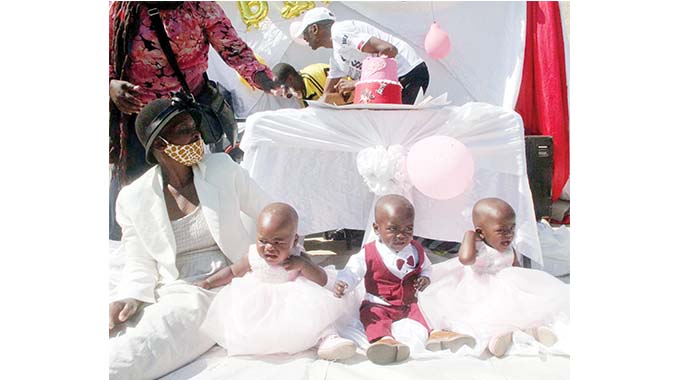
Nkosilathi Sibanda, Sunday News Correspondent
WHEN a 32-year-old woman from Binga died at Mpilo Central Hospital in Bulawayo soon after giving birth to triplets last year, it was not only her family that grieved.
The country was left adding on the count of maternal deaths that could have been saved. The late mother, who was from Dinde Village in Binga bled to death after giving birth to two girls and a boy. She reportedly lost three litres of blood at St Patrick’s Mission Hospital in Hwange where she delivered the triplets before she was rushed to Mpilo, 340km away.
At the time of the birth of the triplets, Mpilo Central Hospital was reportedly inundated with sympathisers from Bulawayo and around the country who donated money and goods for the welfare of the infants. Today, a year later, the three children are staying with their uncle in Cowdray Park, where they are being taken care of by their grandmother. The father reportedly returned to Binga after the birth of the children.
A year later the triplets, fittingly named Sibonginkosi and Sithembinkosi, the girls and Sihlesenkosi are bouncing, healthy babies. Despite the misfortunate of having to breathe their first without a mother, the three babies have caught the eye of many well-wishers. Among them was an organisation that helped celebrate their first birthday on Friday. They will turn one year on 24 September, but a non-governmental organisation, Sabona Trust decided to throw an early birthday party at the uncle’s home.
The organisation took care of the children from the time they were discharged from hospital. Held under the usual Covid-19 preventive procedures, the birthday party was nothing short of pomp. While the triplets cried, unknowingly, of the essence of the celebration before their eyes, it was an event that filled both the family and neighbours with joy. Since birth, Mr Malcom Ncube, their uncle took them under his care, but it has not been easy, he admits. Mr Ncube who also supports his other extended family members said the triplets’ upkeep was demanding.
“Life has not been easy. My family and I have been with the triplets since day one when they were discharged from the hospital. If it was not because of the help we received from Sabona Trust and other well-wishers, I don’t know how we would have survived.”
The triplets, just like all babies, need special supplementary feeding. The cost of baby food is out of reach of many, worse with the unexpected burden that befell the Ncube family.
“Now and then we buy their food from South Africa when we can afford it. As you know, local food is expensive,” said Mr Ncube.
He said once in a while his family succumbs to stress, owing to the prevailing economic hardships, but then, thanks to the emotional support of the triplets’ grandmother, Ms Felicia Sibanda, the children are in good shape.
“The babies’ grandmother is the pillar that has kept us standing firm in all the struggles. When we are down, looking for where to get support, she comes handy. From washing their clothes, feeding and keeping them happy. We are grateful.”
In an interview at the birthday party, Sabona Trust projects coordinator Mr Munyaradzi Nyamande said; “We have been supporting the triplets with baby products and foodstuffs and we are happy that the children are growing up well and are healthy, considering that they had a bad start, with their mother passing away,” said Mr Nyamande.
In addition to the monthly provisions, Mr Nyamande said Sabona Trust pledged that his organisation will take care of the children’s education from primary to tertiary level.
“We have committed to assist in the welfare of the triplets including their education. We are not going to be like other organisations and well-wishers that have a tendency to offer a once off assistance. Sabona Trust will continue to assist the children.”
The unfortunate death that met the triplets’ mother is one account that spells out the dire situation most women face at childbirth. Bleeding during delivery has claimed the lives of more than 2 400 pregnant women in Zimbabwe annually according to the United Nations Population Fund (UNFPA). Bleeding at child birth remains the number one cause of maternal deaths at 29 percent followed by infections which account for 14 percent.
Poverty, unhygienic conditions in rural clinics and the absence of skilled midwives and other health personnel are some of the compounding factors leading to maternal mortality. The country’s maternal mortality rate remains at 640 per 100 000 births according to the latest Zimbabwe Demographic Health Survey.


 Online Reporter