Chronicle Editor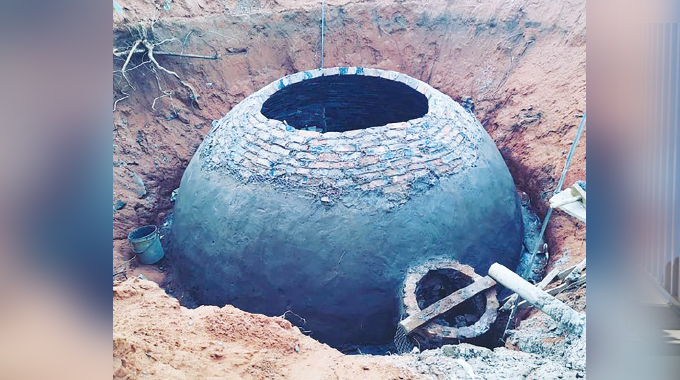
Johnson Siamachira
Deep in the heart of rural Zimbabwe, a quiet revolution is taking place. Rural communities across the country are adopting biogas by using biodigesters, a simple technology to produce clean and easily accessible renewable energy from biomass.
Biogas is an energy product derived from biodegradable organic material such as animal waste that is decomposed in the absence of oxygen, producing a gas mixture that is mainly composed of methane (gas). The gas can be used directly for cooking and lighting or for generating electricity.
Biodigesters hold tremendous potential for Zimbabwe. In this Southern African nation of 17 million people, where only 42 percent of the population has access to electricity, these innovative systems are providing a sustainable, affordable, and reliable energy solution. Rural communities meet 80-90 percent of their energy needs from wood-fuel.
According to Zimbabwe’s National Energy Policy of 2012, the country’s primary energy supply is dominated by traditional fossil fuel-based energy sources.
Biomass is one example of a renewable energy source. One major advantage of the use of renewable energy is that it is sustainable and so will never run out. Renewable energy facilities generally require less maintenance than traditional generators. Their fuel, derived from natural and available resources, reduces the costs of operations.
“Before the biogas initiative, my family struggled to access firewood and paraffin,’’ said Prosper Warikandwa, a smallholder farmer from Goromonzi district in Mashonaland East Province. “We would spend many hours each day collecting firewood, and the fumes from the paraffin stoves would choke us and make my family members sick,’’ she recounts.
“Now, we have a clean gas for cooking, and the left over slurry is a rich fertilizer for our crops, especially horticulture. It’s been life changing,’’ says Warikandwa.
Warikandwa’s story is familiar in this area, where over 70 percent of the community lives without access to reliable energy sources. The heavy dependence on traditional fuels not only strains household budgets, but damages the local environment, with rampant deforestation a major threat. The country loses about 60 million trees — some 262 000 hectares of forests every year.
The Goromonzi project aims to change this narrative. Through the construction of community-owned biodigesters, the initiative harnesses the power of organic waste to generate clean,renewable energy. Depending on size, each plant can produce enough biogas to fuel several households, reducing the need for firewood and paraffin. The project is bringing affordable and sustainable fuel to rural households, breaking the cycle of reliance on expensive and environmentally-damaging alternatives.
“Collecting firewood is a very difficult task for most families in our district. People spend at least six hours collecting about 40 kg of firewood,’ said another farmer, Loveness Round, of Mututa Village in Mudzi district, also in Mashonaland East Province. She is one of the community members using the biogas technology by constructing biogas digesters in their homes to generate energy. “Firewood has become scarce in our village and biogas has provided solutions to our energy challenges,’’ she said, adding, “Our horticulture crops yields have also improved dramatically, thanks to the organic fertiliser. It’s a win-win for us and the environment.’’
“The government, through the Ministry of Energy and Power development and the Rural Electrification Fund(REF) is also partnering non-governmental organisations in training local builders nationally to increase access to clean and sustainable energy to every Zimbabwean,’’ said Blessing Jonga, a Ministry of Energy and Power Development biogas expert.
According to the Ministry of Energy and Power Development, over 800 biodigesters have been installed country-wide since 2012, with a 98 percent functionality rate.
As the country continues to grapple with energy challenges, the role of biodigesters is only set to grow. While the Rural Electrification Agency has been electrifying rural areas, the pace is constrained by inadequate resources, uneconomic and sparsely populated areas rendering the backbone rollout unviable in some cases. In the meantime, the 19 percent rural electricity access presents a huge opportunity for distributed renewable solutions covering mini hydro, solar, wind, and biomass.
The Government has set an ambitious target of installing 8 000 domestic biodigesters and 200 institutional biodigesters by 2030. This target is part of the country’s broader renewable energy strategy, which aims to increase the share of renewable energy in the national energy mix to 16 per cent by 2030. To achieve this target, the Government has partnered with various international organisations to secure funding, training and technical support.
Energy is critical to Zimbabwe’s sustainable development and is at the centre of all developments,
Investing in renewable energy technologies is a promising option for combining the multiple goals of climate change mitigation, a low-carbon economy, employment creation especially among the youth, taking advantage of the growing number of young people out of work,
According to the United Nations Environment Programme, a green economy is one that results in improved well-being and social equity with a minimal impact on the environment. Green investments are also an important component for supporting entrepreneurial initiatives, skills development and technology transfer, all of which are critical to economic growth and development.
Under-served “last-mile” populations removed from electric grids can benefit most from off-grid biogas and other decentralised offerings, which can be installed more quickly and at less cost than traditional electric grid approaches. Through the Renewable Energy policy, the country plans to set up a green-energy fund to promote the use of renewable energy, with the aim of increasing electricity production. The policy aims to promote investment in the renewable energy sector by providing specific incentives. Tax concessions will be offered to independent power generators selling electricity to the Zimbabwe Electricity Supply Authority (Zesa), the national utility, alongside reduced licensing fees.
The partnership with funding agencies, combined with the Government’s strong commitment to renewable energy, are helping to drive the rapid expansion of biodigesters across Zimbabwe, bringing clean, sustainable energy to thousands of people,
“Biodigesters are the key to a brighter, more sustainable Zimbabwe,” says Warikandwa. – New Ziana.


 Online Reporter