Online Reporter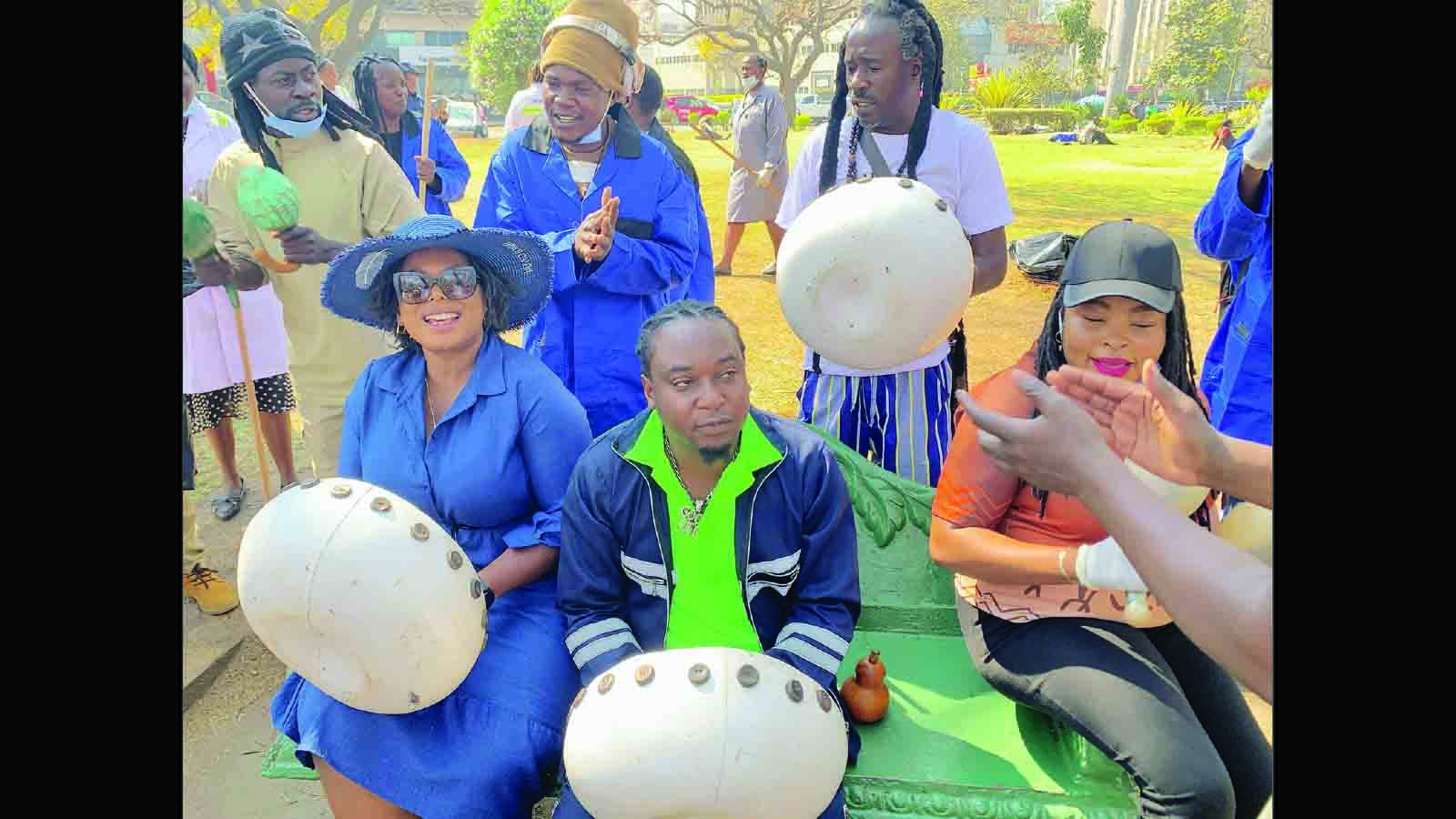
Trust Khosa
Lifestyle Senior Writer
In four days, we will bid farewell to September and welcome October.
What an eventful month it has been, with rich cultural celebrations taking centre stage and reminding Zimbabweans of the importance of preserving their heritage.
As has become the norm, September — regarded as Mbira Month — brought cheer to culture enthusiasts, who reflected on the historical and cultural significance of the mbira and its enduring place in Zimbabwean society.
After all, the mbira was inscribed on UNESCO’s Representative List of the Intangible Cultural Heritage of Humanity in 2020, resulting in renewed global appreciation of the instrument and its traditions.
Six years on, the mbira remains sacred, while September has been embraced as Mbira Month with the endorsement of the Ministry of Sport, Recreation, Arts and Culture, in conjunction with the National Arts Council of Zimbabwe (NACZ).
The Bira ReMbira Festival, which ended in the early hours of yesterday at Glamis Stadium in Harare, was one of the major highlights of the month-long celebrations.
Of interest was the fact that the festival was being held for the third year in a row, further underlining the growing appreciation of mbira music and the traditions associated with it.
For custodians of Shona culture, historians and those passionate about their roots, however, the most intriguing aspect of the festival was the concept of “Bira”.
Bira is a cultural practice that continues to be observed in many parts of Zimbabwe throughout the year.
The only difference now is that, in some instances, it has been brought into the public domain and given a commercial appeal.
However, the fundamentals of the practice remain largely unchanged despite its modern presentation.
Bira is a special word that can loosely be associated with an all-night gathering involving music, dancing, food and drink, often around a bonfire, with participants coming together for communal and spiritual purposes.
There are two distinct segments to a Bira, making the practice particularly unique.
The first segment is open to everyone who wishes to come together, socialise and enjoy traditional music, food and dance.
Children can also attend this part of the gathering, where they are exposed to aspects of their cultural heritage in a communal setting.
The second segment is traditionally reserved for elders and may continue until dawn.
It is a more spiritual and private affair, during which participants engage in rituals, songs and communication associated with ancestral traditions.
Drummers, mbira players and dancers take centre stage, creating an atmosphere that combines music, dance, spirituality and communal participation.
With Bira ReMbira now firmly established as one of the major highlights of Mbira Month, the cultural significance of the practice has once again come to the fore.
Beyond the entertainment value, such gatherings provide an important platform for transmitting cultural knowledge, values and traditions from one generation to the next.
They also give younger generations an opportunity to witness and appreciate practices that might otherwise be lost amid the rapid changes brought about by modern life.
This makes Bira more than just a gathering centred on music and entertainment.
It is a living expression of Zimbabwean identity, connecting communities with their history while providing space for cultural practices to evolve without losing their essence.
This is Bira for you.
Experts who spoke to The Herald on Saturday Lifestyle about the recently held Bira ReMbira, which brought the curtain down on this year’s Mbira Month, underscored the significance of the traditional gathering.
They were also fascinated by the concept of the Bira, which has been on many people’s lips in recent weeks.
The event was dedicated to the late mbira icon Mbuya Stella Chiweshe, who played a pivotal role in promoting Zimbabwean culture beyond the country’s borders.
The gesture resonated well with this year’s theme, “Roots to Markets – Empowering Makers, Players and Markets,” which highlighted the need for mbira players and other cultural practitioners to derive meaningful value from their work.
Mbuya Stella Chiweshe’s daughter and mbira player, Virginia Hetze, nee Mkwesha, whose mother was honoured at the event, spoke about the significance of such traditional ceremonies.
“Traditional ceremonies of this magnitude are very critical for us,” she told The Herald on Saturday Lifestyle.
“This has always been our way of life for some of us, and I have learnt a lot through my mother, with whom I stayed for the greater part of my life.
“She loved her culture and lived true to herself. She was not even ashamed of her culture despite staying abroad for decades.
“Her wish was to be buried here, and it so happened that she never deviated from what she stood for.”
Added Hetze: “I am proud to have had a mother who respected her roots, and we value such gatherings like the Biras.
“Of course, we can’t hold them in the same way we would have wished, but I am glad that we still maintain our culture by honouring our roots,” she said.
Similar sentiments were echoed by Benjamin Nyandoro, one of the co-directors of the 2026 Bira ReMbira, alongside Partson “Chipaz” Chimbodza and Diana “Mangwenya” Samkange.
“Such gatherings are crucial, and we should take pride in them because they bring us back to our culture,” Nyandoro said.
“The fact that there is participation by schoolchildren, particularly those in primary schools, means we are catching them young. This is so prudent, and we need to continue doing that with each passing day,” he said.
Mangwenya, whose love for her tradition is well documented, added:
“Holding such gatherings has always been part of our lives, and we need to carry on doing what our ancestors used to do.
“It’s our way of worshipping our ancestral spirits, which is not a taboo at all.
“I am glad to be part of the new crop of people pushing for cultural identity.
“We need to practise this, and we can’t run away from ourselves.”
Traditional Biras were historically held at family or community level, where people sought to reconnect with their ancestral spirits, known as Vadzimu. Such gatherings were used to seek spiritual guidance on serious matters, appeal for rain and mark important milestones in the lives of individuals and communities.
For many families, these rituals remain an important part of cultural life, particularly around the post-harvest period.
The gatherings provide an opportunity for communities to reconnect with their heritage while passing cultural knowledge from one generation to another.
What has further raised the appeal of Biras is the prominent use of traditional music and dance, including the mbira, gourd rattles or hosho, singing and ritual dancing.
These elements can form part of ceremonies in which participants seek spiritual connection through a medium, or svikiro.
Top mbira players, including Tendayi “Samaita” Gahamadze of Mbira DzeNharira, Wilfred “Nyamasvisva” MaAfrica of Maungira eNharira, Virimai “Vee Mhofu” Nhedenga of Dzivarembira, Mangwenya, Sasha “Amadhuve” Lushomwa and United Kingdom-based mbira player, spiritualist and healer Linos “Wengara” Magaya, continue to champion Zimbabwe’s musical and cultural heritage.
Wengara was recently in Zimbabwe, where he conducted a Bira in Mhondoro, his home area, as he sought to reconnect with spirit mediums and his ancestral roots.
The growing interest in Biras also demonstrates the enduring place of indigenous culture in contemporary Zimbabwean society. While Western influences have transformed many aspects of everyday life, traditional gatherings continue to provide communities with spaces to celebrate identity, preserve heritage and reconnect with their roots.