

 Online Reporter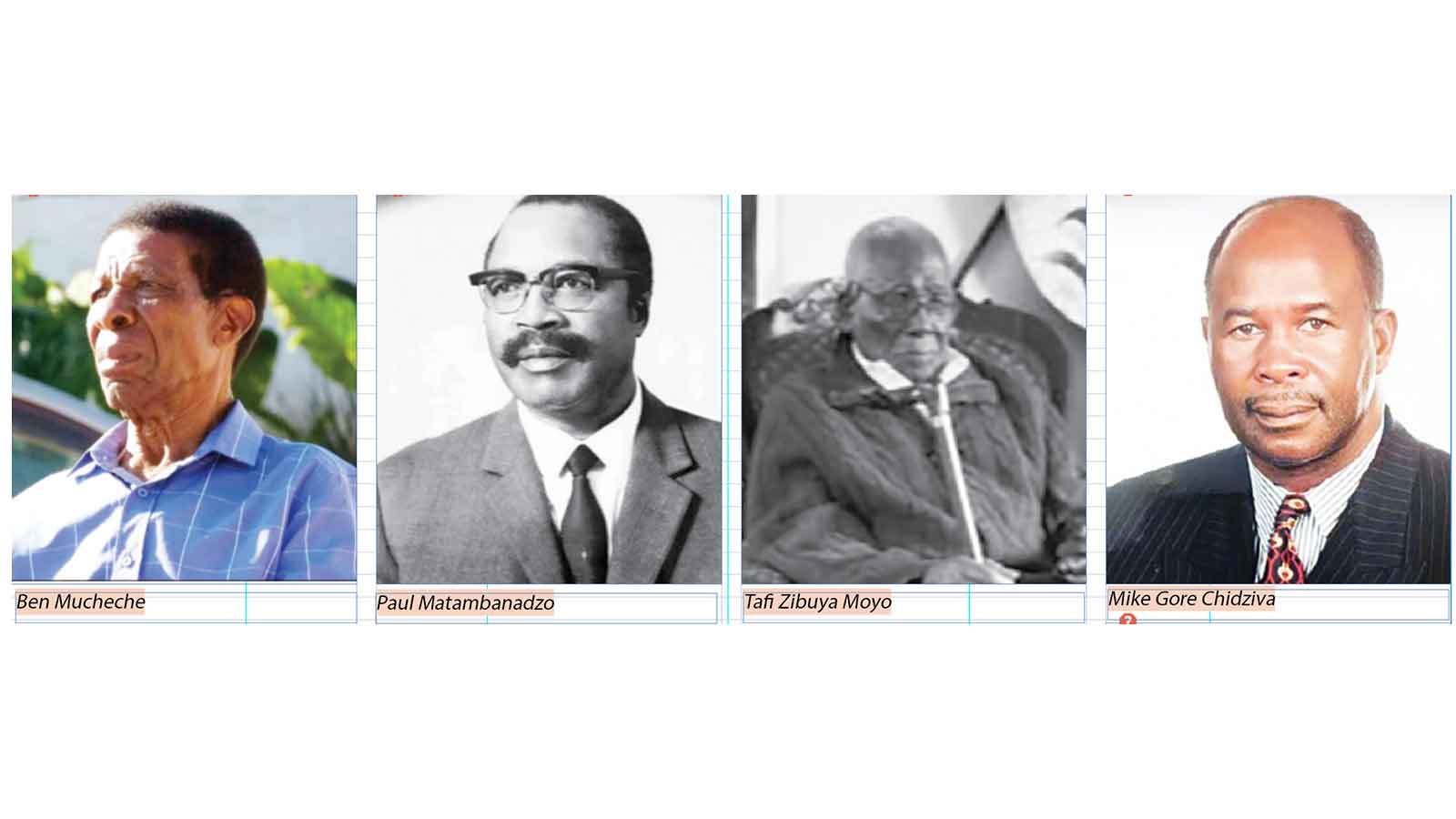
Ranga Mataire
Group Political Editor
ZIMBABWE’s liberation struggle was a concerted multifaceted struggle that involved the generality of indigenes who felt the need to support ZANLA and ZIPRA- the two military wings of ZANU and ZAPU that spearheaded the armed struggle against the repressive colonial regime.
Besides the two armed wings of the two liberation movements (ZANLA and ZIPRA), indigenous businesspeople in cities like Harare, Mutare, Gweru and Bulawayo also rendered financial and material support. These businesspeople sacrificed their businesses and even lives as they were constantly targeted by colonial authorities.
Some of these black businesspeople who rarely get acknowledgement when the story of Zimbabwe’s liberation is told include Ben Mucheche, Paul Matambanadzo, George Tawengwa, Tafi Zibuya Moyo, Mike Gore Chidziva and many others.
Many of the businesspeople were into the transport or retail sector. They faced insurmountable odds in making their businesses viable in an environment that racially discriminated black people who were treated as second class citizens in their own country.
Ben Mucheche
Martin Beno Nhau “Ben” Mucheche (1927-2023), was a pioneering entrepreneur, farmer, and national hero who broke racial barriers in business to build a thriving transport business. Born in Chishawasha and educated at Chishawasha Mission up to standard 6, Mucheche first worked as a teacher before embarking on his transport business in 1956.
He started off as a taxi operator under the name Easy Way Taxis with just 300 pounds’ savings. History records that he was the first black person in colonial Rhodesia to own a fleet of taxis with a dedicated taxi rank at Machipisa Shopping centre in Old Highfield, Harare. His fleet expanded to six making it possible for Mucheche to sell the taxis and bought two busses, marking the birth of Mucheche Bus Services.
Despite colonial era restrictions on black entrepreneurship, Mucheche soldiered on and was on several occasions a target of arson and harassment by the colonial regime. A year before independence Mucheche Bus Services had 75 busses, making the businessman a major figure in the country’s transport sector.
Mucheche used his transport business to support the liberation struggle as his busses were on numerous occasions used by nationalists like Robert Mugabe, Joshua Nkomo, Ndabaningi Sithole, James Chikerema, Edgar Tekere, George Nyandoro and Paul Mushonga. At his personal risk, Mucheche clandestinely provided financial support, food, telephone services and logistical support to ZANLA combatants. In recognition of his contribution, the Government saw it fit to confer national hero status on the man largely viewed as a pioneer of black empowerment and a daring businessman.
Paul Matambanadzo
He rose from poverty-stricken upbringing to a prominent transport operator. After his parents failed to fund his education beyond Standard 3, the young Matambanadzo started work as a farm labourer at the age of 13 and later found work as a cook in a white household in the then Salisbury.
After being a cook, Matambanadzo found a job as a bus conductor. As fate would have it, he acquired permit in 1956 to operate a bus service between then Hartley, Sinoia and Sipolilo. After overcoming financial difficulties, he managed to buy his own bus and used to drive it himself. His busses later expanded to 75. Besides busses, Matambanadzo used to run shops in various areas particularly in Mt Darwin.
Matambanadzo utilised his transport business to carry freedom fighters including transporting vital supplies to various remote areas in rural areas. He also supported the mobilisation of masses to rebel against the colonial regime, which he saw as inhibiting black businesses. Freedom fighters regularly relied on indigenous transport operators like Matambanadzo for transit, provisions and operational mobility within rural zones.
George Tawengwa
Arguably the first black millionaire in colonial Rhodesia, George Tawengwa was a businessman who engaged in transport, retail and agriculture sectors. When the young Tawengwa was 12 years old, he ran away from home after a fight with his father and ended up at Grinham Farm in the then Marandellas.
He started off as cattle herder for Robert Grinham, the eventual owner of Ruzawi School and Springvale House. At 15 years, the young Tawengwa left Grinham farm to go work for Meikles Hotel as a dishwasher and later being promoted to waiter. He used his savings as a waiter to buy a wood planer with mesh wire used to refine mealie meal and other grains.
At his peak, Tawengwa owned Mushandira Pamwe Hotel, which became popular with African nationalists like Robert Mugabe and Joshua Nkomo. Artists like Oliver Mtukudzi, Thomas Mapfumo and Simon Chimbetu found the place a “haven” for their shows.
Tafi Zibuya Moyo
Tafi Zibuya Moyo (1906 – December 8, 2014) was a Zimbabwean nationalist, pioneering indigenous businessman, and patron of Highlanders Football Club who heavily financed and supported the liberation struggle through underground logistics, transport, and resource mobilization. Moyo donated funds, crops, and livestock sales to support early nationalist movement including the African National Congress (ANC), NDP, and ZAPU.
He is well known for donating 350 Pounds to the Southern African National Congress to fund Dr Joshua Nkomo’s trip to London in the 1950s for talks regarding the Federation of Rhodesia and Nyasaland. He is famed for being one of the earliest Black transport operators in Matabeleland to introduce a diesel-powered bus and ran the “Try Again” retail and buss transport businesses. He covertly moved arms, supplies, and guerrilla personnel, including assisting early pioneer combatants.
Moyo started nationalist activities when it was not fashionable doing so. He suffered lengthy detentions and arrests by Rhodesian authorities at prisons like Grey Street and Wha due to his active underground defiance.
Mike Gore Chidziva
Chidziva was an accomplished businessman and farmer. He was conferred with a State-Assisted funeral in honour of his contribution before and after independence. Paying his respects at the Chidziva Farm following the businessman’s demise on 23 March 2023 in Beatrice, President Mnangagwa said Chidziva started out in retail in the 1960s and represented an older generation of successful and pioneering black business people. He described him as a nationalist at heart and a businessman who contributed immensely to both the financial and material needs of the liberation struggle and ushered that in Zimbabwe’s independence from Britain in 1980.
While the liberation struggle is often remembered through the lens of armed combat, Zimbabweans need also to acknowledge the vital role played by black businesspeople in Rhodesia.
Entrepreneurs like Ben Mucheche, Pauros Matambanadzo, Josphat Ruredzo, Tafi Zibuya Moyo, Mike Gore Chidziva and George Tawengwa risked their livelihoods and freedom to move people, goods, and information across the country. In their own way, they carried the struggle forward. Their contribution reminds everyone that liberation was won not only on battlefield, but also through resilience, sacrifice and service in the economy.



Not mentioning business people like P. Hall of Shu-Shine buses and Pelandaba bus owner is leaving a yawning gap in the history of our liberation.