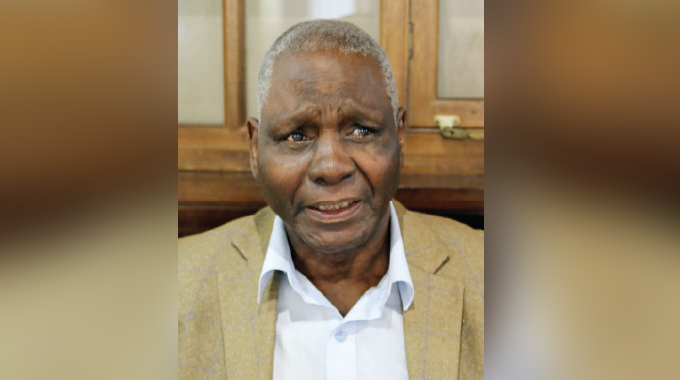
Siphakeme .Mnindwa
Raymond Jaravaza, [email protected]
FOR the past 20 years, Mr Colleen Siwela and his family have used a Blair toilet — a ventilated pit toilet — constructed in a corner of the yard at their Cowdray Park suburb home. They occasionally purchase bio-enzyme-based chemicals to break down waste and reduce odour when the toilet fills up.
The chemicals, which promote the natural decomposition process within the pit, cost about US$6, according to Mr Siwela, and he uses them at least once every two years.
Cowdray Park residents, such as Mr Siwela, are facing a Blair toilet crisis as the decades-old pit latrines fill up after years of usage, given that parts of the suburb have not been connected to the Bulawayo City Council (BCC) reticulation and sewer system.
Affected residents are in the Hlalani Kuhle/Garikai areas.
In its latest council minutes, BCC noted that a majority of Blair toilets in Cowdray Park had filled up, forcing desperate residents to dig new toilets within the same property or resort to using the bush to relieve themselves.
Ward 6 Councillor Nkosinathi Hove Mpofu said residents had long been requesting the council to construct sewer lines and connect the suburb to the city’s sewer reticulation system.

“Residents are willing to assist in the construction of the sewer infrastructure. I am concerned that the council will soon be fined by the Environmental Management Authority (EMA) if the sewer challenges in Cowdray Park are not addressed as a matter of urgency,” said Clr Mpofu.
City Mayor, Councillor David Coltart, acknowledged the plight of Cowdray Park residents regarding sewer reticulation and other service delivery challenges.
Concerned residents who spoke to Chronicle yesterday said they had been facing serious difficulties due to Blair toilets filling up.
Mr Siwela said the number of people per family contributed to the frequency at which Blair toilets filled up.
“I think it is even worse when bathwater is left to flow into the Blair toilet, which causes it to fill up very quickly. My family is small, and it takes about two years for the toilet to fill up. I buy chemicals to break down the waste,” he said.

Mrs Similo Ndiweni said she suspected that her toilet had an underground leakage and that rainwater seeped into the pit latrine.
“Our Blair toilet fills up very fast during the rainy season. In the last two months, when it rained heavily in Bulawayo, we encountered challenges with the toilet.
“When it fills up, I lock the door so that my children do not use the toilet; otherwise, they might be infected with cholera or some other water-borne diseases,” said Mrs Ndiweni.
Some residents, like Mr Siwela, have been using Blair toilets for the past 20 years. He told Chronicle that his house was built in 2006.
The toilets are the only ablution facilities residents have known since construction in the suburb began in 2005. For Miss Thelma Sibanda, a resident since then, the Blair toilets have simply become a way of life.
“I have been living in this house since 2016, and since then we have not had a properly functional sewerage system,” she said.
Ms Sibanda, a nurse, said that while they tried to avoid using Blair toilets and opted for septic tanks instead, in the end, they reverted to them because of the erratic water supply in the area.
“In addition to the Blair toilets, some of us are also using septic tanks in our houses, but because the water supply is so erratic, we end up going back to the Blair toilets,” she said.

“We used to get water on Thursdays and Sundays, and on those days the septic tanks were useful. The reality, however, is that not everyone can afford these tanks or toilets, so they just relieve themselves in the bush.
“If you walk behind the house next to mine, you will find that someone relieved themselves there today. It is hard to live like this, and we hope our situation is resolved soon,” she said.
The situation has been worsened by the rainy season, as the rise in the water table has also seen a corresponding rise in waste levels.
According to World Health Organisation guidelines, Blair toilets should be located downhill from a water source and should not penetrate groundwater. The toilet should also be at least two metres above the water table, with the site well-drained and above flood level.
However, the recent rains in Bulawayo have shown that such standards are a pipe dream in Cowdray Park, where Blair toilets are sometimes located just a few metres from vending stalls that sell food and other wares.



 Online Reporter