admin
admin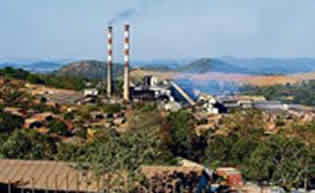
Business Reporter
BINDURA Nickel Corporation last week opened its $20 million bond issue to raise funds needed to finance the restart of its mothballed smelter at a cost of $26,5 million. The mining company had earlier said that it would seek debt finance for half of the required amount and mobilise the balance from the nickel miner’s own resources.
According to documents seen by The Herald Business the nickel miner has since floated the redeemable and fixed rate bond, issued at par on a fully paid basis. Subscriptions for the bond on the 12th of this month and is scheduled to close on the January 23 next year.
The bond is targeted at insurance companies, pension funds and institutional investors. The bond will be issued as a private placement and will not be offered to the public.
Bondholders’ claims shall, save for certain debt required to be preferred by law, rankequally with all other secured and unsubordinated obligations, present and future. The coupon rate is 10 percent per annum payable semi-annually in arrears.
BNC said coupon on the bond will be paid semi-annually in arrears and subject to a 12-months moratorium from the date of issue.
The bond was accorded prescribed asset status by the Ministry of Finance and can be recorded as such in the books of subscribers in terms of Section 26 of the Insurance Act.
Repayment of principal amount shall be subject to an 18 months moratorium from the date of Issue. Payment will be made thought eight equal payments of $2,5 million each.
The debt will be paid from a sinking fund capitalised to the required extent by proceeds from the sale of Nickel. Contributions to the fund will start after 18 months.
The principal amount and coupon represented by the bond will be securitised by the bond trust deed and the sinking fund charged in favour of the Trustee, independently managed by the Trustee, and a guarantee made by Mwana Africa Plc. BNC is a Zimbabwe subsidiary of the pan-African multi- commodity group, which is listed on LSE’s junior market.
Executive chairman Mr Kalaa Mpinga told the firm’s annual general meeting in August this year that preparatory work for the restart of the smelter had commenced.
He said the project team had been recruited, key components of the engineering designs had been completed while orders for key technical components had been placed. Site preparations and demolition of some infrastructure was also advanced.
Mr Mpinga pointed out that the pan-African mining group was seeking national project status for smelter restart, expected to save BNC $12 million in transport costs annually.
He said national project status was also sought and obtained for the restart of Trojan Mine, which allowed for duty free import of equipment.
The Trojan Mine smelter was mothballed in 2008 when other operations were put under care and maintenance at the height of economic instability in Zimbabwe and a plunge in global metal prices.
Part of the rationale for the restart includes higher pay ability of nickel in leach alloy than in concentrate, which increases revenue for each tonne of nickel by between 15-20 percent.
BNC also said that nickel leach alloy free from impurities such as magnesium oxide in concentrate attracted price penalties, but arsenic penalties offset this benefit and the fact that leach alloy transport uses 70 percent fewer trucks than concentrate. Further, the integrated nickel miner said the smelter cuts transport costs.
Accelerated restart will create more than 300 jobs and generate additional tax revenue, align to Government’s medium term economic blueprint, Zimbabwe Agenda for Sustainable Socio-Economic Transformation, covering the period 2014/18.
The smelting of nickel will also mitigate losses that would accrue from a ban on raw nickel exports and/or additional royalties that may be levied by government in the future while the smelter restart aligned with the Government’s beneficiation drive



 Online Reporter