admin
admin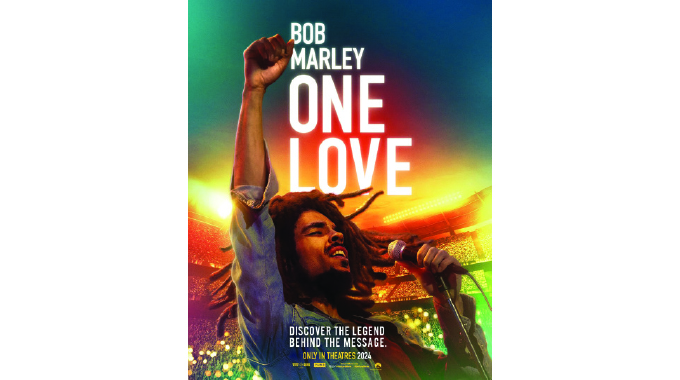
Fred Zindi Music
Last week, I spent five days at Holiday Inn, Mutare. Each time I got up to have breakfast, I and the rest of the patrons in the dining room were subjected to Lucky Dube’s first reggae single “Rastas Never Die”. During lunch, it was the same song and again at night during supper, the same song was repeated over and over again. I asked Sarudzai Mubonderi, the duty manager, why the hotel played that one song only throughout the day. She started laughing and said to me, “Are you not aware that Rastas never die? This is to remind everyone of this fact.” When questioned further, she later admitted that it was the only CD the hotel has had for sometime as someone had stolen all their CDs.
Well, whether we like to accept it or not, Lucky Dube is dead. He died on the 18th October in 2007. That is a fact.
He was gunned down in the presence of his son and daughter, whom he had dropped off in Rosettenville, Johannesburg in what is alleged to be a car hijacking crime.
Another Rastaman who also died 33 years ago is Robert Nesta Marley a.k.a. Bob Marley. That is also a fact, but close followers of his religion, do not believe he died. They believe in his continued existence somewhere else beyond our reach. In reality, Bob Marley died on the 11th of May, 1981, a year after he came to perform in Zimbabwe during the country’s first Independence celebration.
We have had several Bob Marley commemoration concerts in Zimbabwe each year since 1982. Indeed he was and still is an international superstar who Zimbabweans can identify with because his music contributed a lot to the liberation of Zimbabwe from the colonial grip.
I was surprised however, that this year there was no commemoration concert for Bob Marley in Zimbabwe. This begs me to ask the question, ‘Is Bob Marley still alive?’ Ras Jabulani, where are you?
Although the Rastafarians in Jamaica do not believe in death, it is difficult for me to follow this fallacy and simply agree with the misleading argument that, ‘Rasta never die. Rasta cyan’t born fe dead. Rasta just pass through’, as they say. There are Rastas who truly believe that ‘Rastas Never Die’. But are they playing mind games with us?
I remember getting into trouble with Bunny Wailer on one of my visits to Jamaica when I asked him after Peter Tosh’s death if he was going to dedicate an album for Peter Tosh as he did for Bob Marley. His response was, “Man, Rasta don’t ded. Maybe I man might livicate an album for Tosh.”
It seems we have now reached a point where both Bob Marley and the teachings of Rasta are now forgotten. The first sign is the absence of a commemoration concert this year in honour of Bob Marley’s legacy. The second one is the movement away from conscious roots rock reggae music to dancehall. Marley must be turning in his grave when he listens to his music being mashed up like this.
Bob Marley is one of the architects of roots reggae music as we know it today and despite his death many years ago, he still commands a lot of respect in Jamaica and throughout the world.
Without Bob Marley, reggae music would still be largely confined to a handful of singers, bands and sound systems dotted around the Caribbean and among West Indian communities in the cities of Britain and North America. Through his devotion to the principles of Rastafari, Marley preached strength and social unity to oppressed peoples across the globe. His music crossed racial boundaries, providing black people with a new level of dignity. Since his death, there has been an uneasy vacuum within the music, as if it is marking time until another prophet, with the capacity to carry millions, takes up his role.
In all, Marley recorded 10 albums for Island Records, ranging in content, lyrically and musically, from the bold political sloganeering of ‘Exodus’ (spawning hit singles ‘Exodus’, ‘Jammin’’ and ‘Waiting In Vain’), ‘Survival’ and the powerful ‘Uprising’, his last recorded album that included the epic ‘Redemption Song’, Marley’s voice accompanied by just an acoustic guitar; and the mellower and reflective ‘Kaya’ (1978).
Bob Marley had become so popular in Jamaica among the people to the extent that rival political parties led by Edward Seaga and Michael Manley tried to entice him to support their different factions. One of the parties, the People’s National Party (P.N.P.) organised a concert, but the night before his performance, there was an assassination attempt on his life.
In December of that year, at the height of Jamaica’s pre-election political gang violence, seven armed men burst into Bob Marley’s home at 56 Hope Road, Kingston. If his manager, Don Taylor, hadn’t flung himself in front of the singer, Marley would have sustained more serious injury than the four bullet wounds in his arm. His wife, Rita was also injured in the incident.
To cap it all, Bob Marley, being the revolutionary he had become, wrote a song entitled ‘Zimbabwe’ just before Zimbabwe celebrated its Independence in 1980.
It was almost inevitable that a man so identified with the struggles against class and racial oppression should be invited to perform at the celebrations of the birth of a new nation, Zimbabwe. On the 18th April, 1980, Bob Marley performed at Rufaro Stadium in Harare and celebrated Zimbabwe’s independence.
The popular press could not get much mileage from something as mundane as an assassination attempt or the end of apartheid in a newly created African nation, but his affair with erstwhile Miss World, Cindy Breakspear, caused them all to sit up and take note.
Towards the close of an exhausting world tour (1980) Marley collapsed after a concert at New York’s Madison Square Gardens and was taken to Sloane Kettering Hospital where cancer was diagnosed. Some months later it became known that he had a cancerous toe removed while in Miami three years before. The extent of his illness could be gauged by his decision to admit himself to the Josef Issels Clinic, on Lake Tegarn, Bavaria. Upon completion of the treatment he flew to Miami, to visit his mother, Cedella, en route to Jamaica. His discomfort must have been chronic and on May 8 he admitted himself to the Cedars Lebanon Hospital where he died three days later on May 11.
He was provided with a state funeral in Jamaica.
However, a lot of Rastas interviewed after his death went into denial. They did not believe he was gone. They would only regurgitate their catch phrase, ‘Him not dead, him just pass through!’
Bob Marley was the biggest single foreign currency earner in Jamaica leaving an estimated US$46 million behind.
Since his death, countless tribute records have been released; none finer than Bunny Wailer’s ‘Tribute’ collection of Marley compositions.
However, in Zimbabwe, the Bob Marley commemorations held in May each year seem to have come to an end now as more and more people begin to ask who this man named Marley was. His music has also disappeared from the shop shelves. Soon there will be nothing to remind us of the legendary king of reggae.
I was astonished to come across many youths in their twenties who have never heard of Bob Marley. Does that mean that the legend is finally dead? But true to the legend, “Rastas Never Die,” his spirit must live on!
Feedback: [email protected]


 Online Reporter