admin
admin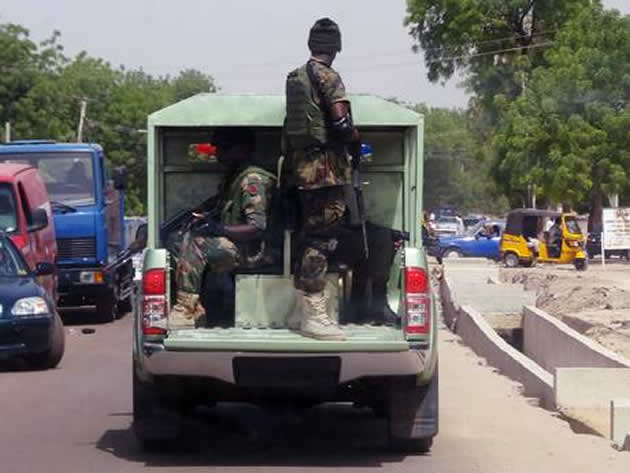
YOLA. — Soldiers in a Nigerian state at the heart of an Islamist revolt shut down all venues preparing to screen live World Cup matches on Wednesday, hoping to stave off the kind of attacks that have killed more than 20 people in the past two weeks.
The Nigerian government also advised residents of Abuja to avoid public viewing centres as the World Cup kicks off in Brazil in case of attacks.
Nigeria has witnessed an increasingly bold series of assaults over the past five years by the Islamist militant group Boko Haram, including the kidnapping of more than 200 schoolgirls in April.
“Our action is not to stop Nigerians . . . watching the World Cup. It is to protect their lives,” Brigadier-General Nicholas Rogers said on Wednesday.
Many fans had been relying on the viewing centres — often open-sided structures with televisions set up in shops and side streets — to watch live coverage of their national squad, the “Super Eagles.”
Meanwhile, the UK will increase its military and educational aid to help Nigeria tackle Boko Haram, Foreign Secretary William Hague has announced.
According to the BBC, Hague said Nigeria’s army would receive extra training, especially in counter-insurgency, and a million more children would be given schooling.
This is the latest promise of Western help since Boko Haram abducted some 200 schoolgirls in April.
Since then, the Islamist group has stepped up its attacks. Hague was speaking at a summit in London.
It follows last month’s summit in Paris where regional powers pledged to share intelligence and co-ordinate action against the group and its five-year insurgency. Boko Haram has waged an increasingly bloody insurgency since 2009 in an attempt to create an Islamic state in Nigeria. Thousands of people have died in their attacks and the subsequent security crackdown.
The meeting took place on the sidelines of the London summit on ending sexual violence in conflict, co-hosted by Hague and UN special envoy and actress Angelina Jolie. Representatives from the US, the European Union, Canada and Nigeria’s neighbours Benin, Chad, Cameroon and Niger also attended.
Niger’s Foreign Minister Mohamed Bazoum said that at the Paris summit it was decided that Chad’s capital, N’Djamena, would be the headquarters for aircraft involved in surveillance and possibly “operations in the field”.
Nigeria’s capital, Abuja, was chosen as the headquarters of the shared intelligence services. Nigerian President Goodluck Jonathan declared a state of emergency in May 2013 in the three northern states where Boko Haram is most active — Borno, Adamawa and Yobe.
The militants retaliated by stepping up their bombing campaign in cities and raiding small towns and villages.
Many people have fled their homes — some over the borders to Cameroon, Chad and Niger. Correspondents say since the kidnapping of the girls from their boarding school in Borno state on April 14, the attacks have become an almost daily occurrence. A new report by the Internal Displacement Monitoring Centre and the Norwegian Refugee Council says 3,300 people have been killed by Boko Haram this year alone.
The UK, the US, China and France are among the countries to have sent teams of experts and equipment to help to locate the girls. — Reuters/BBC/Herald Reporter.


 Online Reporter