Online Reporter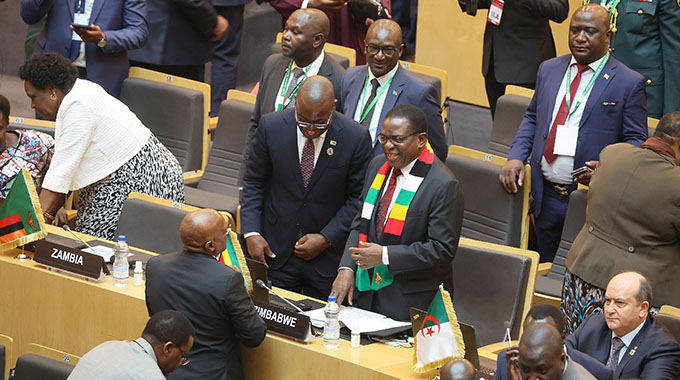
Kudakwashe Mugari in ADDIS ABABA, Ethiopia
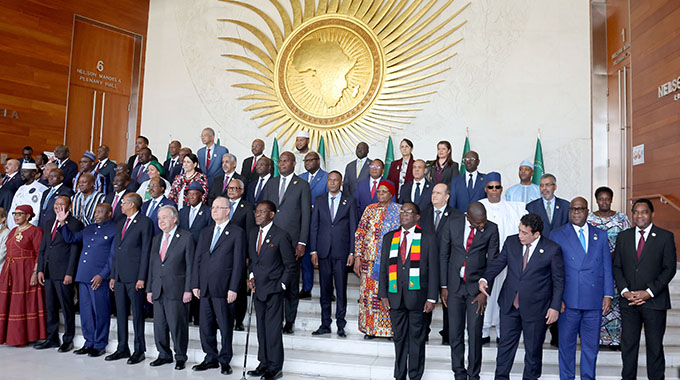
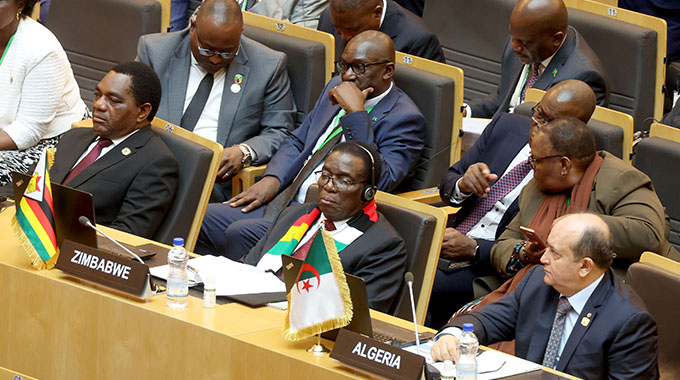
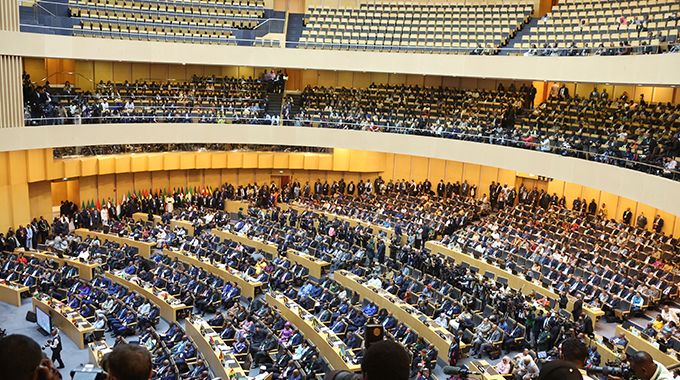
PRESIDENT MNANGAGWA yesterday joined fellow African leaders at the 39th Ordinary Session of the Assembly of Heads of State and Government of the African union (AU) in Addis Ababa, Ethiopia, where leaders are focusing on strengthening continental water security and expanding access to safe water and sanitation as key pillars for inclusive development.
The two-day summit, being held under the theme “Sustainable Access to Water and Sanitation Services for Inclusive Growth and Development”, seeks to accelerate universal access to safe water across Africa amid mounting pressures from climate change, rapid urbanisation, population growth and environmental degradation.
The gathering brings together leaders from AU member states to deliberate on strategic priorities affecting the continent, including water governance, peace and security, economic integration and institutional reforms.
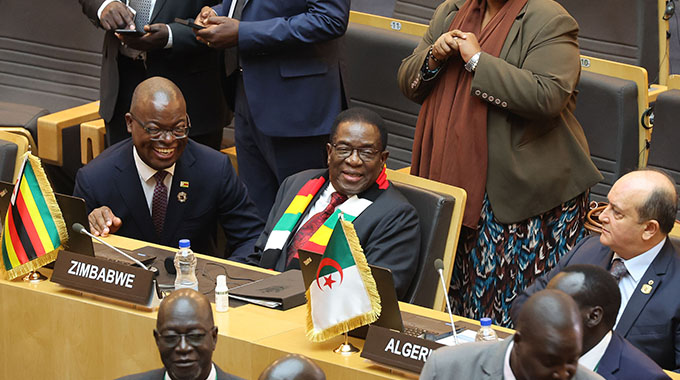
During the opening session, Burundi President Évariste Ndayishimiye assumed the African union chairmanship from Angolan President João Lourenço, with both leaders emphasising the urgent need to advance the continental agenda of “silencing the guns” in response to ongoing conflicts across Africa.
Several regions continue to face instability, including South Sudan, northern Mozambique and the Democratic Republic of Congo, while unconstitutional changes of government in parts of the Sahel remain a major concern for the continental body.
Leaders also highlighted the growing risk of water scarcity as a potential driver of conflict, particularly in transboundary river basins where multiple countries share water resources.
Competition over access to rivers, lakes and groundwater systems, especially during periods of drought and climate stress, has increased pressure on regional cooperation frameworks, making sustainable water governance a critical peace and development issue.
Against this backdrop, Zimbabwe has positioned itself among leading African countries advancing sustainable access to water and sanitation, supported by major investments in rural water supply, dam construction and groundwater development aligned with the AU’s Agenda 2063 vision.
Authorities say the country’s integrated water strategy — anchored in a nationwide 35 000-borehole programme, construction of high-impact dams and improved water resource management — reflects a deliberate shift towards treating water not only as a social service but as a strategic economic enabler supporting agriculture, climate resilience and rural industrialisation.
Speaking on the sidelines of the summit, Lands, Agriculture, Fisheries, Water and Rural Development Minister Dr Anxious Masuka said Zimbabwe had already aligned its national policies with the continental vision.
“The theme for 2026 focuses on sustainable access to water and sanitation services. For Zimbabwe, this is not a future aspiration; it is already under implementation,” said Dr Masuka.
Central to Zimbabwe’s strategy is the rural water access programme targeting the drilling of one borehole per village as part of a broader effort to ensure universal access to safe and potable water.
“We have pronounced a policy to provide universal access to safe and potable water through the drilling of 35 000 boreholes across the country. This ensures that every village has access to reliable water supplies,” he said.
The programme forms part of President Mnangagwa’s broader development agenda, which positions water as a critical driver of rural transformation, food security and industrial growth.
Apart from borehole drilling, the Government is accelerating dam construction, with 12 high-impact projects underway or nearing completion.
Key projects such as Lake Gwayi-Shangani and Kunzvi Dam are expected to enhance urban and rural water supply, expand irrigation schemes, boost agricultural production and strengthen national climate resilience.
Dr Masuka said Zimbabwe’s water strategy reflects a paradigm shift towards recognising water as a catalyst for economic development under the Agriculture and Food Systems Transformation Strategy.
“We now look at water beyond the constitutional right dimension. It is an economic accelerator that underpins agricultural production, food security and rural industrialisation,” he said.
Authorities are also promoting conservation of “green water” through rainwater harvesting and soil moisture management to improve agricultural yields, while strengthening groundwater monitoring systems to ensure long-term sustainability of borehole water sources.
At a regional level, Dr Masuka underlined the importance of cooperation in managing transboundary water resources, noting that nearly 80 percent of Africa’s water systems are shared across national borders.
“In Southern Africa, we have established river basin commissions that allow us to share water resources peacefully. Water must remain a source of development and cooperation, not conflict,” he said.
He added that Zimbabwe’s integrated water management approach could serve as a model for other African countries as the continent rallies behind the AU’s 2026 water and sanitation agenda.