

 admin
admin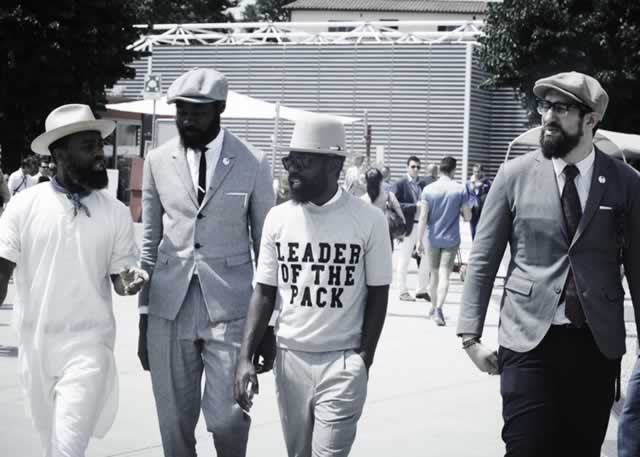
Chipo Mapondera Fashion
Italy is abuzz with fashion from the recent Milan Men’s Fashion Week, which ended on Tuesday. Before that the fashion set flooded Florence with a celebration that included art, opera, food, wine, and above all, fashion.
The fair, Pitti Uomo is a platform for men’s fashion from the likes of Ermenegildo Zegna, the largest luxury menswear brand in the world, Ermanno Scervino, and Louis Vuitton. It was also an exciting opportunity to see the new and alternative names of style at the exhibition space that housed over a thousand brands from across the globe.
My first reaction to the presentations seen was that men’s fashion is bigger than ever, which means big business too. The variation of brands from luxury clothing, leather goods, shoes and accessories, to premium street wear and design, represented a new era where menswear has become a hotbed for creativity and innovation.
The aim of the fair is for brands to present themselves to buyers who come from all continents, including Asia, The Americas, and Europe. Media came to find what is new and trend forecasters to find inspiration in the unique spaces, presentation and people who were showcasing what is next to come.
The group that I was a part of included other journalists from Africa, namely Nigeria and Morocco. This made me want to investigate exactly what the presence of others from the continent was, especially the brands, which are fundamentally what the few days were created to focus on.
I was not disappointed to discover Nigerian designer Adebayo Oke-Lawal, designer of Orange Culture, in the Fashion Buzz area, which housed emerging designers from as close as England to as far as Japan. I have followed Adebayo’s work since discovering his name on the list of finalists of luxury conglomerate Louis Vuitton Moët Hennesey’s LVMH Prize, earlier this year. His work is challenging in how it subverts the definitions of masculinity in menswear but plays to the African man’s predisposition to adorn himself. Adebayo’s heritage comes into play through his prints, which he designs to create his own fabrics.
This results in a unique perspective that is based on local tradition and craft that, in my opinion, need to be unearthed and utilised by more designers and craftsmen across Africa. However, this is not to put Adebayo’s work into a box, as his pieces do not lack in global appeal. Through his work Adebayo is crafting a niche for himself as a young designer with a rich heritage that is exposed to a luxurious, urban, and modern perspective.
In a similar way Bola Marquis of Okun swimwear is driven by a curiosity to explore and share a pan-African viewpoint. The brand eschews the superficial trend for African inspired textiles, which are most often coming from Holland, and more recently China, and chooses instead to use traditional African prints including South African Shweshwe, Congolese Kuba and Ghanaian Adinkra, which not only originated in Africa but also convey a wealth of symbols and ideals that could be erased and forgotten if not continuously refreshed in ways like this. Not only do these prints fit so naturally on a garment that conveys colour and fun, this range also reflects a savvy business mind that is dipping into a niche pool, with a cutting-edge and refreshing concept that, after two years, has a client base across all continents.
This idea of the world being a global village where ideas are not limited to a single origin is also embodied by the work of Shaka Maidoh and Sam Lambert of Art Comes First. Born in Angola, Lambert and Shaka, who is of mixed West African and West Indies heritage, came together in London where their experience across art, culture and tailoring was refined in Savile Row, and as designers for Oswald Boateng and Spencer Hart.
Shaka describes Art Comes First as the result of “creating out of need” hence going into menswear was a natural progression. At Pitti Uomo they presented an installation in the Global Village, in collaboration with five other brands who the pair have met on their global travels. The range is based on easy but well-considered pieces for the nomadic modern man, and rejects the notion of singular expression and inspiration, taking from all places and cultures.
I discovered the brand Norwegian Rain quite by chance and what attracted to me to their stand was the busy mix of gentlemen visitors, in a style that was at once considered, well tailored and urban. The brand is a collaboration between Norwegian economist Alexander Helle and T-Michael, a tailor from Ghana via London, who has lived in Norway for 25 years. The brand’s only definers are its approach to functional luxury outwear, like meticulously designed coats that combine high-tech fabrics to withstand the harsh urban terrain of Norway.
What is exciting about both Art Comes First and Norwegian Rain, in particular, is that, as Africans, there are no definitions by which we have to express ourselves. Not everything has to be print and colour. We are nomadic by nature and ideas, language and dress have crossed the continent since its origin. For many reasons, some to be celebrated and others reviled, the diaspora is now a powerful network of Africans breaking into (and breaking down) the existing notions of their adopted environments. We are instead identifying those universal traits and human needs, across our work, which are the true foundations of why clothing is made.



 Online Reporter