

 Online Reporter
Mukudzei Chingwere and Remember Deketeke
Herald Correspondent
FROM next week ICT devices start being distributed to disadvantaged rural schools, beginning with Manicaland, before moving to Matabeleland South, as part of efforts to promote blended teaching and learning, Primary and Secondary Education Minister Professor Torerai Moyo has said.
Ahead of the school’s opening on January 13, Government is seeking to bridge the gap between those in rural and urban areas and has also warned teachers and school heads to desist from seeking bribes from parents for a place at their schools or to force them to buy school uniforms from designated shops or at schools.
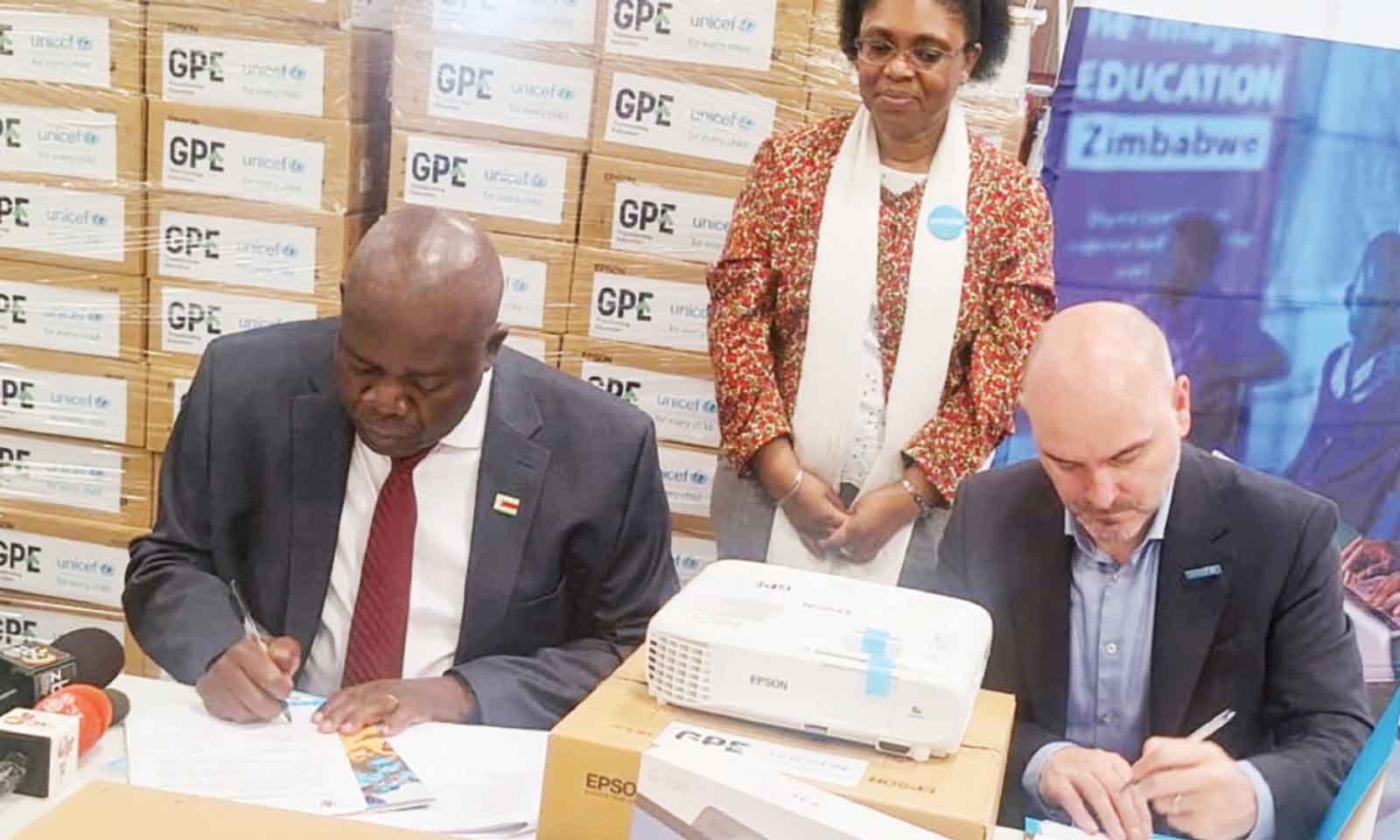
Speaking at the handover of 815 laptops, 708 projectors and 2 112 tablets by the United Nations Children’s Fund (UNICEF) to the Ministry of Primary and Secondary Education at the United Nations Warehouse, Prof Moyo said the intervention was critical in shaping the education sector.
“This ceremony marks a significant milestone in the transformation of Zimbabwe’s education system, particularly for disadvantaged rural schools in Manicaland and Matabeleland South Provinces,” he said.
“The handover of 815 laptops, 708 projectors and 2 112 tablets is not merely a logistical exercise; it is a strategic investment in the future of our children and the nation as a whole.
“This approach aligns with His Excellency President Mnangagwa’s call for modernisation, innovation and resilience across all sectors of the economy, including education. His leadership continues to champion inclusive development, innovation, modernisation and the transformation of Zimbabwe into an upper-middle-income economy by 2030.”
Prof Moyo said the devices would be deployed across seven districts to deliberately address inequality, supporting 113 disadvantaged, solar-powered schools in Manicaland; Buhera, Chipinge and Nyanga, and in Matabeleland South; Beitbridge, Gwanda, Matobo and Insiza. The solar panels had to come first as they power the devices and show how the bits of building capacity all fit together.
Most of the beneficiary schools are in remote and underserved communities.
He said the equipment would strengthen teaching and learning through access to digital content, interactive instruction and offline learning platforms.
“The tablets will enhance learner access to digital content and interactive learning. The laptops will strengthen teacher preparation, assessment, school administration and content development. The projectors will support whole-class digital instruction, ensuring inclusive access to technology-enhanced learning,” he said.
“This is how we democratise access to quality education.” The rollout comes as the Government continues to advance its e-learning initiative, which has seen the formalisation of the heritage-based curriculum alongside the expansion of telecommunications infrastructure to bridge the rural-urban digital divide.
Last year, Information, Publicity and Broadcasting Services Minister Dr Jenfan Muswere said Government had approved a Starlink licensing policy as part of a broader strategy to strengthen the national e-learning programme, ensuring affordable broadband connectivity for even the most remote schools. He said the licensing framework also accommodates other service providers and empowers private sector participation.
UNICEF acting representative Mr Fiachra Mcasey said the devices would be complemented by teacher training programmes focused on ICT literacy and pedagogical integration, scheduled for February and March.
“To ensure that these efforts translate into measurable improvements, pre- and post-training assessments for both teachers and learners will be conducted to track gains in digital competencies, confidence, and effective use of technology for learning,” he said.
He said the ICT devices would be securely packaged, recorded in asset registers and distributed directly to beneficiary schools from next week when schools reopen.
Meanwhile, Government has issued a strong warning to school heads engaging in corrupt practices, saying that those caught soliciting bribes for school placements or forcing parents to buy uniforms from designated shops will face disciplinary charges.
This follows accusations against those heads, particularly in public schools, who are allegedly demanding bribes from parents to enrol their children into Form One, Form Five, Grade One, or to facilitate transfers from other schools.
Additionally, some schools stand accused of shortchanging parents by compelling them to purchase uniforms from specific outlets, often at prices well above market value, a direct violation of existing regulations.
The Ministry of Primary and Secondary Education has told off the delinquent school heads.

Ministry spokesperson Mr Taungana Ndoro called on affected people to report such cases to the relevant authorities.
“Any head found carrying out such underhand dealings will be charged with an act of misconduct,” Mr Ndoro said.
He cited the Public Service Regulations, specifically clauses related to corruption, dishonesty and abuse of authority.
“These are very serious charges that may warrant dismissal and or imprisonment.”
Mr Ndoro clarified that private schools are not exempt from the law, as they are registered by the Government and must adhere to the Education Act.
He reiterated a longstanding ministry position, reminding parents that they have the right to purchase uniforms from any shop of their choice, provided the items meet the school’s specifications, and should not be forced into buying from expensive designated outlets.
On the separate issue of school fee increases, the Government warned against unilateral hikes, stressing that schools must follow the correct procedure.
This requires convening a meeting with parents, achieving a 20 percent quorum and obtaining the consent of the majority. The ministry must then receive the minutes with a sound justification for any proposed increase.
“Schools know the procedure… No school will increase fees without the permanent secretary knowing. Any school head who allows it will have committed an offence,” Mr Ndoro said.
He noted, however, that parents who fail to attend such meetings risk having their absence taken as consent to decisions made by a majority of those present.



