Online Reporter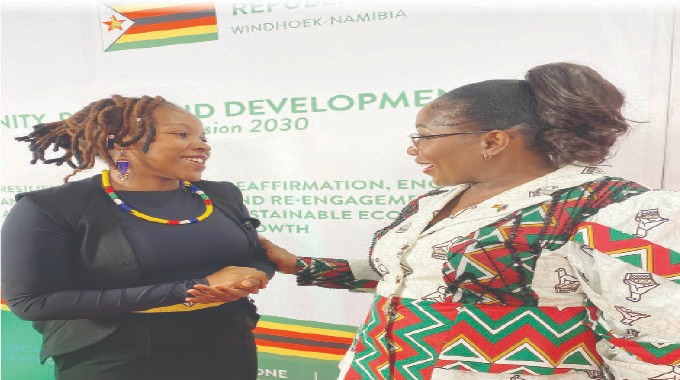
Mbulelo Mpofu, [email protected]
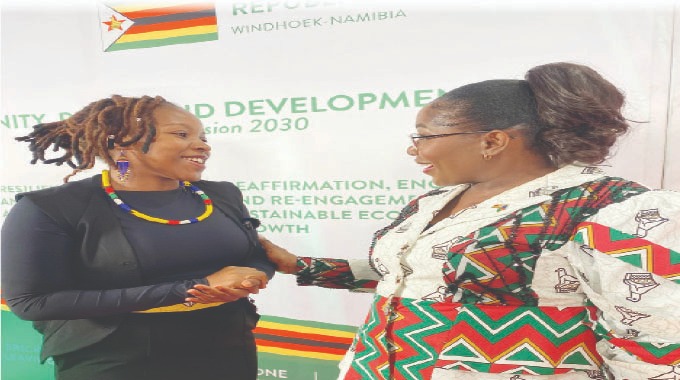
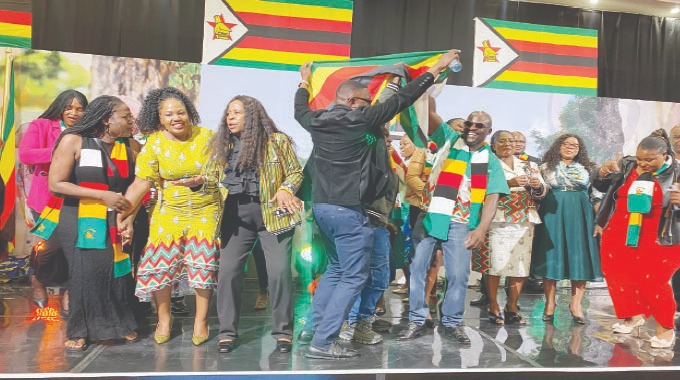
DIPLOMACY is often imagined as something distant and formal, unfolding quietly behind closed doors in grand buildings where voices are measured and every word is carefully chosen. But in truth, it often comes alive in more human ways — in music, in stories, in shared meals, and in the small but powerful expressions of culture that bring people closer. That spirit was unmistakable on April 23, in Windhoek, where the Embassy of the Republic of Zimbabwe hosted a grand Independence Dinner. It was an evening filled with colour, emotion and memory, but among the many distinguished faces, one presence stood out in its quiet significance — Mellisa Nonhlanhla Moyo.
Born in Bulawayo, Moyo is not just a guest at such events. She carries with her a deep connection to culture and heritage, and on that night, she represented something larger than herself — a new kind of Zimbabwean identity that stretches across borders while staying firmly rooted in history. As a Master’s intern with the Finnish Southern Africa Cooperation Institute and a Master of Arts student at the University of Namibia (UNAM), she walks a path that blends academic study with lived experience, showing how young Zimbabweans are navigating both worlds with confidence.
For Moyo, history is not something that sits quietly in textbooks. It is alive, shaping how people see themselves and how they move through the world. Her studies reflect this belief. As she works towards her Master of Arts in History by thesis at UNAM, she focuses on how historical narratives influence modern identity — how the past continues to speak into the present.
“My academic journey is deeply rooted in understanding these narratives. Alongside my studies, my role at the Finnish Southern Africa Cooperation Institute allows me to build sustainable bridges between Finland and Southern Africa. It’s a role that perfectly aligns with my passion for transnational history,” Moyo said.
That understanding gave her a different lens through which to view the Independence Dinner. While others saw a celebration marking 46 years of Zimbabwe’s independence, she saw something more layered — a living example of cultural diplomacy at work, where relationships between countries are strengthened not just through policy, but through shared experiences and mutual respect.
The evening itself carried a strong sense of history. Zimbabwe and Namibia share a past shaped by struggle and liberation, and that connection could be felt throughout the room. Yet, what stood out most was not only the reflection on the past, but the clear focus on the future. Moyo pointed to the inclusion of young talent as one of the most powerful aspects of the event.
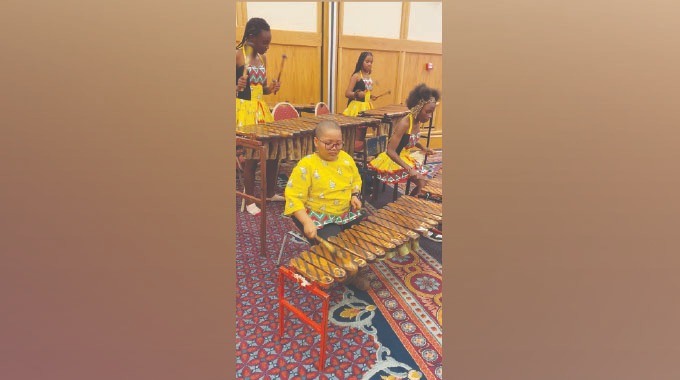
The room came alive with the sound of Sunshine Marimba, their music echoing with both tradition and modern energy. It was a reminder that culture evolves but never loses its roots.
“They proved that our traditional sounds are still deeply relevant and celebrated by the youth,” Moyo remarked.
Alongside the music came spoken word, with Tadiwa Chokufora delivering poetry that captured what it means to be Zimbabwean today — grounded in history, but forward-looking.
“These young artistes showcased what it truly means to be Zimbabwean today. They demonstrated that our youth are not disconnected from their roots; rather, they are using art to express their patriotism, resilience, and love for their country on a global stage,” she said.
Moments like these show that culture has a power that is often underestimated. In international relations, it is sometimes referred to as “soft power” — the ability to influence and connect through identity, shared values and creativity. The Embassy, through this event, managed to create a space that felt familiar to Zimbabweans far from home, a reminder that belonging does not fade with distance. It carried that quiet philosophy of Ubuntu — that a person is shaped by others — and brought it to life.
The evening also drew several high-profile figures, including Comrade Sophia Shaningwa, H.E Melody Chaurura and Honourable Jenelle Matundu, the Deputy Minister of International Relations, adding weight to an already meaningful occasion.
What stayed with Moyo most, however, was a simple but powerful idea — that heritage is something people carry with them wherever they go. Whether for education, work, or diplomacy, Zimbabweans do not leave their identity behind; they bring it with them, shape it, and share it.
“No matter where we are in the world, our shared history binds us together. The Embassy did a phenomenal job of not just hosting a dinner, but actively empowering the next generation to take up space in the diplomatic arena,” she added.
Her words reflect her own journey. With a Bachelor of Arts in Tourism Management and a postgraduate diploma in Heritage Conservation and Management, she understands that heritage is not only about memory — it also has value, both socially and economically. Her experience in international exchange programmes, such as the Namibia and Switzerland Winter Summer School, has helped her engage with broader issues like migration and land, subjects that continue to shape conversations across the SADC region.
Yet what makes Moyo’s work stand out is her determination to take these ideas beyond academic spaces. Through her digital platform, ‘Let’s Talk Heritage’, she is finding ways to speak to a younger audience, breaking down history into something accessible and interesting.
“My goal has always been to make cultural preservation accessible to everyone, especially the youth,” she said.
She plans to continue exploring historical sites and museums across the region, documenting her experiences and encouraging others to connect with their heritage in their own way. It is a simple idea, but one that carries weight — that people should know where they come from and understand its value.
Today, her work continues at the Amagugu International Heritage Centre (AIHC), where she is involved in heritage tours and educational programmes that support Zimbabwe’s heritage-based curriculum. In practical ways, she is helping ensure that history is not forgotten, but passed on in meaningful ways.
As the Independence Dinner in Windhoek came to an end, there was a sense that it had achieved more than celebration. It had brought people together, reminded them of where they come from, and pointed gently towards where they could go. In people like Mellisa Moyo, there is a feeling of continuity — that the stories, values and sacrifices of the past are not being lost, but carried forward.
And in that, there is something reassuring. Whether in Bulawayo, Windhoek, or anywhere else in the world, the spirit of Zimbabwe continues to travel, to adapt, and to find new ways to speak. – Follow on X @MbuleloMpofu