Online Reporter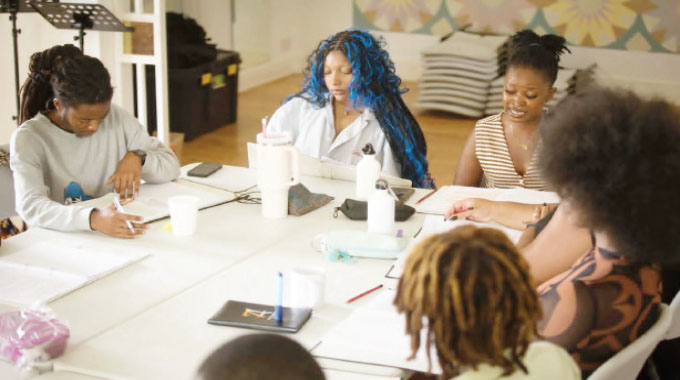
Mbulelo Mpofu, [email protected]
IN the theatre world, the spotlight rarely strays from the actors. It is their voices that rise and fall, their faces that carry emotion, and their movements that hold the audience in place. They are the ones who take the bows, the ones who fill the headlines. Yet anyone who has spent even a little time behind the curtain knows that what unfolds on stage is only a small part of the story. The real work — the careful planning, the quiet coordination, the endless fine-tuning — happens out of sight, where the true machinery of theatre lives.
It is in this unseen space that the success or failure of any production is decided. Directing and stage management, often spoken of less but felt everywhere, form the backbone of the craft. Without them, even the most talented actors cannot hold a performance together. And so, in recognition of just how vital these roles are, Almasi Collaborative Arts has turned its focus deliberately to this often-overlooked side of storytelling, launching its highly anticipated Directing & Stage Management Workshop.
Running from April 20 and drawing to a close today, Saturday, May 2, the programme has been anything but casual. It has demanded focus, discipline, and a willingness to learn from the ground up. At its centre is Adam Immerwahr, a respected theatre director and producer from the United States, whose presence has brought both experience and fresh energy into the room.
For the 18 early and mid-career theatre makers selected to take part, the past days have felt less like a course and more like a deep immersion into the heart of theatre. This is where ideas are tested, pulled apart, and rebuilt. It is where vision meets detail. The workshop has been carefully shaped to close a gap many artists struggle with — the space between imagining a performance and actually bringing it to life.
In theatre, the director is often described as the architect of the story. It is the director who reads between the lines of a script, who decides how a scene should breathe, and who guides actors in giving shape to something that exists only in words on a page. Through detailed sessions on script analysis and blocking — the subtle yet precise mapping of movement on stage — Immerwahr has been helping participants find clarity in their vision and confidence in their decisions.
At the same time, equal attention has been given to the stage manager — a role that, while less visible, is no less essential. If the director is the architect, then the stage manager is the one who keeps the entire structure standing.
From managing the flow of rehearsals to handling the unpredictability of backstage life, their role demands calm control, communication, and a strong sense of order.
For many in the workshop, this has been a revelation — the understanding that theatre is not just about creativity, but about discipline and leadership too. It is about making sure that at any given moment, everything works as it should.
“It is a great pleasure to welcome Mr. Immerwahr back to Zimbabwe for his third visit, where he will be training our Directing and Stage Management artists in the art of helming a production and managing a creative room. By continuing our collaboration with Mr Immerwahr, we are strengthening our commitment to cultural exchange as an essential pillar of collaborative development.
“This initiative further heightens our focus on capacitating local talent through specialised programming. This workshop marks the beginning of several training initiatives scheduled for this year, all of which will culminate in the Africa Voices Now Festival—our premier showcase for new and original African plays,” said Gideon Wabvuta, the Programmes Director of Almasi.
Immerwahr’s presence has clearly raised the level of the programme. His experience stretches across some of the most respected spaces in theatre, including his work as Artistic Director of Village Theatre in Washington and his leadership at Theatre J. His career has been shaped by both creative vision and the practical demands of running productions, a balance that has proven invaluable for those learning under him.
His journey has intersected with moments that quietly link back to Zimbabwe itself. During his time at the Tony Award-winning McCarter Theatre, he contributed to the development of Eclipsed, the acclaimed play written by Almasi co-founder Danai Gurira. Add to that his teaching experience at institutions like Juilliard and Princeton, and it becomes clear that the participants in this workshop are being exposed to a level of training that is both rare and deeply valuable.
For Almasi, however, this is not about a single workshop or a one-off experience. It is part of a wider vision — one that centres on building strong, skilled, and confident theatre practitioners who can stand on any stage in the world.
Founded by Danai Gurira, the organisation has always worked with a clear purpose: to empower African artists to tell their stories with professionalism and pride.
There is a belief at the heart of this work — that African stories matter, and that they deserve to be told with the highest level of care and craft. But for that to happen, talent alone is not enough. It must be matched with training, discipline, and technical understanding.
The Directing & Stage Management Workshop is one important step in that journey, feeding directly into the upcoming Africa Voices Now! Festival set for October 2026.
That festival will become a space where new and original African plays are brought to life, and the very people now learning under Immerwahr will carry the responsibility of shaping how those stories are told.
As this particular workshop comes to an end with a free public showcase titled “Scenes from the World,” it also opens the door to what comes next. Almasi’s calendar for 2026 hints at something much bigger — a steady build-up of programmes aimed at strengthening the creative sector from every angle.
From acting and voice training to writing intensives led by internationally recognised figures, the coming months promise growth that goes beyond individual artists and into the broader creative economy.
At the same time, work continues quietly on the ground. Through initiatives like the Solo Initiative Monologue Programme, led by Community Engagements Manager Tafadzwa Bob Mutumbi, young people — including those outside formal education — are being given access to opportunities that might otherwise remain out of reach.
All of it points back to one simple idea: that good theatre does not happen by chance. It is built, piece by piece, through knowledge, practice, and attention to detail.
By placing focus on the less visible parts of theatre — the direction, the coordination, the structure — Almasi is doing something important. It is shaping not just performances, but the people behind them. And in doing so, it is helping ensure that the next generation of Zimbabwean storytellers does not just dream, but knows exactly how to bring those dreams to life.