

 admin
admin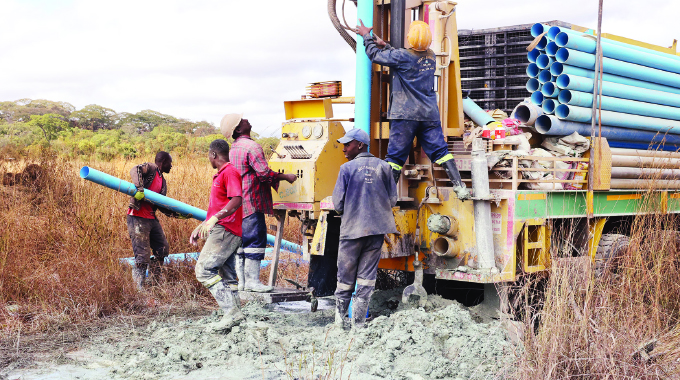
Sharon Shayanewako
GOVERNMENT’S ongoing countrywide borehole drilling initiative will bolster the push to make nutrition security gardens viable in line with the Horticultural Recovery and Growth Plan.
Chief director Agriculture and Rural Advisory Services Professor Obert Jiri said the borehole drilling programme was a way of promoting horticultural crops in rural areas and boost both nutrition and economic livelihoods.
“This year, our target is to drill 5 000 boreholes with 200 having already been drilled as we speak. Our target is to drill 35 000 boreholes by the year 2025.
“Additionally, we are distributing seed packs as part of the Pfumvudza programme.
“This is for people to access good vegetables, which promotes nutrition security as well as income generation, as the country journeys towards attaining Vision 2030,” he explained.
The Horticulture Recovery Plan is part of Government initiatives under Agriculture and Food Systems Transformation Strategy (2020-2025) to transform agriculture from a US$5, 2 billion to a US$8, 2 billion sector, contributing 20 percent to the gross domestic product (GDP) by 2025 in line with the drive to make Zimbabwe an upper-middle-income country by 2030.
Professor Jiri added that the Horticultural Recovery and Growth plan was initiated to give impetus to the horticulture industry’s recovery after its performance dipped in recent years due to various economic issues.
“The plan mainly focuses on making sure that we have benefits from the horticultural interventions throughout the country, basically looking at the household level.
“There is need to have good nutrition, which includes fruits and vegetables at the household level.
“In essence, the plan says we need to look at what needs to be done at the household level, community level as well as national level to boost the production of horticultural crops.
“We are also saying people should have good access to fruits and vegetables for household nutrition security as well as for sale,” Prof Jiri further explained.
The Government is also distributing 10 fruit trees per household. Horticultural products are rich in vitamins, which is an essential nutrient needed in the body.
Essentially, the Government aims to increase agriculture’s contribution to US$8,2 billion by 2025 to reverse the decline in food production through the Horticulture Recovery and Growth Plan and revive serious trade on both domestic and export markets.
Zimbabwe is on the path to win back its ‘Bread basket of Africa’ status when it was known for always being food secure with surplus to sell.
President Mnangagwa has since pledged to resolve land tenure matters and place agriculture at the epicentre of Zimbabwe’s economic policy with particular focus on exports, aided by the relaxation of export procedures.



 Online Reporter