

 admin
admin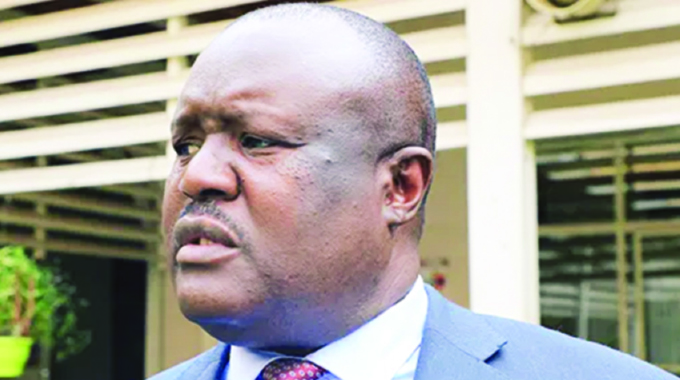
Zvamaida Murwira
Senior Reporter
The Pan African Parliament is a sleeping African giant whose role, influence, mandate and potential is yet to be felt on the continent, almost two decades since its formation.
Notwithstanding that it is a third organ of the African Union in order of ranking, legislators who attended the continental Parliament’ two-week long strategic and re-orientation workshop agreed that PAP is yet to assert its presence on the African continent, both in terms of it being known by citizens and in playing its role as espoused by its founding values in the Constitutive Act.
Related to that, PAP, led by Zimbabwe’ Chiefs Council president Chief Fortune Charumbira, will have to review some of its protocols for them to be relevant to modern developments and aspirations.
During plenary, it was felt that PAP needed to play a significant role in peace building and fostering regional integration consistent with the spirit of Pan Africanism which was a dream of the continent’s founding fathers.
The Constitutive Act of the African Union that establishes PAP provides the continental organ as an important vehicle for facilitating the full participation of African people in the development and economic integration of the continent.
With the continent saddled with poverty levels, political instability in some cases, corruption and the growing prevalence of cases of opposition parties refusing to accept outcome of elections, the role of PAP becomes more compelling.
PAP ran the workshop under the theme; “Reviving, Renewing, Repositioning and Reinvigorating the Pan African Parliament” that was meant to brainstorm strategies of institutional renewal and reinvention where it sought to interrogate the structures, practices and ideologies that had created failures, progresses and weaknesses in past performances or reveal the institutional dimensions of past wrongs.
While PAP has recorded some accomplishments in consolidating and sustaining democracy in member states, there is still the question as to whether or not it has lost its way and digressed from the principles and values that informed its foundation.
Members of Parliament seconded to PAP and speakers of national and regional parliaments attended the conference to confront these and other issues.
In an interview on the sidelines of the conference, Chief Charumbira said the meeting was meant to carry out a review of the work of PAP and come up with practical ways to reposition it.
“Every organisation should periodically reflect and do introspection, that is the rule, whether you are doing well or not, you should regularly go back to say after five years, for example, to reflect whether you are on the right direction, but for PAP it is even more imperative, to come together asking ourselves if we are still focused in the right direction; what were the original objectives, do they need to be adjusted or are we answering to the aspiration of the African citizens, are we performing to their expectation,” said Chief Charumbira.
The conference agreed on some measures to ensure peace and stability on the continent given the prevalence of cases of unlawful change of governments,
He said democracy did not only entail periodic holding of polls to elect governments, but it goes further to subject leaders to account for themselves during their tenure in office.
Chief Charumbira said if democracy was to end by electing leaders, there would be no coups and such kinds of instability in the continent.
“The role of citizens in democracy is not exhausted by the process of electing a Government,” he said.
“They need to be continuous engagement with it to remain in touch with the people,” said Chief Charumbira while addressing a PAP Committee meeting an African Union Organ on African Architecture on Governance.
“Democracy implies that the Government is the peoples’ Government. Why do people revolt against that same system they elected? Democracy does not mean electing people in office alone. Voting is a means to democracy.
“Democracy is a means to ensure that those elected are accountable to the people. When MPs go back to their constituencies for feedback that is democracy.”
Chief Charumbira said in Burkina Faso, in recent years, there was a violent uprising after people protested the extension of two terms of that country’s president by Parliament without consulting the people.
He said in Mauritania in the 2000s, former African Union chairperson Colonel Muammar Gaddafi had to abandon his message directing the military to return to their barracks upon realising people were in the streets, including at the airport, waiting for his arrival, only to tell him that they concurred with the military takeover of the Government.
He said the PAP should interrogate all these issues on what should really be the yardstick of democracy.
Addressing a plenary of Speakers of National and Regional Parliaments, Speaker of the National Assembly, Advocate Jacob Mudenda challenged PAP to play an enhanced role in the development of the continent particularly to ensure peace so that Africa realised its full potential given its endowment with natural resources.
He said the Democratic Republic of Congo had the potential to provide 65 percent of the continent’s electricity requirement through hydro power in Inga Dam, but conflict in the country had an adverse effect on the project
“The PAP is, therefore, implored to engage the AU Commission and through it the Peace and Security of AU as well as the Sadc Treaty so that the Eastern part of DRC is demilitarised so that there is peace in the DRC.
“We are losing an important African resource because of insecurity. The same applies with the Northern part of Mozambique where banditry is emerging destabilising good economic project in the production of gas,” said Adv Mudenda.
In pursuit of long lasting solution to reposition PAP, the five regional caucuses receded into their different groups to brainstorm challenges facing PAP before reporting back to plenary constituted by several panel of experts on several thematic areas mainly from various AU organs.
Some of the questions were, why was PAP established; what do the African citizens expect from the organisation, what are PAP deliverables, challenges of PAP, it’s opportunities and what it should do better to deliver on its mandate.
In its report, Southern African caucus chairperson, Mrs Pemmy Majodina from South Africa, said there was need to harmonise roles of AU organs in a way that conferred PAP with due recognition as provided by its Constitutive Act, adding that recommendations by the continental body were not considered by AU.
“In view of the fact that PAP’s role in the AU governance system is not well defined, its Bureau must organise meetings with relevant AU organs to clarify the role of the PAP and to ensure that the continental body’s turf is clearly defined within the AU governance system,” said Mrs Majodina
“The popularisation and marketing of the PAP needs to be prioritised to familiarise PAP with the citizens of Africa.”
Western Africa caucus chairperson, Mr Alhagi Mbow from Gambia, said there was need to constitute a special committee to lobby for the ratification of the Malabo Protocol that sought to strengthen the powers of PAP.
“We think research should be conducted to ask people directly to ascertain their expectations. PAP is not known in many countries including the host country,” said Mr Mbow.
“There is need for PAP to create effective exposure strategies across the continent as well as to increase their activities in many countries so that the citizens of the continent can know PAP and its mandate.”
Central regional caucus led by Ms Jaynet Kabila felt that PAP should have powers to vote for its budget coupled by the need to have control over AU organs.
“PAP is a Parliament without legislative power, which makes it unable to exercise its functions ascribed to it,” he said.
In its presentation, the Eastern region led by Mr Terrance Mondon from Seychelles noted that PAP relied more on AU.
It also recommended that PAP sessions be taken to different member states as part of measures to raise awareness of its role.
Other issues discussed were the role of PAP in the achievement of AU Agenda 2063 where presenters comprising experts made their recommendations.
What now remains is for PAP to sift through a number of recommendations and adopt those it feels will help it to transform the continental body which largely remained in the shadow of some AU organs despite the fact that some of them should report to it.
If correct and prudent decisions are taken, PAP can rise again and assert its role in transforming Africa.



 Online Reporter