Obey Sibanda
BULAWAYO must maximise the use of alternative water sources, including drilling new boreholes and rehabilitating existing ones, to cushion residents against prolonged water shedding during the coming dry season, Zanu-PF Secretary for Administration Cde Raymond Mutomba has said.
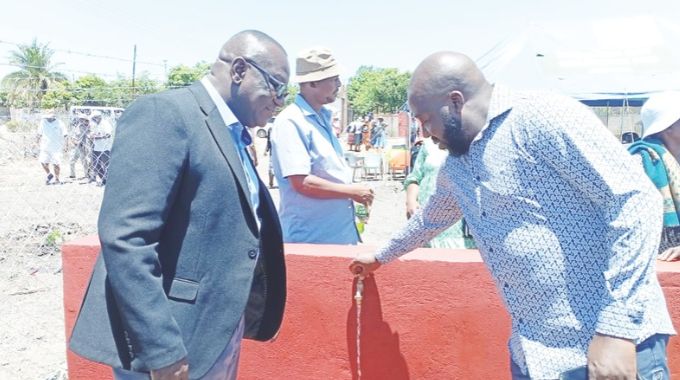
Speaking during the handover of a solar-powered borehole to residents of Gwabalanda, Cde Mutomba urged businesses to complement Bulawayo City Council’s efforts to improve water access as the country prepares for an El Niño-induced drought.
The borehole, donated by businessperson and politician Cde Brian Samuriwo, is equipped with a 20 000-litre storage tank, eight solar panels and community taps under the Gwabalanda West Community Borehole Scheme.
Cde Mutomba said rainfall projections for the coming season indicated normal to below-normal precipitation, raising concerns about water availability, particularly in Bulawayo and Matabeleland South, where the city’s major supply dams are located.
“Not much rain is expected in Bulawayo and Matabeleland South Province, where all our city’s water supply dams are situated, and that means residents must expect prolonged water shedding.
However, the predicted El Niño does not mean we must sit back and do nothing,” he said.
He urged companies and individuals to support the council’s interventions by investing in new boreholes and rehabilitating existing ones to provide communities with reliable alternative sources of water.
“As a party, we are calling on businesses to support Bulawayo City Council in its efforts to ensure residents have enough water throughout 2027 by rehabilitating and drilling new boreholes to alleviate water challenges,” said Cde Mutomba.
He commended the Brian Samuriwo Foundation for handing over two solar-powered boreholes in Lobengula and Gwabalanda within a month, saying the facilities would provide communities with alternative sources of clean water during periods of municipal supply interruptions.
Cde Samuriwo said the initiative was part of broader efforts to support communities grappling with water shortages and improve access to reliable supplies.
“Our aim is to complement efforts to improve access to clean water and ensure that communities have reliable alternative sources, particularly during periods of water shortages,” he said.
Residents welcomed the development, saying the facility would ease the burden of searching for water whenever municipal supplies were interrupted.
Mrs Sinanzeni Ndlovu said households typically required about five 20-litre buckets of water daily during water shedding, adding that the borehole would reduce reliance on potentially unsafe alternative sources.
“When council taps are dry, each household needs about five 20-litre buckets of water to get by per day, and we can now fetch water here. Mothers will not have to fetch water from open and unsafe sources but can access clean water that is readily available throughout the day,” she said.
Ms Sinqobile Sibanda said residents had also faced criticism on social media over the drilling of boreholes in western suburbs, arguing that they deserved equal opportunities to access groundwater like communities in other parts of the city.
She said residents were also planning to establish nutrition gardens using water from the facility, which would help strengthen household food security.
Residents further agreed to introduce a water-use timetable that will allow the borehole to replenish the 20 000-litre storage tank overnight while ensuring that community members have access to water during the day.