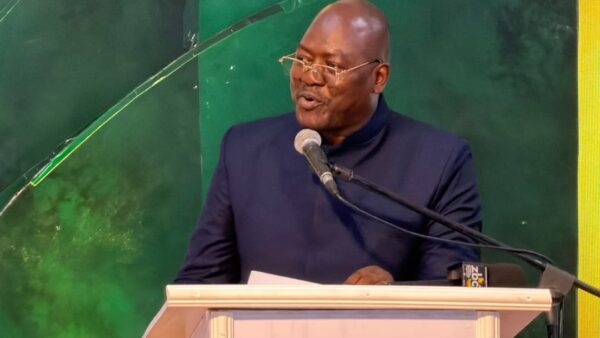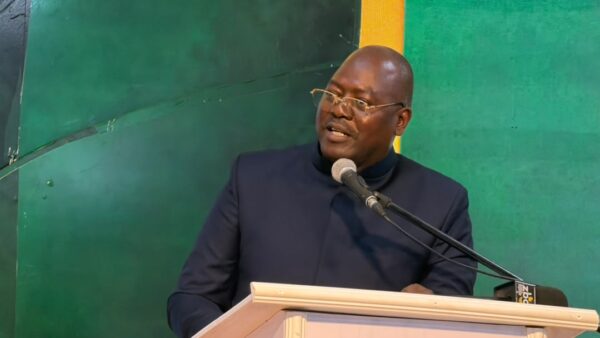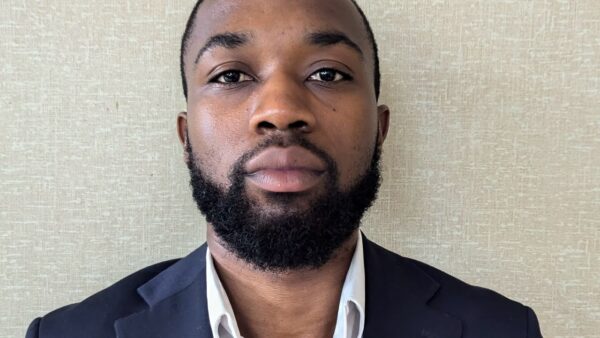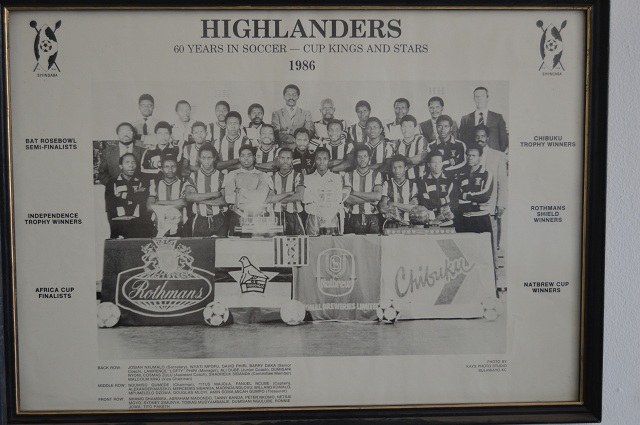
FORMER Highlanders striker Josiah Nxumalo believes the club’s 90th anniversary this year, presents a perfect opportunity for the club to be realistic and focus on its future.
Nxumalo said the club cannot afford to carry a begging bowl into the future. He emphasised that there was need for the business model to change in line with new trends where clubs are run as business concerns with a shareholding.
Nxumalo played at Highlanders with his elder brother James who was a defender. They are part of a long list of brothers who include Kainoti and Willie Luphahla, Tennyson and Douglas Mloyi, Marko, Madinda, Adam and Peter Ndlovu, Thabani and Itai Masawi, Lawrence and Kingston Phiri, Amin and Makwinji Soma-Phiri, Chester and Raymond Makhanda, Jeffrey and Benjie Mpofu, Itai and George Chieza who have donned the Bosso strip.
Sunday News’ Lovemore Dube (LD) talks to Nxumalo (JN) on Bosso’s future and his career this week.
LD: Nxumalo it’s been a long time, welcome back home. I hear you are back and into farming.
JN: Yes, I have retired from working in South Africa and farming just after Sawmills in Umguza District.
LD: Highlanders FC are celebrating 90 years in the game this year what’s your take?
JN: It is milestone achievement to be 90 years old. But I am worried that the club has continued to struggle with no money every season.
LD: What is the way forward in your view, you have been a player, manager and secretary of Bosso?
JN: Highlanders must change and run along business lines where there is shareholding. Imagine someone pumping a million dollars into Highlanders today, the club would be solvent and would join the rest of the football world in recognising the big business football is with a distinction between shareholders and supporters. Honestly Highlanders cannot continue to thrive under supporters who are vociferous at meetings and elections but put little into the institution. They must travel the route undertaken by many which has seen more professionalism and benefits. Look at Arsenal, they are owned by a billionaire and results have been coming so Highlanders must do that and venture into the future.
LD: So much about the future, let’s delve into Josiah “S’gubudu” the former club bustling striker.
JN: I was born at Luveve in Bulawayo on 15 June 1946 but attended elementary school in Mbonqane before we relocated to Shashani in Matobo District. I then moved to Luveve Primary School for my senior primary education.
LD: Did the football bug catch up with you that early S’gubudu?
JN: I was not so good then but I remember making it into the second stream side. One player I remember is one Simon Gwebu who made it into the Bulawayo Select (Pick).
LD: You went to Mpopoma High School where the likes of Nivathi Songo were players, did you make an impact there?
JN: We had a problem where at one time our truck broke down and Bulawayo African High School later to be Mpopoma High School did not get so active in the game.
LD: So much is said about John Walker Chipukula who lured you to City Pirates . . .
JN: He was a great goalkeeper who played for Northern Rhodesia and was behind the establishment of City Pirates during the 1963 split of Mashonaland United, Matabeleland Highlanders and Northern Rhodesia when the national league which was multi-racial was established. He must have seen something in me to entice me to join his team which was a formidable side.
LD: So when did you join City Pirates?
JN: This was in 1968 and in 1969 I moved to Harare to study at the School of Social Work.
LD: Where was the club-based?
JN: Matshobana.
LD: Were you not a big club, why Matshobana?
JN: It was a big venue then. When there were big matches we would cordon off the pitch and make people pay. It was the home of the big derbies of those days.
LD: So what were the other clubs of the day and who were the players who inspired you to take the game seriously?
JN: We had clubs like Callies, Bulawayo Rovers and Founders. There were some great individual talents of that era 303 Marume, Dusty King, Jambok and Justin some of whom were my teammates at City Pirates.
LD: Once in the capital Salisbury Sables became your team.
JN: Yes, they were a competitive side but not among the best. I was with them for 1969 and 1970 and thereafter I got in the books of Highlanders who were now in the national league. They would drive to Harare and pick me up whenever they had games in the Northern Region which included Mhangura.
I remember we struggled in 1971 and we were relegated but we seemed to get better in 1972.
LD: What were the problems with Highlanders then?
JN: Poor administration and archaic administration principles were a factor at the club.
LD: So what happened, things seem to have taken a positive turn in 1972 when Silas Ndlovu took over as coach and the executive was reduced from 15 to five members?
JN: Silas Ndlovu never rose to be a player of note. He had good administrative and organisational skills. He was professional and read a lot about British football which he seemed to admire and that was the turning point for Highlanders in 1972.
LD: Good. So what was the first major tournament won by Bosso?
JN: We won the Chibuku Trophy beating Mhangura by three goals in 1973. I scored two and Tymon Mabaleka chested in the third. We had gone into the match as underdogs against a team that was teeming with talent with George, Itai and Tendai Chieza, Alex Masanjala, Philemon Phiri and Lovemore Nyabeze. We had no big name then.
LD: So much is said about your telephathic understanding with Cavin Duberley, Tymon Mabaleka and Tommy Masuku, tell us more.
JN: Tommy Masuku was a very good dribbler endowed with a good passing mind. These guys knew where I would run and place the ball just there for me to outpace defenders and score. I scored many goals with their assists.
LD: The Chronicle Sport’s David Ncube, coined a nickname for the team.
JN: It was how he described Masuku, Mabaleka and myself. He called us the Destruction Squad as we would clobber all our opponents with ease with Duberley and Masuku tormenting on the wings and Mabaleka assisting in attack and middle.
LD: Yesteryear fans talk so much about you guys, what was it really?
JN: We had flair and a commitment to the game and fans. We knew what it meant to play for Highlanders and never wanted to disappoint with results or entertainment value.
LD: So a number of trophies came your way until the 1976 split, why did you not go with some of the players to form Olympics.
JN: The issue is that some like Lawrence Phiri, Billy Sibanda and myself had other professions other than football. We were comfortable. Someone used money on the players who came from out of Bulawayo and Barry Daka joined them. We felt we owed it all to our club and stayed put because of our commitment to the club and game and nothing could come between us and Tshilamoya.
LD: But with them went some of the lustre and playing South Zone football was a bit of a deep in standards.
JN: We soldiered on and kept on giving service to the club, grooming young players once again.
LD: Who are among some of the most notable players you were with at Highlanders?
JN: Bruce Grobbelaar, Ananias Dube, Billy Sibanda, Nehemiah Dube, Lawrence Phiri, Stanley Nyika, Chutika Tembo, Isaac Mafaro, Itai Chieza, Masuku, Boet Van Ays, James Nxumalo, Duberley, Masuku, Jeffrey Mpofu, Peter Bhebhe and Majuta Mpofu who came later.
LD: Which defender kept you under lock and key better than others?
JN: It has to be Daniel Chikanda in earlier years and Caps United’s Charles “Raw Meat” Sibanda.
LD: There was abundant talent in your career that ended at Independence in 1980, who are some of the players you believe if not for suspension from international football could have made an impact in world football?
JN: George Shaya, Gibson Homela, Steven Chimedza, Chita Antonio, Mabaleka, Majuta Mpofu were some of the good players of my days later I saw Joel Shambo he was a gem.
LD: So what would you say were some of your biggest achievements as a player?
JN: Being selected Soccer Star of the Year finalist and topping the goalscorers’ charts at a time when there was competition. Everyone in the team would fight to get you to score by creating chances and when it was penalty it got to be a preserve for the top striker. Unfortunately I was not a good penalty taker.
LD: What were your attributes as a player?
JN: My physical stature was imposing, I had speed and I was good in the air as well and could not be shoved off a tussle. Another thing that many never saw about me was that I was a good dribbler, I did less of that though.
LD: There was a time you were linked with a move to South Africa in the mid 1970s, what happened?
JN: We played Pirates and beat them 2-0. I gave Shakes Mashaba and company hell. Jomo Sono was the crowd favourite with sublime dribbling skills. We were however, beaten by Kaizer Chiefs 3-2 and Pirates wanted me. I could not move because of the suspension of Rhodesia then. I remember Mashaba and his defence which had the likes of legendary goalkeeper Patson Banda insinuating that we were running away with the ball as they preferred it on their feet and then playing tricks of which Jomo was a master. I also saw players like Teenage Dladla who were great dribblers as well.
LD: Are you happy with what you achieved as a player and administrator at Highlanders where you were at a very exciting period when Bosso swept all before it in cup games between 1984 and 1988?
JN: It was good being part of the club winning so many trophies and going to Germany on a twinning agreement. I wish the club could get into those during my playing days we were with Orlando Pirates.
LD: Thanks Nxumalo.JN: You are welcome.