

 admin
admin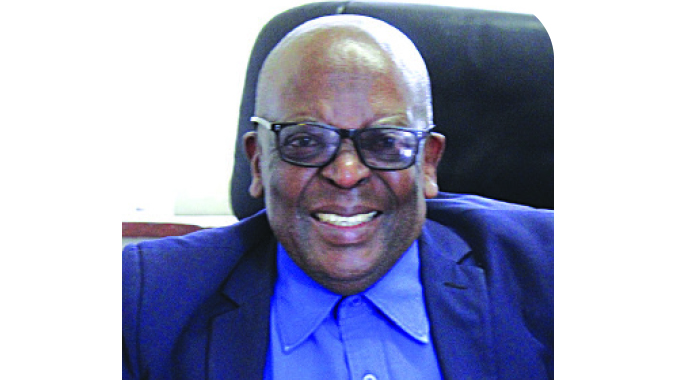
Simpson Nyereyemhuka
Special Correspondent
THE article published in The Saturday Herald, under the headline, “Were Bosso robbed in the ’76 title race?’’ was always going to provoke interest, analysis and feedback.
It’s a subject which touches a lot of emotions.
It’s always the case when controversy is attached to the age-old rivalry, between Dynamos and Highlanders, this country’s dominant, and biggest, football clubs.
Therefore, it’s just natural, the article, which was published on Saturday, where a number of Bosso legends, including Douglas “British’’ Mloyi, were quoted suggesting they were robbed, in that championship race in 1976, should be challenged.
The first point of challenge is that Dynamos were not awarded two points, forfeited from Highlanders, on the last day of the season, as those legends claimed.
Those two points were awarded on the very day Highlanders decided not to show up, at their own home ground, Barbourfields, on March 21, 1976.
Their fans pitched, up for the anticipated blockbuster match, and Dynamos had also made the long journey, from their base in the capital, for the match that was never.
Secondly, it’s not the home team who decide whether to postpone matches, or for the games to go ahead, but the league administrators, who in this case, were represented by fixture-secretary, Ismail Adam.
In this scenario, they insisted the match should proceed, as scheduled, which meant that Highlanders claims that Barbourfields was waterlogged, had no merit.
This led them to be docked two points, on a 2–0 scoreline, there and then, and not on the last day of the season, as they allegations appear to suggest.
Thirdly, the Bosso legends give an impression that, by divine right, those two points belonged to them, and were taken from their tally.
This again, is misleading because they might as well have lost the match, had they taken to the field.
Fourthly, the presence of Rhodesia National Football League president, John Madzima at Barbourfields, did not mean he had travelled in the Dynamos team bus.
After all, league administrators travel across the country, to watch teams play, whenever they are free.
Remember, this match was supposed to be the pick of crop of the fixtures and Highlanders disappointed all and sundry, by their unprofessional conduct, which they are now blaming on other parties.
If they were serious title contenders, they had ample time to recover.
It must be noted that in the reverse fixture, at Rufaro on Sunday, September 19, 1976, Bosso surrendered a 1–0 lead, from a Majuta Mpofu strike, in the seventh minute.
They allowed a late equaliser, in the 86th minute, with Dynamos scoring through David George.
Exactly a week later, Highlanders dropped crucial points at home when, just like the previous week in Harare, they led visiting Gwelo United, from the 14th minute, through another Majuta Mpofu strike.
They appeared set to collect maximum points, which could have boosted their title chances, but allowed right winger Wonder Chaka to slot home a priceless equaliser, past goalkeeper Annanias Dube.
The ‘keeper had spilled a shot from centre striker Ian Mpofu. Ironically, that was the their season-ending fixture, alongside the rest of the 10-member Super League, except for Dynamos.
The Glamour Boys had two games in hand, because of their two-legged matches against Orlando Pirates, in the final of the Southern African Club Championships.
Then, there was also the replay, which Dynamos had to play, in the Castle Cup semi-finals, against Meikles, after the 3-3 draw on September 5, 1976.
Dynamos won the replay 3–1, on September 12, and went on to win their first Castle Cup by thrashing Zimbabwe Saints 8–1 on October 3, 1976.
Then, Dynamos completed their outstanding league fixtures by beating Umtali United 10–0, on October 10, and Zimbabwe Saints 3–1 on October 17, to clinch the league championship.
Therefore, claims from the Highlanders camp of conspiracy, against them, are without merit and are just meant to spoil the Dynamos party, 45 years down the line.
The Glamour Boys of that year was just a stream-rolling machine, just like the Highlanders of 1999–2003.
I think the old guard, like some of us, who have been part of the local football family for decades, and were there when it was happening, deserve to ensure tomorrow’s generation, get the true picture of what happened.
We should not just watch, from a distance, and let misrepresentation of what really happened, define the story of the events of the past.
It’s even troubling when such misrepresentations are made by respected and legendary footballers, like my big brother Douglas “British’’ Mloyi, who remains one of a rare breed of thoroughbred defenders, to ever to grace our stadia.
Highlanders simply need to look at their infamous decision, to stage a no-show at Barbourfields, which they cannot blame on Dynamos, who were ready to play, fully aware they could win, draw or even lose that match.
Bosso should also look at the 1–1 draw against Dynamos, on September 19 at Rufaro, and the two reverse fixtures against Gwelo United 0–0, in the Midlands, and 1–1 in Bulawayo, as the reasons they didn’t win the championship.
This is where their championship bid collapsed, and not when they chose not to play their home match against Dynamos.
Had they won those other three matches, where they had a very good chance of doing so, no one would be talking about the match that never was.
Simpson Nyereyemhuka is a football fan, former ZNA Sports writer and analyst. He works as a labour relations practitioner.



 Online Reporter