Online Reporter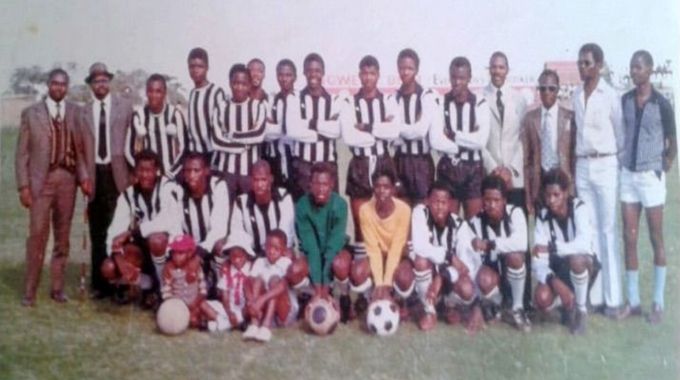
WITH Highlanders Football Club celebrating its centenary this year, it is unfortunate that an important chapter of the club’s rich and illustrious history appears to have been overlooked by those tasked with commemorating the milestone. Much has been said about the trophies, legendary players and unforgettable matches that have defined Bosso over the past 100 years.
However, very little attention has been paid to the club’s remarkable contribution to Zimbabwe’s liberation struggle.
Yet during the turbulent 1970s, when the armed struggle against colonial rule gathered momentum, Highlanders became much more than a football club.
It evolved into a breeding ground for nationalist consciousness and a rallying point for young people determined to fight against oppression. Those who donned the famous black-and-white jersey were not merely footballers chasing glory on the pitch. Many were young patriots prepared to sacrifice promising sporting careers in pursuit of freedom.
The clearest demonstration of this came in the mid-1970s when almost an entire Highlanders Under-16 side abandoned football and crossed into Botswana en route to Zambia to join the liberation struggle.
Among those who exchanged football boots for military fatigues were Cdes Jabulani Mbambo, later to serve as Matabeleland South Provincial Registrar, George Nkomo, the elder brother of legendary goalkeeper Peter “Oxo” Nkomo, Clarence Tshuma, George Moyo and several others.
The youngsters embarked on a journey that would transform them from promising sportsmen into guerrilla fighters.
Many later underwent military training under Cuban instructors at Luso in Angola before being deployed to various operational fronts to confront Rhodesian security forces. Sadly, as preparations to celebrate Highlanders’ 100-year existence gather momentum, this extraordinary contribution to the liberation struggle appears to have faded into the background.
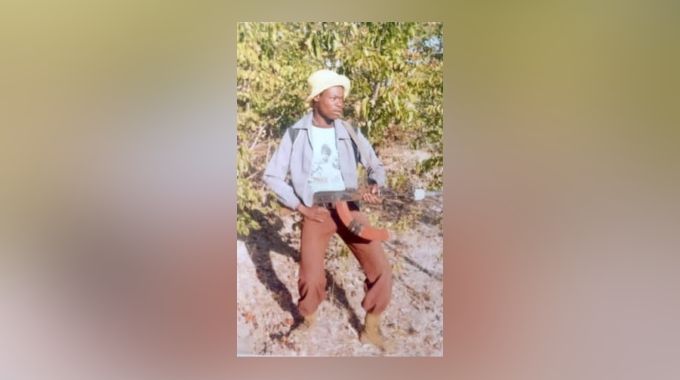
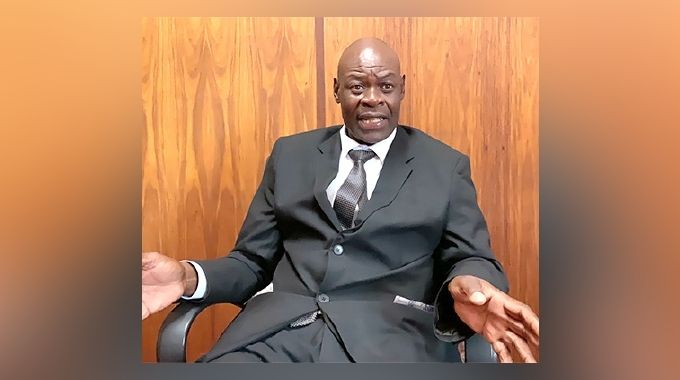
Last Friday, our Assistant Editor Mkhululi Sibanda (MS) tracked down one of the then youngsters who made the life-changing decision to leave football behind. The lanky and athletic Cde Smart Moyo, whose pseudonym name was Cde Makhakhi Zondo, vividly recalls abandoning a promising football career to answer the call of the revolution.
In 1976, shortly after sitting for the then Rhodesia Junior Certificate (RJC) examinations at Sobukhazi Secondary School in Mzilikazi, Bulawayo, the young goalkeeper left the football fields he loved and ventured into the uncertainty of guerrilla warfare. Driven by a burning desire to fight colonial injustice, he entered a world where he would spend years evading Rhodesian security forces in the bush.
After crossing into Botswana and proceeding to Zambia, Cde Moyo underwent military training at ZPRA’s CGT1 and CGT2 camps, which were under the command of the now retired former Zimbabwe Defence Forces Commander, General Philip Valerio Sibanda, whose wartime name was Cde Ananias Gwenzi. Upon completing his training, Cde Moyo was in 1978 deployed to Northern Front Two (NF2), an operational area covering parts of Lupane, Nkayi and Binga districts.
There he served under regional commander Cde Phebion Mutero (Lieutenant-Colonel Ernest Sibanda). NF2 witnessed numerous fierce engagements as Rhodesian security forces maintained a close watch on the area, which served as a vital corridor for guerrillas moving from Zambia into various operational zones inside the country. When Zimbabwe attained Independence in 1980, Cde Moyo was demobilised and returned to the football club where his sporting journey had begun.
Back at Highlanders, he resumed his goalkeeping career and competed for a place alongside the legendary Peter “Oxo” Nkomo.
Before joining the liberation struggle, Cde Moyo had risen through Highlanders’ junior ranks, featuring for the Under-14, Under-16 and reserve teams and was widely regarded as one of the club’s most promising young goalkeepers.
Today, Cde Moyo is a beneficiary of the Land Reform Programme and farms in Nyamandlovu, Umguza District. He reflects on a remarkable journey that took him from the football pitch to the battlefield and back again. Below he shares his experiences in a blow by blow account. Read on…
MS: Cde Moyo, as is customary, could you begin by giving us a brief background about yourself?
Cde Moyo: I was born Smart Moyo on 18 January 1960 at Mpilo Central Hospital in Bulawayo. I attended Lozikeyi Primary School in Nguboyenja before proceeding to Sobukhazi Secondary School in Mzilikazi, where I enrolled in 1975. I remained at Sobukhazi until 1976 when I sat for the Rhodesia Junior Certificate examinations. In those days, reaching that level of education was considered a significant achievement. After writing my examinations in
November 1976, I did not wait for the results. The desire to join the armed struggle had already taken hold of me and I soon left the country to join the liberation war.
MS: Before we discuss the armed struggle, what was life like growing up in Bulawayo during that period?
Cde Moyo: There was widespread discrimination against black people. We often listened to our elders discussing the injustices they experienced under colonial rule and that influenced our thinking as young people. On the sporting side, I played football with the likes of Tito Paketh, Peter Kavisa, who later played for Zimbabwe Saints, and Phanakhosi Mthimkhulu, who, like myself and Tito, would later play for Highlanders’ first team. During those days, we played football for the love of the game and pride in the badge rather than for money. Bulawayo had very strong junior football structures. Teams such as Mashonaland United, which later became Zimbabwe Saints, Zulu Chiefs from Pumula and Eastlands were all highly competitive.
MS: When did your football journey begin?
Cde Moyo: I started playing football at the age of 10 as a goalkeeper at Lozikeyi Primary School. Three years later, I joined Highlanders’ Under-14 side under coach Albert Dube, who is popularly known as Ali Baba. By 1976, at the age of 16, I had progressed to the Under-18 team and was also a member of the club’s reserve side.
MS: With such a promising football career ahead of you, what made you decide to abandon it and join the armed struggle?
Cde Moyo: I was inspired by my elder brothers, who had already left the country to receive military training. Their example had a huge influence on me. I was not the only footballer harbouring ambitions of becoming a freedom fighter. Some of my peers in the Bosso junior ranks who later exchanged football boots for AK-47 rifles included George Moyo, Jabulani Mbambo and Danisa, who was then the Under-18 goalkeeper at Highlanders.
As for me, I first had to convince my cousin. We had managed to save some money and I told him that since we had the means to travel, it was the right opportunity to leave Bulawayo and join the armed struggle. We also had two relatives in Matobo whom we knew wanted to become freedom fighters, so we agreed to collect them before proceeding. We went to Renkini Bus Terminus and boarded a Pelandaba Bus Services vehicle, Bus Number 22.
At the time, the bus was well known for transporting young people heading towards Botswana to join the liberation struggle. Everything went smoothly. We travelled without attracting attention and were dropped at the final stop near the border area. We crossed the Shashe River at around 7pm to avoid being seen. We spent the night near the
Botswana border and continued our journey the following morning. The local people in Botswana assured us that we were now safe.
They directed us to Gobashango Police Station, where arrangements were made for us to travel to Selebi-Phikwe. We were transported by a truck and found many other comrades there. We spent about three weeks at Selebi-Phikwe and, interestingly, we continued playing football while awaiting further travel arrangements. After that, we were flown to Zambia. It was the first time in my life that I had travelled by aeroplane. Upon arrival in Zambia, we were taken to Nampundwe Transit Camp. It was there that I received my wartime name, Makhakhi Zondo.
n To be continued next week with Cde Moyo talking about his training and then deployment