admin
admin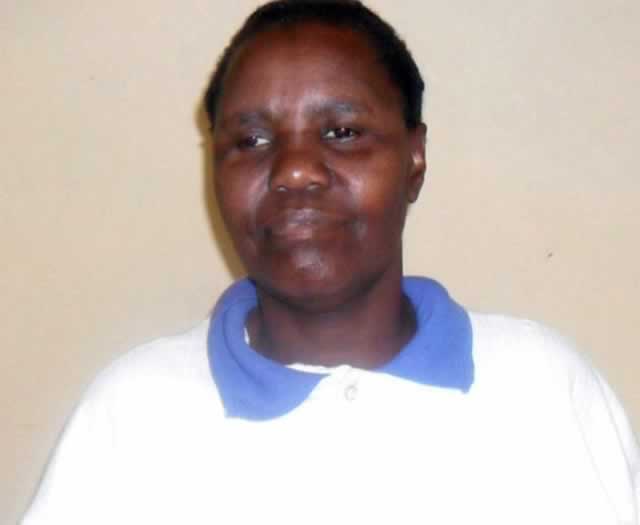
Mbachi Mutukula-Maregere Sports Reporter
AS Zimbabwe marks yet another milestone today in celebrating 35 years of sovereignty, Independence Day brings special memories to one of a rare breed of sportspersons to have emerged from the country.
Within that unique breed is Connie Sibanda, a gifted blind bowler who at the peak of her powers won a Commonwealth silver medal for Zimbabwe at the club Games in 2002.
Sibanda ventured into uncharted waters, joining a sport that had been a preserve of the elite and a closed community of whites.
Now retired and aged 60 Sibanda told Herald Sport this week that Independence Day also comes two days before her birthday and this has made Uhuru celebrations even more special for her.
Just like many black athletes in the country, it needed Independence for Sibanda to freely express her talents on the bowling greens.
“Being born two days before Zimbabwe’s Independence Day will always be a thing I treasure each year.
“Realising that someone fought for our freedom makes me feel that life is meaningful although I am blind.
“Thursday was my birthday, thanks to our president Robert Mugabe for our 35 years of Independence. I was able to join bowls because we were independent,” said Sibanda.
Sibanda who was the first black blind bowler to win a silver medal at the Commonwealth Games in 2002 turned 60 on Thursday.
Before 1980, it was very difficult for any black bowler to be allowed into the sport and to enter the bowling clubs in Salisbury and around the country but Sibanda broke those barriers and rose to become a queen of the greens.
As she reflects on the growth of the sport, it has not been lost on Sibanda that Independence brought with it the freedom of association and many young players have been over the years come through the bowls system.
Although she was blind by the time she won medals for Zimbabwe, Sibanda was not born with that disability and only started to gradually lose her sight in 1980 before it was completely gone five years later.
“To be born blind it can be accepted easily but to suddenly lose sight for many individuals it is painful and I just thank God that it was not a big issue for me.
“My blindness came after finishing my education, I am a proud mother of four, and I have two girls and two boys.
“My journey in bowling really was the best story for many people in our country as I was the only black bowler who won many medals at international tournaments.
“I started collecting my medal is 1989 in Harare and also at the World Championships abroad were I was a gold medalist and I also won the Sportsperson of the year award.
“The best moments of my life came when I used to play the sport.
“I loved it and enjoyed very much, I would not mind playing it again although I am old now.
“The good part about this sport is that it has no age restrictions… anyone can play, I only stopped playing it in 2002 when the association which used to deal with the blind seemed not to function.
“Everything was slow and many people in the association left so there was no one to play with.
“I was just surprised when I heard that some journalist wrote a story about me that I had been suspended but when I asked some people the association they advised me to ignore the issue’’.
Although she won 10 gold medals between 1994 and 2002, Sibanda still relishes her crowning moment in Manchester, England when she won a Commonwealth silver.
She also claimed the national Blind Sports Person of the Year accolade on three occasions.
Since her return from the Commonwealth Games in 2002, Sibanda has not been active in the sport.
However, some young bowlers continue to be developed in the sport with 11year-old Anotidaishe Chilundo who plays for City Bowling Club, being the youngest bowler in Zimbabwe.
Anotidaishe also has a sibling – 17-year-old Aaron Chilundo – playing the sport that includes 16 year-old Austin Kupara of Alexandra Sports Club among its brighter prospects.
“Many young people of my age asked me why I selected bowls of all the sports, but it is a very healthy sport and most of the old players are welcoming and gave up their time to teach me to be a good bowler.
“Almost all the bowlers were good to me and now my young brother is the youngest bowler for Zimbabwe as he is only 11 years old.
“I am now one of the best young players for the country and am very happy and looking forward to become Zimbabwe’s black top bowler,”said Aaron Chilundo.
Although the sport which was first played in Zimbabwe in 1902 has over the decades gained its popularity with many young players coming onto the stage and eventually becoming good bowlers it has not been able to retain some of the talent.
Bowls Zimbabwe president Malcolm Evans spoke of a story that has been so far so good and said the sport had developed tremendously with a strong involvement of both black and whites.
“We have been working hard towards the development of bowls.
“We now have a lot of blacks coming to join and playing bowls.
“If you look at our Bowls Zimbabwe website there are a lot of developments, NSSA is one of our sponsors who have boosted the sport and we are glad that we have a lot of individuals from companies who have joined bowls.
“Individually I think our major development has been the raising of black people and the clubs,’’ Evans said.
“The number of players I believe reduced because some people left the country and others just stopped playing but we are still happy,’’ Evans said.



 Online Reporter