


 Andrew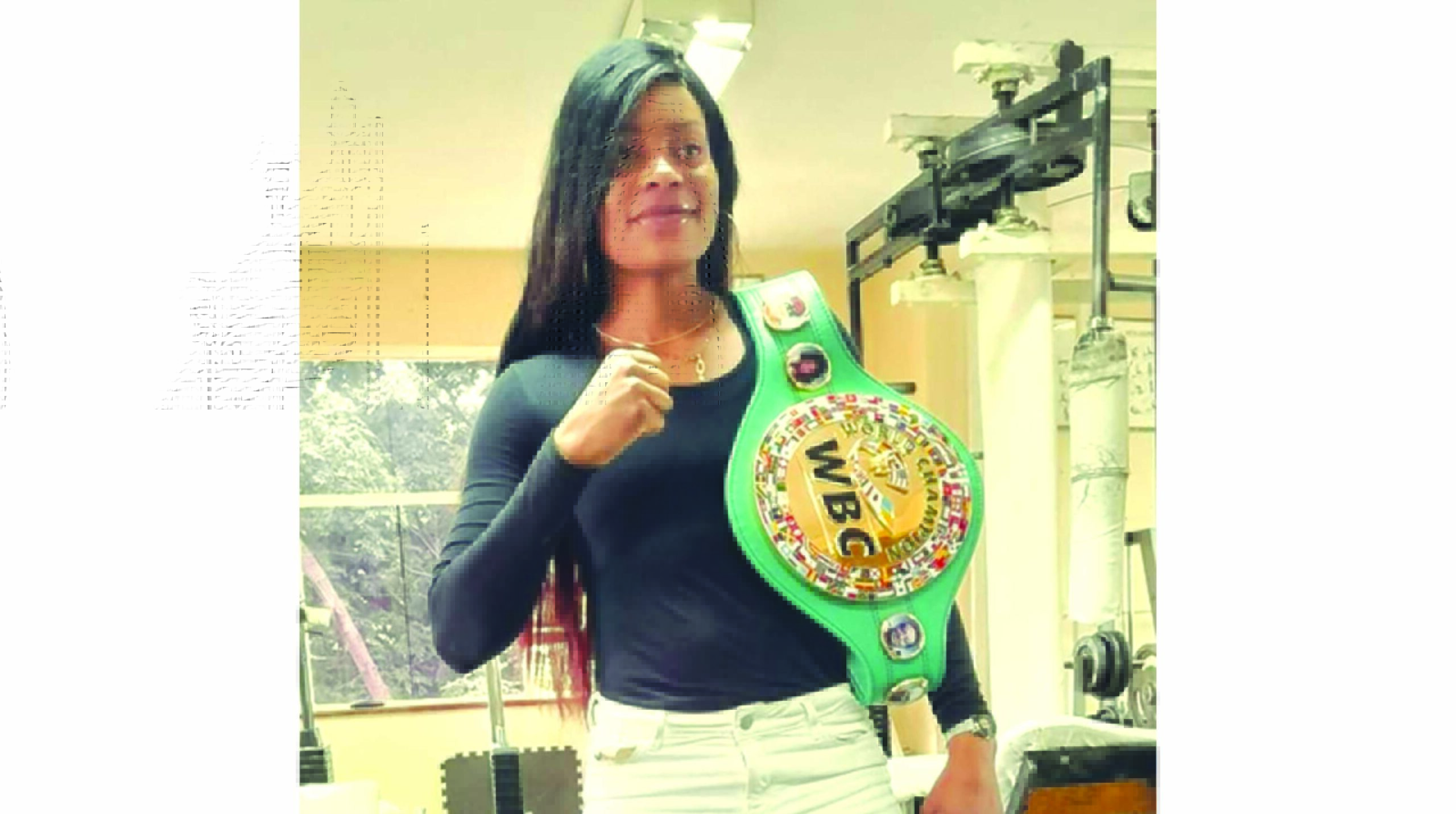
Langton Nyakwenda
Sports Reporter
People can go to extraordinary lengths to survive, more so, if they are single mothers fending for their parents and siblings.
Kudakwashe Chiwandire, who is a single mother of three, including one-and-a-half-year-old twins, has been through a lot.
She has done this and that just to put food on the table.
Less than two years ago, she was a street vendor, who fought running battles in the central business district with City of Harare’s municipal police.
She would also juggle vending and hairdressing.
At one time, she temporarily quit boxing, a sport she believed would deliver her out of poverty.
Just like many female boxers, the Covid-19 pandemic forced her to turn elsewhere for survival.
She was persuaded to return to the ring by promoter and manager Clyde Musonda last year, and she heeded the call.
However, even after winning the coveted World Boxing Council (WBC) Interim Super Bantamweight title against the highly rated Zambian Catherine Phiri in February, she did not get the rewards she expected.
“I am still leading the same kind of life I led before I won this belt; nothing has changed.
“Sometimes I feel like going back to the streets and do what I used to do,” she told The Sunday Mail Sport in May.
How things have changed!
Chiwandire is now a boxing queen, who has since earned a small fortune for herself, especially after her latest victory against Mexican Zulina Munoz – one of the best female boxers in the world – to retain her title.
Ranked the ninth best female super bantamweight boxer in the world by the WBC, Munoz also carried a 53-4-2 record, with 30 of those victories coming through knockouts.
However, she was outfoxed and outboxed by “Take Money’’ in a thrilling 10-round bout at the Harare International Conference Centre last weekend.
Chiwandire bagged over US$70 000 in prize money and pledges for her efforts.
Deputy Minister of Youth, Sports, Art and Recreation Tino Machakaire promised her US$10 000. Businessman Pedzisayi “Scott” Sakupwanya also pledged the same amount.
The businessman had earlier bought Muhammad Ali’s sculpture, which was auctioned before the fight for US$32 000.
Chiwandire also pocketed a cool US$20 000 as purse money.
Zororo-Phumulani, a sister company of Doves, pledged US$1 000.
Cumulatively, Chiwandire and her camp could gross at least US$73 000.
In May, after her exploits in Zambia, President Mnangagwa showered her with US$15 000.
On Friday, a party was hosted in her honour in Chivhu, with more events lined up across the country to celebrate her historic win.
It capped a hectic week for Chiwandire and her manager Musonda.
International media houses, including some in the Unites States, all want a piece of her.
“It has been a hectic week for us; we have become very popular in town. We have received thousands of congratulatory messages on WhatsApp.
“Media from as far as the United States have contacted us, seeking to know more about Kudakwashe Chiwandire,” Musonda said. The rising boxer is slowly capturing the imagination of the world, as she angles for the WBC Super Bantamweight gold belt.
Current holder Yamileth Mercado of Mexico fights countrywoman Marian Juarez next month, with the winner set to face Chiwandire early next year.
“When we won in Zambia against Phiri, many thought it was a fluke, but after this recent win, most people now realise Zimbabwe has a world class boxer in Kuda.
“Zimbabweans are also now beginning to realise boxing is a sport that is capable of putting the country on the world map,” Musonda said.
Just like many of the successful local boxers before her, Chiwandire’s fortunes have changed overnight.
She has refurbished her family’s house in Dzivarasekwa Extension.
Her three kids are now living well.
She has literally fought her way to fortune.
Veteran promoter Stalin Mau Mau knows how the sport can transform lives, having worked with various boxers since independence.
He was managing Arifonso Zvenyika, when the retired Mbare pugilist won the Commonwealth flyweight title in 1998.
“The potential to make money is anchored in the highest levels of discipline,” says Mau Mau.
“You have to be disciplined to make money and also be disciplined enough to manage it.”
Historically, the sweet science, as some call it, has been known to transform lives.
The late Proud “Kilimanjaro” Chinembiri was an African heavyweight champion for five years from 1982 and he lived large.
His exploits charmed former Côte d’Ivoire president Felix Houphouet-Boigny, who gave him regular royal treatment at his palace in Abidjan.
Chinembiri’s brother, Punish, summed up Kilimanjaro’s lifestyle in an interview with The Sunday Mail Sport in March, 2020.
“I must say boxing took good care of my younger brother,” said Punish.
“He refurbished our family house in Mbare. He bought his own house in Bulawayo and he also had three BMW vehicles.”
Zvenyika splashed some cash after his Commonwealth triumph.
He even bought a car, although he was not a licensed driver, a situation that saw him encounter some problems with the law.
“I did all sorts of things with the money I got from that fight. All sorts of women were after me and I blew my money,” regretted Zvenyika in an interview with this publication in 2016.
Charles Manyuchi burst onto the scene after winning the African Boxing Union welterweight title in 2013.
He would go on to claim the WBC International and Silver belts.
Along the way, he made money.
Manyuchi has several houses and cars, and is now into farming and mining.
He also runs a fleet of commuter omnibuses.
“I have achieved a lot from boxing and I want to thank God for that,” Manyuchi said.
“I come from a very poor background and I was born in a family of eight. My father even struggled to take care of us, so boxing was a way out for me.”
Monalisa “Queen of the Jungle” Sibanda is no longer an ordinary girl from Mabvuku, thanks to boxing.
Sibanda is the holder of the Women International Boxing Association intercontinental welterweight title.


 Bongani Ndlovu
 Online Reporter