Online Reporter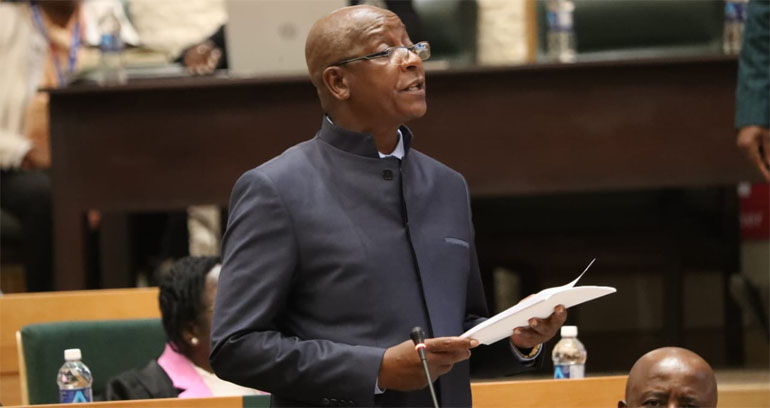
Debra Matabvu-Senior Reporter
THE process of aligning laws with the recently enacted Constitution of Zimbabwe Amendment Act No. 3, which will see about 12 Acts of Parliament being amended over the next two years, has begun.
Preparations to transfer the management of the voters’ roll from the Zimbabwe Electoral Commission (ZEC) to the Registrar-General’s Office, one of the first administrative changes required under the new constitutional framework, are underway.
The constitutional amendments introduced significant governance reforms, including transferring responsibility for voter registration and maintenance of the voters’ roll to the Registrar-General, establishing a Delimitation Commission, changing the procedure for filling a vacancy in the Office of President through election by Parliament, extending Presidential and parliamentary election cycles from five to seven years and expanding the Senate through the appointment of 10 additional presidential nominees.
It also provides for the election of the President by a joint sitting of Parliament.
Justice, Legal and Parliamentary Affairs Minister Ziyambi Ziyambi told The Sunday Mail that the Government expects to complete the legislative alignment exercise by 2028.
He said work was underway to identify all statutes that require amendment to give full effect to the constitutional changes.
The Electoral Act is expected to undergo the most extensive amendments, as many of its current provisions are now inconsistent with the new framework.
At present, the Act assigns responsibility for voter registration and maintenance of the voters’ roll to ZEC.
It will now have to be amended to transfer those functions to the Registrar-General, in line with the Constitution.
The legislation will also have to be rewritten to reflect the new procedure for electing a person and filling a vacancy in the Office of President, which will now be done through election by Parliament instead of a nationwide Presidential election.
Consequential amendments will also be required to cater for the extension of Presidential and parliamentary electoral cycles from five to seven years, revise election timetables and nomination periods, provide for the appointment of 10 additional Presidential nominees to the Senate and remove provisions assigning constituency delimitation functions to ZEC.
The Constitution now provides for the establishment of a Delimitation Commission whose composition, functions and operations will be set out in an Act of Parliament.
Parliament’s Standing Orders will also require revision to provide procedures for the joint sitting of Parliament that will elect a President or whenever a vacancy arises in the Office of President.
Beyond electoral legislation, the Government will also amend several other statutes to align them with the Constitution, including the Judicial Service Act, the Supreme Court Act, the Constitutional Court Act, the National Peace and Reconciliation Commission Act, the Defence Act, the Urban Councils Act, the Rural District Councils Act, the Traditional Leaders Act and the Attorney-General’s Office Act.
“We will amend the Electoral Act to give effect to the constitutional amendments that have already been enacted,” he said.
“In addition, we are also looking at amending or coming up with legislation to give effect also to the Delimitation Commission, its composition, its functions and related issues.
“So, we will soon be working on those amendments, as well as amendments to govern the relationship between ZEC and the Registrar-General in terms of the voters’ roll, its maintenance and upkeep and related issues. We are giving ourselves perhaps . . . by 2028 we must have done all the amendments that we need to do.”
The Judicial Service Act will have to recognise the newly created office of the Judge President of the Supreme Court and define its administrative powers.
The Supreme Court Act will also require amendments to reflect the restructuring of the superior courts, with the Judge President assuming responsibility for the administration of the Supreme Court while the Chief Justice becomes the head of the Constitutional Court.
The Constitutional Court Act will, in turn, need to be amended to incorporate the court’s expanded appellate jurisdiction and provide procedures for applications seeking leave to appeal on matters raising questions of general public importance.
The National Peace and Reconciliation Commission Act is also expected to be repealed or substantially amended following the removal of the constitutional provisions establishing the commission.
Further, the Defence Act will require amendments to align the statutory functions of the Defence Forces with the revised constitutional mandate, which now expressly includes protecting Zimbabwe, its people, national security, national interests, territorial integrity and upholding the Constitution.
Changes to Local Government legislation are also in the pipeline.
Meanwhile, the Attorney-General’s Office Act will have to be amended to reflect the new requirement that anyone appointed Attorney-General must now be qualified for appointment as a judge of the Supreme Court rather than the High Court
Speaking in the Senate last week, Minister Ziyambi said the Government had already commenced the administrative processes necessary to facilitate the transfer of responsibility for the voters’ roll from ZEC to the Registrar-General’s Office.
“The Zimbabwe Electoral Commission, which is responsible for the elections, has already begun the sensitisation programme with the Ministry of Justice, Legal and Parliamentary Affairs, the Registrar-General and the Ministry of Home Affairs and Cultural Heritage, and is also making sure that they have started the process of migrating the voters’ roll from ZEC to the Registrar-General’s Office,” he said.
The constitutional amendments, Minister Ziyambi said, had ushered in a broad legislative reform programme and Parliament would soon begin receiving Bills designed to operationalise the new constitutional provisions.
“We need to do several consequential amendments,” he said.
“What we are doing is that we are working on the modalities to see which laws we need to deal with. I can cite the Electoral Act, and we need to amend it. We also need to come up with legislation to give effect to the Delimitation Commission.
“So, all this is now work in progress and you will recall the Act was only assented to by His Excellency two weeks or so ago.
“You will soon find us bringing several Bills to support the amendments that were made so that we give full effect to that.”
President Mnangagwa signed the Constitution of Zimbabwe Amendment Act No. 3 into law on July 7.