admin
admin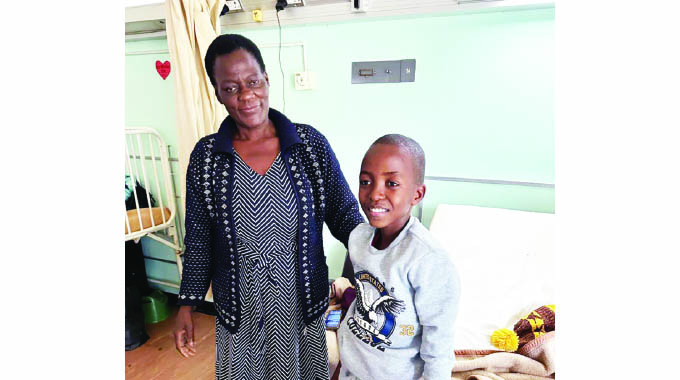
Sifelani Tsiko, Innovations Editor
AN eight-year-old boy who underwent delicate open-heart surgery at Parirenyatwa Group of Hospitals in Harare recently to repair a hole in his heart, also known as a sinus venosus atrial septal defect with anomalous blood return, has been discharged.
Veteran cardiovascular and thoracic surgeon Dr Wilfred Muteweye told The Herald this week that the boy was recovering well, an indication that the operation was successful.
“Yes, the boy is doing very well. He was now in the general surgical ward for children and will be discharged any time today,” he said.
“He is doing well, walking on his own. He still has some pain on the operation site, which is expected since it’s still early days. The symptoms that he had before the surgery should subside over the next eight weeks.
“We will do a heart scan called an echocardiogram to monitor his progress as well as to monitor the signs and symptoms that he had initially. The next echocardiogram should be done within the next two weeks.”
The life-saving operation was done by a wholly Zimbabwean team of cardiac surgeons, cardiac anaesthetists, theatre nurses and perfusionists showcasing the team’s distinction and outstanding competency.
The lead surgeons were Dr Kudzai Kanyepi and Dr Simukayi Machawira supported by cardiac anaesthetists Dr Shield Kajese and Dr Emerson Mutetwa, cardiac theatre nurse Sister Sipiwe Mandipa and perfusionist Patricia Zhande.
The boy had suffered from a heart condition for four years. He had a hole about 3cm wide which caused shunting of blood from the left-sided chambers of the heart to the right-sided chambers.
This resulted in symptoms of the disease that included shortness of breath, swollen legs, persistent cough and stunted growth among others.
Local surgeons performed open-heart surgery to save his life and without medical intervention, experts said, the boy could die from the heart–related complications.
“The surgeon’s effort came at the right time because the child’s condition was beginning to worsen. Had we delayed, in a few months he would have become inoperable,” Dr Muteweye said.
“In addition to saving the life, such a surgery could have seen the family having to fork out about US$12 000 in surgical fees, accommodation and travel costs if they had needed to go to India.”
Dr Muteweye said the team of cardiac specialists will continue to monitor the boy for potential complications.
Zimbabwean cardiac specialists are targeting to perform 60 free open-heart surgeries this year as they scale up efforts to significantly reduce the backlog of people needing treatment.
Last year, the team conducted 22 open-heart surgeries. Out of this, three patients died while 19 recovered well.
One in every 100 babies born in Zimbabwe is diagnosed with a congenital heart disease, a disease found at birth, and a septal defect is one of the most common.
Zimbabwe has about 4 000 children born every year who need some sort of open heart surgery for them to be able to survive.


 Online Reporter