Online Reporter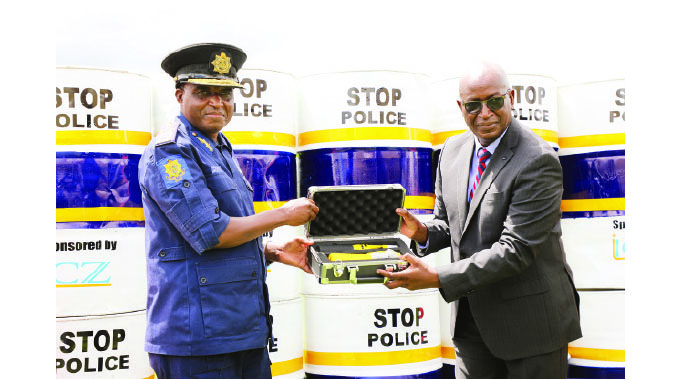
Riochard Muponde-Zimpapers Politics Hub
THE publication of Statutory Instrument 7 of 2026 last week, authorising the Zimbabwe Republic Police to use specified breathalyser devices, has set the nation abuzz. For habitual drunk drivers, it’s a sobering development.
Under the newly gazetted Statutory Instrument 7 of 2026—the Road Traffic Act (Use of Breathalysers)—President Mnangagwa has approved two internationally recognised devices for police use: the ST FIT-333Gi (manufactured by AAT Limited of Hong Kong) and the AT9000 (manufactured by Hanwei Electronics Group Corporation of China). This clears the legal path for the nationwide deployment of this modern testing equipment against drunk driving.
This new law is more than a routine regulatory update but represents a critical, long-awaited tactical shift in Zimbabwe’s protracted war against road carnage.
The regulation arrives amid escalating road carnage, with the latest holiday figures underscoring the urgent need for intervention. The just-ended festive season proved particularly lethal, as police confirmed 2,412 accidents—a staggering 100 percent increase from the 1,211 recorded the previous year—resulting in 100 fatalities.
The new legislation has moved from bureaucratic consideration to frontline tools in a matter of days.
In an interview, ZRP national spokesperson Commissioner Paul Nyathi confirmed that enforcement had begun “with immediate effect.”
This decisive action was long overdue. For years, police statistics have painted a grim annual portrait. Thousands of accidents and hundreds of fatalities are recorded every year, with a significant portion blamed on drunk driving, particularly among public transport operators. Yet, prosecutions have been hamstrung. In some instances, defence lawyers successfully challenged the admissibility of alcohol test results, arguing a lack of standardised, legally gazetted equipment.
It was always likely for the State’s case to evaporate on a technicality due to lack of evidence, emboldening offenders and frustrating law enforcement.
The core purpose of SI 7 of 2026 is to strengthen the law. It lists the approved breathalysers so that their readings can’t be easily questioned, making them strong evidence to secure a conviction.
The public welcome and the weight of expectation
The public reaction, especially among the vast commuting population, has been overwhelmingly positive. For millions who depend on kombis, buses, and taxis, the daily commute has been an exercise in anxiety. Tales of speeding, recklessness, and drivers suspected of being under the influence are commonplace.
The promise of systematic breathalyser checks at roadblocks is seen as a direct intervention for their safety.
Recent data from the Traffic Safety Council of Zimbabwe (TSCZ) and the Zimbabwe Republic Police (ZRP) revealed that human error and behavioural factors are the primary causes, responsible for a staggering 85 percent of all road accidents. The most prevalent and deadly behaviours identified are a familiar, tragic catalogue: driving under the influence of alcohol, reckless overtaking, driver fatigue and excessive speeding.
There is a palpable hope that the very visibility of the devices will act as a powerful deterrent, instilling discipline and restoring a semblance of safety to public transport. This public goodwill is a significant asset for the ZRP, but it also raises expectations for transparent and consistent application.
Ensuring a sufficient supply of the approved devices and calibrated testing kits for meaningful coverage—from major highways to rural roads—will be the clearest signal that this policy is designed for nationwide impact, leaving no community behind.
Legal clarity provided by the statutory instrument creates a sound foundation for rigorous, standardised training for the ZRP. This encompasses not only the proficient use of the devices but also mastering evidential protocols and chain of custody procedures, ensuring every test is judicially robust and beyond reproach. Synchronising this with judicial awareness will solidify the entire system, making enforcement seamless and convictions secure.
Success of breathalysers in the SADC region
Zimbabwe’s introduction of approved breathalysers aligns with a proven regional strategy that has saved lives on Southern African roads. Neighbouring countries demonstrate that success hinges on consistent, high-visibility enforcement paired with strong legal frameworks.
In South Africa, the “Arrive Alive” campaign’s integration of standardised evidential breath testing has been a cornerstone. During major holiday periods, the arrest of thousands of drunk drivers at roadblocks has contributed directly to measurable reductions in festive season fatalities, as reported by the Road Traffic Management Corporation.
Botswana stands as a regional model, where rigorous breathalyser use in widespread random stops is credited with a significant multi-year decline in total road deaths. Similarly, Namibia’s focused weekend roadblocks and Mauritius’s zero-tolerance policy have both driven down the proportion of alcohol-related crashes, creating a powerful public deterrent.
A symbol in a broader reform narrative
The introduction of breathalysers is, by all accounts, a significant move. It aligns with the Second Republic’s narrative of implementing tangible, reform-oriented policies. Through acting on a long-standing public safety demand, the Government has demonstrated responsiveness. It also indirectly addresses the economic cost of road accidents—the burden on the healthcare system, the loss of productivity, and the devastating impact on families.
The promulgation of SI 7 of 2026 is a definitive and necessary step. It corrects a fundamental weakness in the enforcement arsenal and responds to a legitimate public fear. Indeed, Zimbabwe has a clear, legally sound mechanism to directly confront drunk driving at scale.
However, the breathalyser is not the end of it all. Its success will be measured not by the number of devices procured, but by a sustained reduction in alcohol-related crashes and fatalities.
This requires flawless execution by the ZRP, unwavering support from the judiciary, and its integration into a wider, uncompromising approach to all traffic offences.
The Government has blown the whistle on drunk driving; the nation now watches to see if this strong start translates into a safer finish for all road users. The road to curbing carnage remains long, but with this move, a significant hurdle has finally been cleared.