
Trust Freddy
Herald correspondent
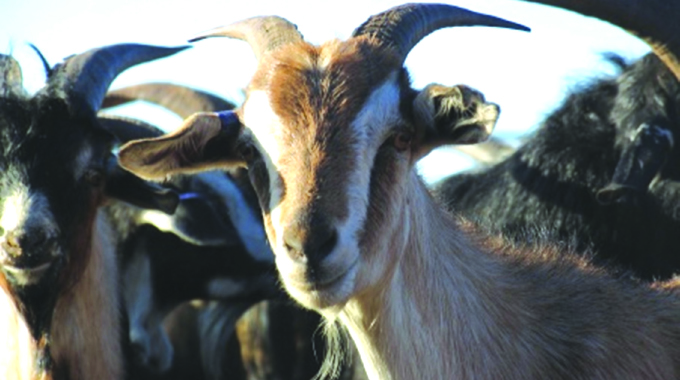
Zimbabwean farmers need to take urgent measures to save indigenous goat breeds from extinction, a goat breeding expert says.
Indigenous goat expert, Mr Joe Sikhosana told participants at a goat indaba recently that the loss of local breeds was a serious matter that required urgent attention.
“Matabele and Mashona are slowly disappearing due to the influx of these exotic breeds and that is the greatest challenge we are facing.
“There is nothing wrong with exotic breeds but even if we are introducing exotic breeds we still have to develop our own breeds so that in future Matabele and Mashona will play the same role like the boer goats,” said Sikhosana.
He also said in the spirit of conservatism farmers must safeguard indigenous goats as they give the nation an identity.
“We need to conserve our indigenous goats as Zimbabweans because that is our natural heritage.
“When you talk of Zimbabwe, we have to talk of matabele and mashona. Frankly speaking, those goats contribute to the food security of the country especially for the people in the rural areas.
“We need to protect them because one day they may be needed again especially with this climate change which is unpredictable. Matabele and mashona they can withstand all the pressure.
“The current population is over 4 million but their contribution to the economy is very low because if these 4 million goats are properly managed we should be talking of 7 to 8 million goats but because of high mortality rate, our goats are dying unnecessary because of lack of management.
“Farmers know how to look after these animals but I don’t know where the problem is coming,”said Sikhosana.
The chairperson of Goat Breeders Association of Zimbabwe Dr Divine Simbi Ndlukula also concurred with Mr Sikhosana saying high mortality rate which has resulted in loss of indigenous goats is a major worry as it stands at 30 percent.
“The greatest challenge is high mortality rate, if out of 100 goats that are born and 30 of them are dying that is a big lose. If you are looking at a breeding stock of a million as an example, already you are saying 300 thousand which is a potential number for going into the market and this the biggest problem that our production numbers are very low.
“We cannot even meet the local demand for meat let alone the demand for breeding stock and people talk about export market which we cannot even start dreaming of until our production levels start increasing significantly.”
Dr Ndlukula also said due to inbreeding, indigenous goats have tended to become smaller and the best approach to preserving them is to use bucks or males that are not related to the females for mating.
“Most males born must be castrated and farmers get indigenous males from different genetics for breeding. Ethiopia has done it well and they export their goat meat from their indigenous goats.”
Another farmer from Thukula Dube said shortage of grazing land in Gwanda as a result of veld-fires is affecting production levels of indigenous goats and she called for stiffer penalties for those who start veld fires which end up destroying people’s livestock.
According to experts, indigenous goats can withstand drought conditions much better and can survive on shrubs and need less manpower for tending to, making them a better choice than high-maintenance livestock like cows.