admin
admin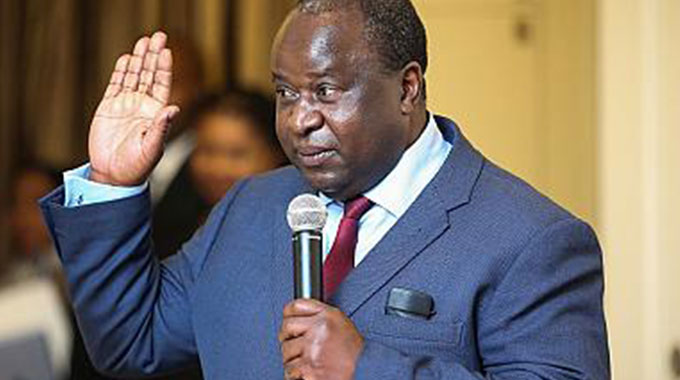
Prosper Ndlovu, Analysis
GLOBAL trade remains sluggish with negative impact on growth forecasts, mainly for emerging economies, due to the impact of continuing trade wars between United States and China and uncertainties over Brexit.
Given Africa’s dependency on the West and China for foreign direct investment, aid support andexport trade, developing economies are likelyto suffer associated risks, especially in the absence of vibrant domestic solutions and intra-regional trade.
Zimbabwe’s major trading partner, South Africa, has been hardest hit and economic experts fear the impact of these shocks could trigger a similar strain to trade dependent regional economies.
South Africa is a sub-regional economic power house and many Sadc economies, for instance, depend on it for trade and investments.
At a briefing ahead of the recent World Economic Forum (WEF) Africa, South Africa’s Finance Minister, Mr Tito Mboweni, expressed worry over the issue as he pleaded for speedy resolution to the US-China trade impasse.
The world’s two biggest economies have recently imposed heavy tariffs on each other, renewing concerns over slower global growth, global media has reported.
“The biggest issue is the global trade tensions, which are consuming the world. The trade war between the US and China is not helpful and is affecting the markets generally whether it’s the commodity markets or the currency markets,” SA local media quoted Mr Mboweni saying.
“The issue of trade tensions is a very important one for us . . . the message must get through especially to those in Washington that the trade war is not helpful to us or to the global economy. The quicker these issues are dealt with, the better.”
Multinational financial services group, Old Mutual Group, also shared the concern over the issue in its interim financial results issued last week for the six month period to 30 June 2019.
It noted: “Global growth remains subdued due to the continuing trade tensions between USA and China, Brexit related uncertainty and weaker than anticipated global activity”.
Group interim chief executive officer, Mr Iain Williamson, said: “This has impacted growth forecasts with many central banks implementing interest rate cuts in Q2 (second quarter) 2019 to assist with the recovery of suppressed economies”.
He added that in emerging markets, households continue to hold back on long range spending resulting in global trade remaining sluggish.
South Africa’s equity markets, for instance, remained below the levels of half year 2018 despite the fact that the Johannesburg Stock Exchange shareholder weighted index was up 7,2 percent since the start of the year, according to Old Mutual.
“While inflation has been kept at less than five percent for the last 12 months and the year to date average of 43 percent in line with the 44 percent target for 2019, the state of the economy has given cause for serious concern,” said MrWilliamson.
Zimbabwe’s economy on one hand continues to experience challenging conditions in the face of liquidity constraints, rising inflation that spiked 176 percent as at end of June 2019, power outages and erosion of disposable incomes, which have weighed heavily on the economy.
In the context of Brexit, academic studies also observe that the uncertainties over the prospects of the UK leaving the European Union have generally triggered a shock on global markets and left investors operating on the African continent in a state of confusion.
Fears are that this uncertainty would possibly result in a cut in UK aid spending in Africa, which will likely hinder economic abilities of aid dependent states on the continent.
Should the UK go into recession post Brexit, possible implications are that its entities would likely have little appetite for external investments and this could dent several African economies where London has a high hand on the foreign direct investment front.
The scenario places on high focus the need for emerging economies, particularly from Africa, to scale up intra-regional trade and harness opportunities from the African Continental Free Trade Agreement (AfCFTA).
The African Union recently launched the operational phase of the Africa AfCFTA, which will be the world’s largest free trade area by number of countries once it is fully operational.
Intra-Africa trade has been historically low and the World Economic Forum gathering was briefed that intra-regional trade within Africa stood at 16,6 percent of total exports in 2017 compared to Europe’s 68 percent and 59 percent in Asia, which points to untapped potential.
This explains why the AfCFTA deal is seen as critical for growth and job creation for Africa and its 1,27 billion people.
Zimbabwe is already seized with engagements on how its private sector could benefit more from this broader regional trading market.
After years of talks, the goal of the AfCFTA is to establish a single market for goods and services across 54 countries, allow the free movement of business travellers and investments, and create a continental customs union to streamline trade and attract long-term investment.
Mr Mboweni has also said his country was seriously focusing on the AfCFTA as a vehicle to gain the most from regional trade opportunities.
“SA stands to benefit far more from the Africa intercontinental free trade because of our large industrial base through the production and export of manufactured goods.
“Against the background of the trade wars, Africans are organising themselves,” he said.


 Online Reporter